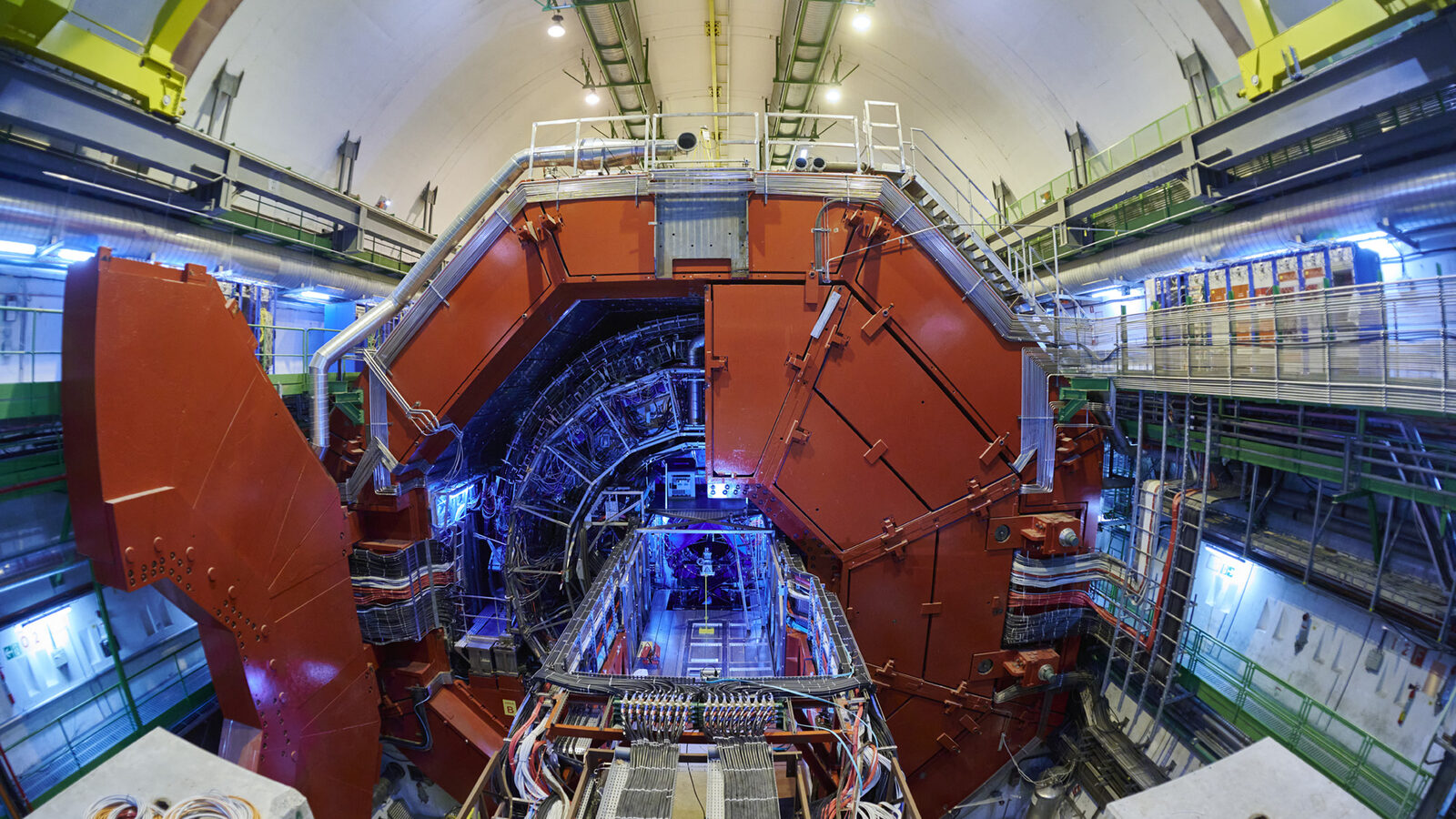
New data from the ALICE experiment, collected when no particle beams were circulating in the LHC during pauses in Run 2, may contribute to solving a puzzle surrounding cosmic muons.
Launched by the CERN Council in March 2024, the stated aim of the 2026 update to the strategy is to develop a visionary and concrete plan that greatly advances human knowledge in fundamental physics, in particular through the realization of the next flagship project at CERN.
Scientific American takes a field trip to the US’s only particle collider, the Relativistic Heavy Ion Collider (RHIC), housed at Brookhaven National Laboratory.
In 2023, the ALICE experiment was ready for their best year yet, until a mysterious signal threatened everything. As the LHC wraps up its 2025 lead-ion run, physicists recall how they worked together to solve the puzzle.
As upgrades enable the LHC to produce more and more particle collisions, physicists are using machine learning to keep up with the growing task of sorting through everything.
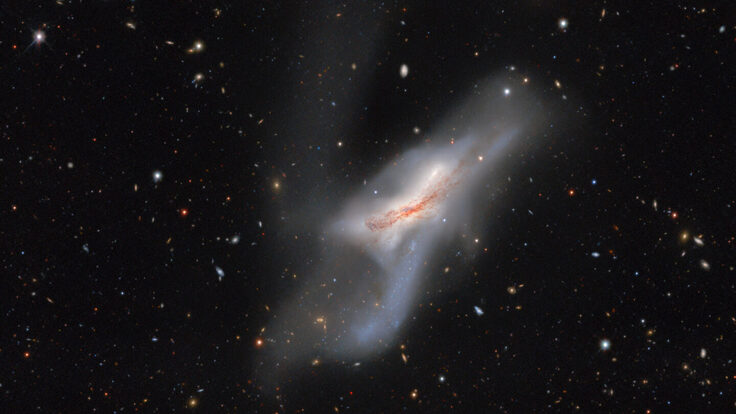
The Siena Galaxy Atlas will be a tool for research into how galaxies form and evolve, gravitational waves, dark matter and the structure of our universe.