Photography is sometimes thought of as one part skill and one part luck. During his amateur photography career, Dale Carter has had both.
Carter lives in the northern Black Hills of South Dakota, where the steep slopes that dominate the mining town of Lead are surrounded by an eminently photographable regional landscape filled with picturesque canyons, wide open prairies, and rugged badlands.
In the sweltering summer of 2002, when the Grizzly Gulch wildfire brought huge flames roaring into the neighboring Black Hills town of Deadwood, Carter was on hand with his camera. He captured slurry bombers skimming the treetops above town as residents evacuated through the smoke and embers. Carter was proud that his photos made the front pages of local and regional newspapers.
But Carter might be proudest of the photographs he’s taken over the years of scientists.
During the fall of 2001, in the wake of the closure of the local Homestake Gold Mine, physicists from around the world converged on the town of Lead for a conference on the potential to convert the mine into a place to host underground science. By building experiments deep underground, physicists could shield sensitive equipment from the interference of cosmic rays that rain down on the surface of Earth from space.
Carter made his way to the local hotel where the scientists’ conference took place. He had grown up reading Carl Sagan and science magazines and jumped at the chance to rub shoulders with the global scientific community.
“You don't get to talk to world-class physicists very often,” he says. “I had to come up and get their pictures. There were Harvard professors and leading researchers, and it was just unbelievable, the crowd that was here. They were all very gracious and welcoming.”
A small sampling of the many photos includes:
- Kevin Lesko, a senior physicist in the physics division of Lawrence Berkeley National Laboratory and former spokesperson for dark matter experiment LUX ZEPLIN (LZ). In the years to follow the 2001 meeting in Lead, Lesko’s tireless advocacy in front of the South Dakota Legislature and in Washington, DC would help secure the approvals that made SURF possible.
- Rick Gaitskell, a professor of physics at Brown University and the current spokesperson for the LZ experiment, the world leader in the hunt for WIMP dark matter. Gaitskell helped pioneer the liquid xenon time-projection chamber technology employed by LZ and its predecessor, LUX, at SURF.
- Baha Balantekin, a professor of physics at the University of Wisconsin-Madison, who in the decades to follow the 2001 meeting, would go on to become one of the pioneers of neutrino astronomy, helping to show the world the value of using neutrinos to study the cosmos. Balantekin was also an early advocate for a workshop series that Carter would later attend and photograph.
- Kenneth Lande, a professor of physics at Penn State University, worked alongside physicist Raymond Davis on the Nobel Prize-winning solar neutrino experiment at Homestake. Lande became an early advocate for the creation of a national underground laboratory that SURF has become today.
- Steve Elliott, a senior researcher at Los Alamos National Laboratory who served as the co-spokesperson for the MAJORANA DEMONSTRATOR experiment at SURF and the LEGEND experiment at Gran Sasso in Italy. Both neutrinoless double-beta decay experiments pushed the scientific frontier in the search for this ultra-rare process.
- Alfred K. Mann helped pioneer the use of underground laboratories to measure astronomical neutrinos. His passionate advocacy for a deep underground laboratory in the United States played a major role in convincing others to push for the conversion of the former Homestake Mine into a world-class research facility.
- Bonnie Fleming, who the year of that first meeting in Lead was chosen for a prestigious Lederman Fellowship at the US Department of Energy's Fermi National Accelerator Laboratory, now serves as Fermilab’s Deputy Director for Science and Technology and Chief Research Officer. She is also on faculty at the University of Chicago.
Twenty-five years later, the vision the scientists expressed at that first conference in 2001 has come to fruition. The Sanford Underground Research Facility is the deepest laboratory in the United States. SURF hosts world-class research in physics from the LUX-ZEPLIN dark matter search to the massive Deep Underground Neutrino Experiment, under construction 4,850 feet below ground. SURF is also home to pioneering research in geothermal energy, astrobiology, engineering and more.
Jaret Heise, the director of science at SURF and a physicist who collaborated with and studied under some of the scientists Carter photographed, marvels at the early history of SURF that Carter has documented. “This photographic time capsule captures a significant milestone in the journey to establish a national dedicated underground facility in the US,” he says.
In the photographs, he says, “you can literally see and feel the enthusiasm of these believers in underground science, and appreciate the potential these early meetings held for developing something magnificent and essential to realizing multi-disciplinary science on a grand scale.”
Carter’s effort to capture visitors to the Black Hills did not end after that first conference in 2001. He continued to take photos of physicists over the next 20 years.
The photographer became a mainstay at various conferences, including Center for Theoretical Underground Physics and Related Areas (CETUP*) workshop hosted by The Institute for Underground Science at SURF each year. He photographed students, post-docs, research scientists, and university professors.
“Carter’s pictures serve as an important reminder of the tremendous work of many, whose passion for compelling scientific questions led to the creation of the Sanford Underground Research Facility,” Heise says. “Many of those early advocates are now community leaders whose current work motivates not only continued use of underground laboratories, but expanded space to match the pace and scale of scientific inquiry.”
For Carter, the joy of capturing these images is also about the connections he makes with the scientists. “They have always been so gracious in letting me take their photos,” he says. “I also have lots of questions for them, and we have had some great conversations over the years.”
This summer, the Institute for Underground Science at SURF hosted the International Conference on Interconnections between Particle Physics and Cosmology. Carter was there, continuing to capture the unfolding history of physics in the Black Hills of South Dakota.
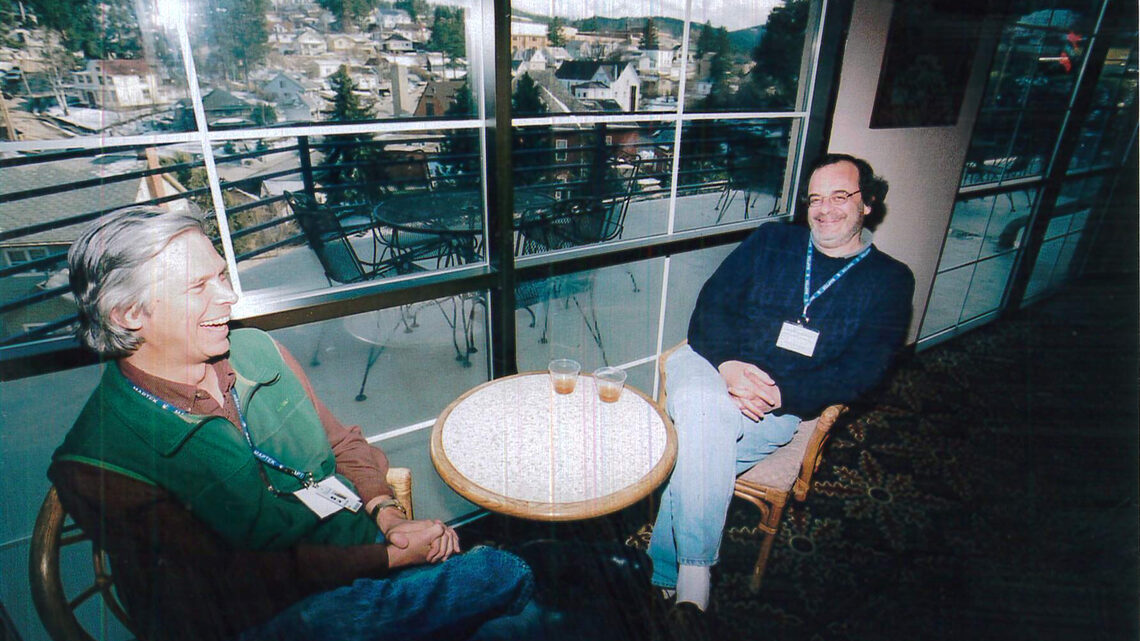
Kevin Lesko and Jon Kotcher

Richard Schnee and Andrew Sonnenschein

Andreas Piepke, Kevin Lesko, Andrew Hime, and Steven Elliott

Bonnie Fleming, Harry Nelson, and Daniel Akerib

Ken Lande and Al Mann

Richard Gaitskell, Hangno Wang, Neil Spooner

Ken Lande and Al Mann

Boris Kayser and Baha Balantekin
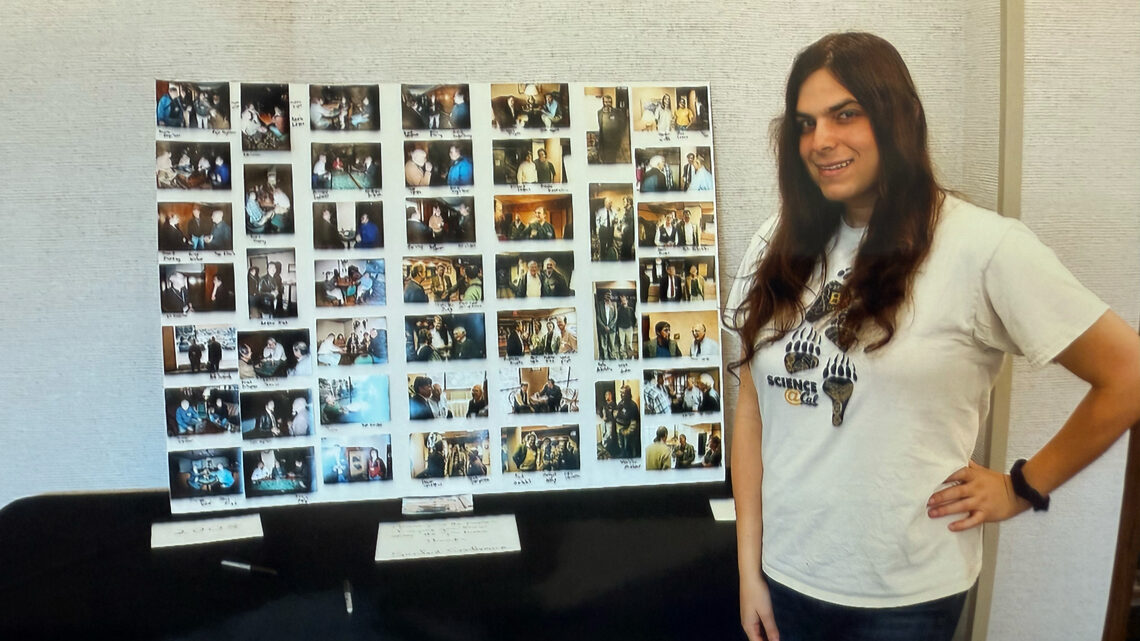
Eli Mizrachi
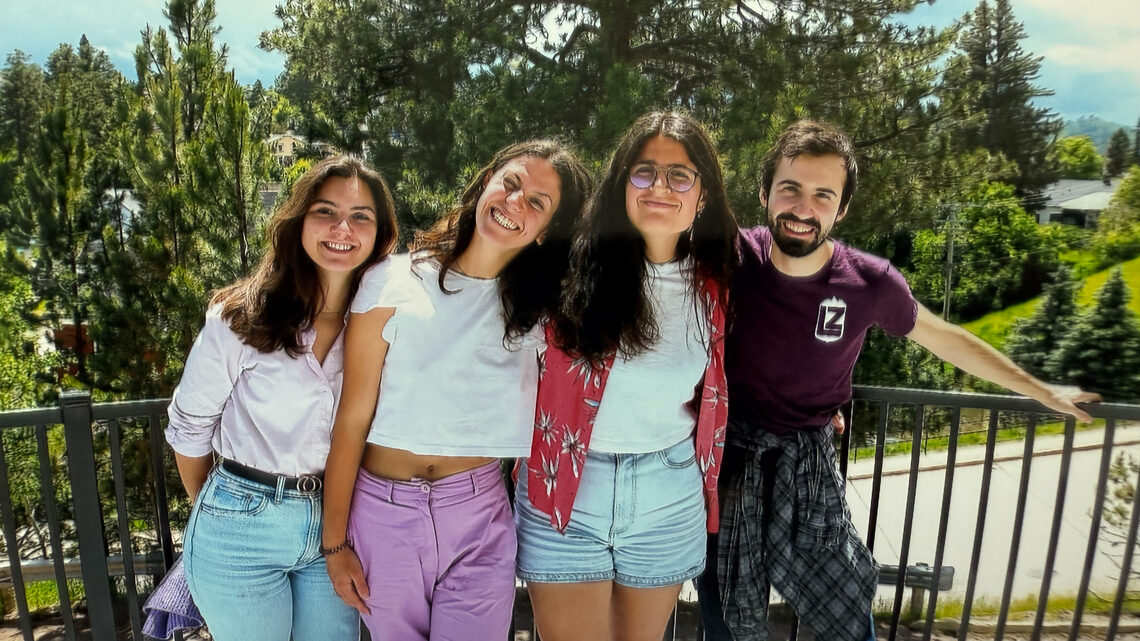
Elsa Jaquet, Olivia Valentino, Linda Di Felice and Jacopo Siniscalco
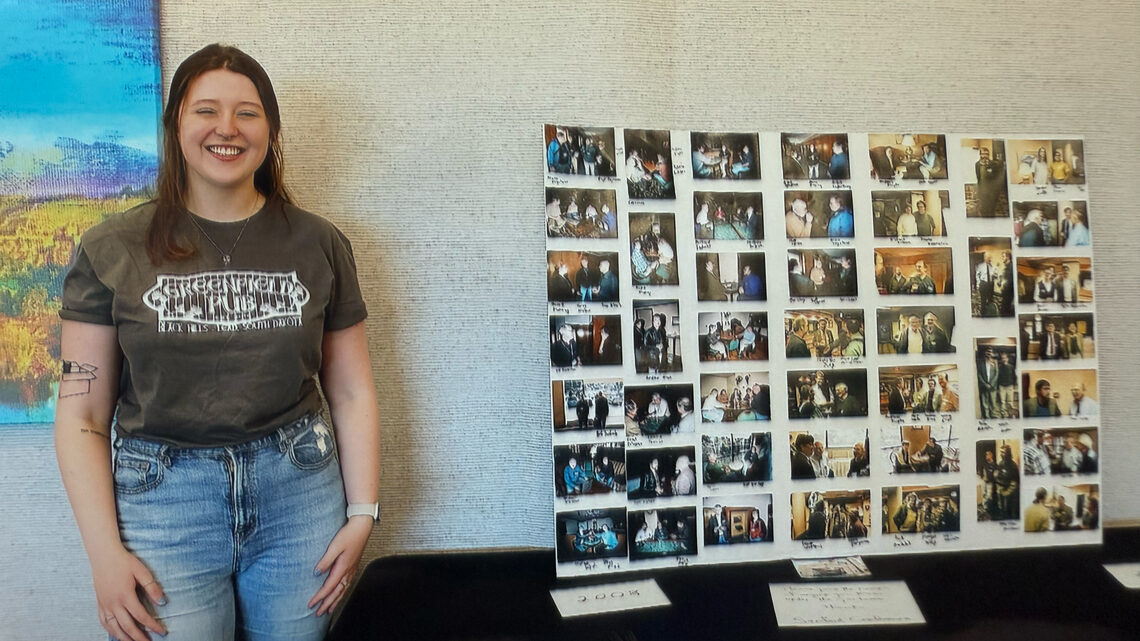
Erin Barillier
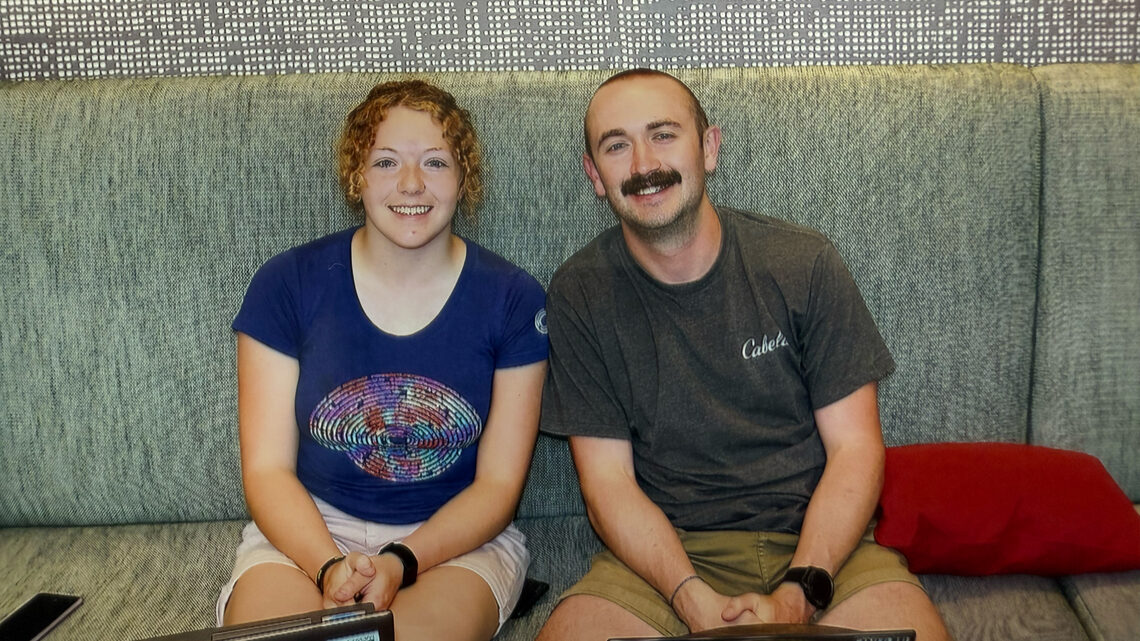
Jemima Tranter and Harvey Birch
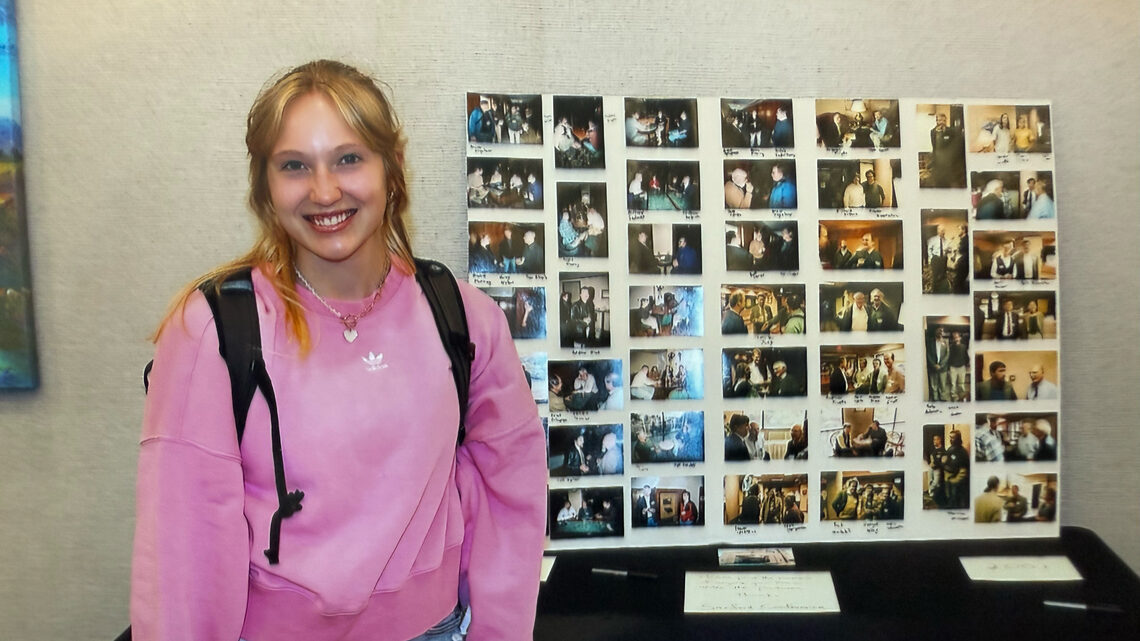
Lindsey Weeldreyer
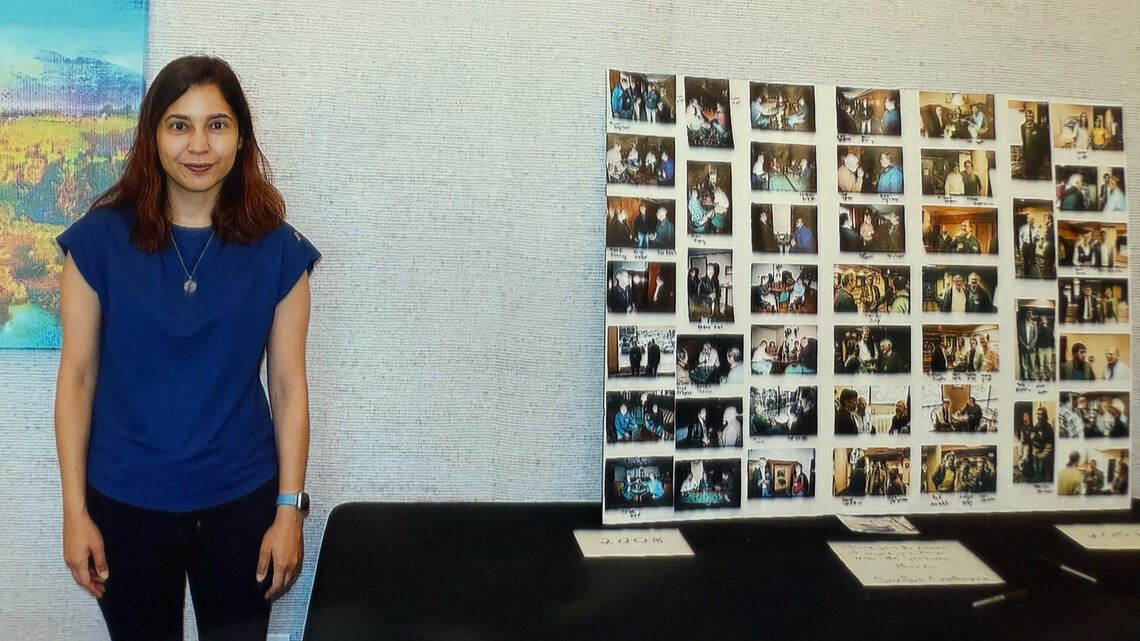
Nassim Bozorgnia