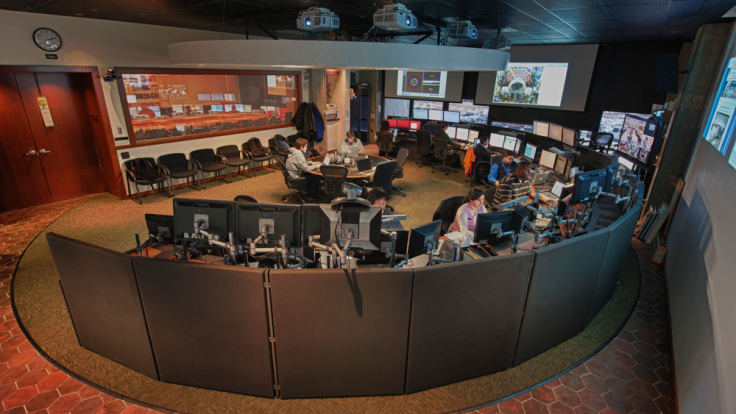
Learn some particle accelerator basics from a Fermilab accelerator operator.
How do you keep a particle inside of an accelerator? Fermilab accelerator operator Cindy Joe explains.
Video URL
Have a burning question about particle physics? Let us know via email or Twitter (using the hashtag #asksymmetry). We might answer you in a future video!
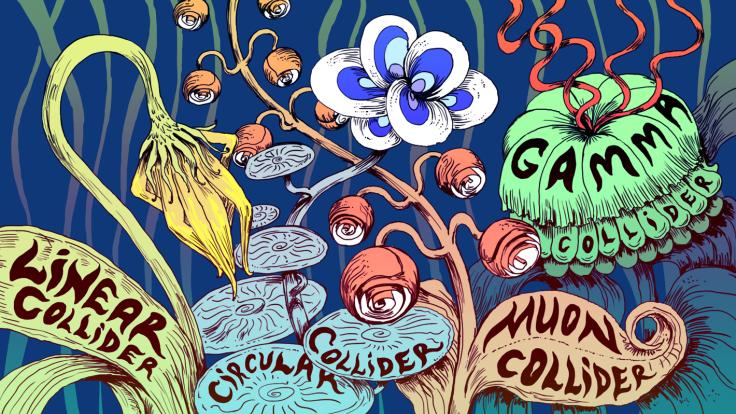
Now that a Higgs-like boson has been discovered at the Large Hadron Collider, proposals to build colliders that churn out the new particle are gathering momentum.
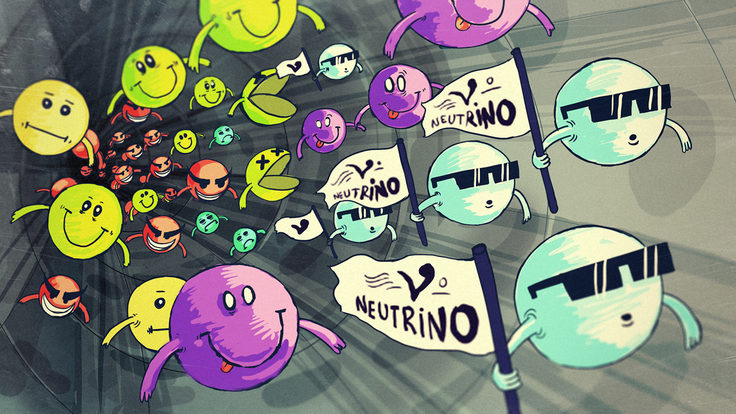
Neutrinos are elusive particles that are difficult to study, yet they may help explain some of the biggest mysteries of our universe. Using accelerators to make neutrino beams, scientists are unveiling the neutrinos’ secrets.
The life-saving medical technology known as Magnetic Resonance Imaging, or MRI, makes detailed images of soft tissue in the body, nearly eliminating the need for exploratory surgery.
My body is a tiny composition of molecules, insignificant compared to the three-story-high particle detector towering over the various tanks, wires, and steel tubing from which it had been construc
On September 10, 2008, scientists at the European laboratory CERN attempted for the first time to send a beam of particles around a new particle accelerator, the Large Hadron Collider.