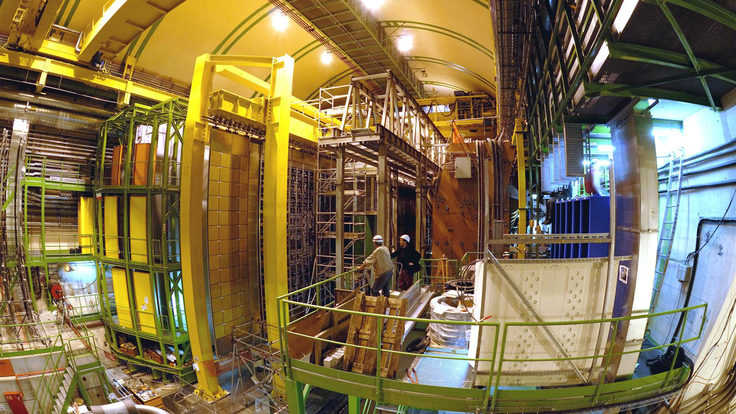
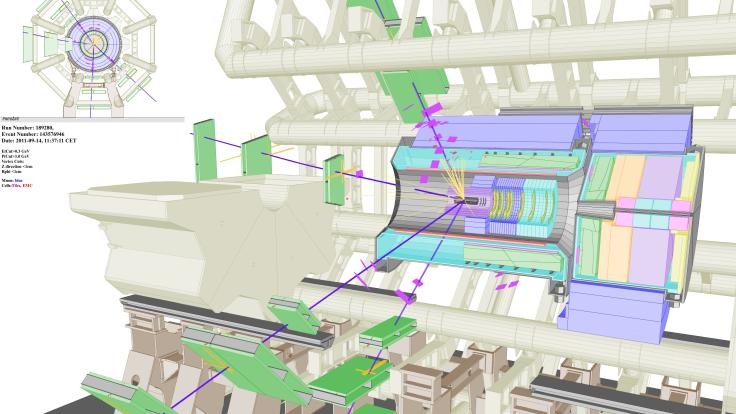
In analyses of a fundamental characteristic of the newly discovered Higgs-like particle—the ways in which it decays—scientists see even more Higgs-like behavior.
In a display of timing worthy of a blockbuster movie, a multinational team of accelerator physicists focused a beam of electrons down to the tiny size needed for a future linear collider the same week that the linear collider board formed.
Gamma rays, valued by astrophysicists for conveying information about phenomena in space, are also becoming valued by doctors for their ability to uncover cancer.
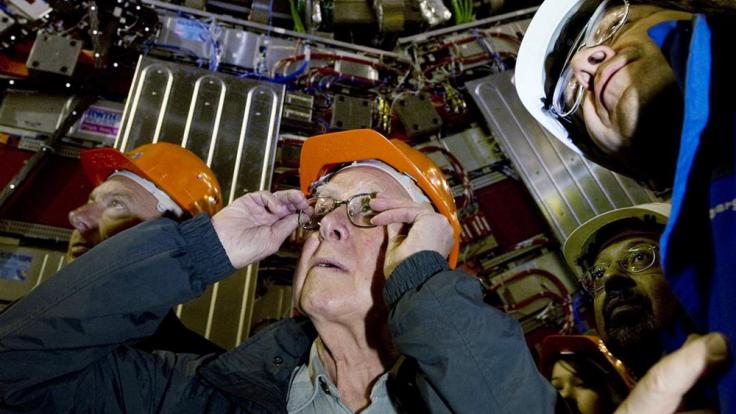
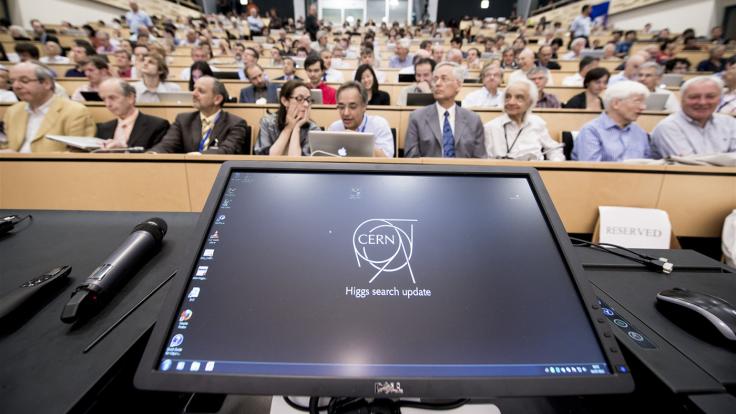
Early in the summer of 2012, excitement reached a peak as members of the CMS and ATLAS collaborations confirmed among themselves that they would soon announce the discovery of what looked like the Higgs boson.
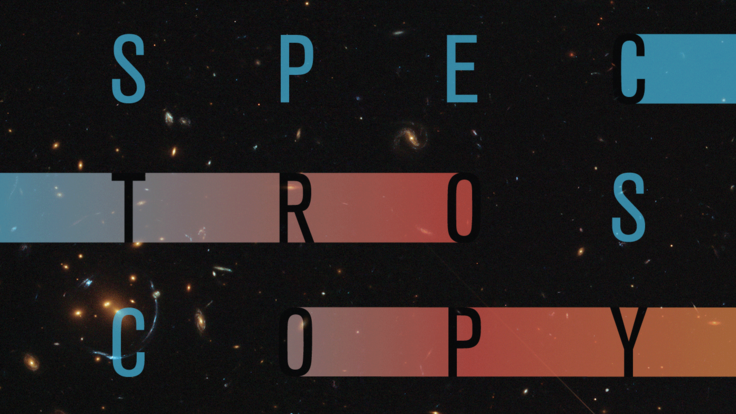
Spectroscopy is a technique that astronomers use to measure and analyze the hundreds of colors contained in the light emitted by stars, galaxies and other celestial objects.
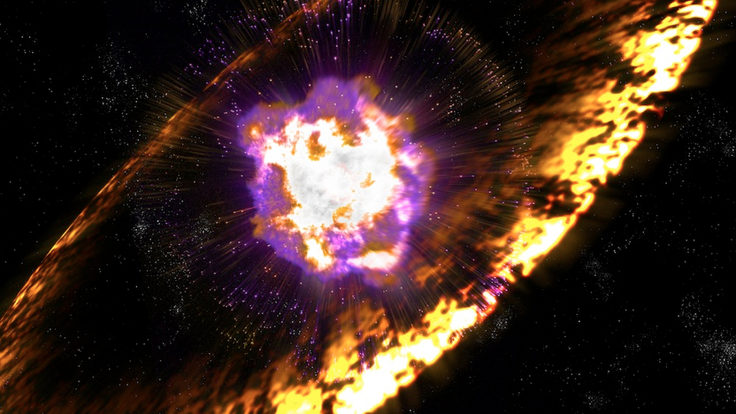
One hundred years after the discovery of cosmic rays, a team of particle astrophysicists has definitively determined one source of these abundant yet enigmatic particles.
For years, scientists thought that neutrinos fit perfectly into the Standard Model. But they don't. By better understanding these strange, elusive particles, scientists seek to better understand the workings of all the universe, one discovery at a time.