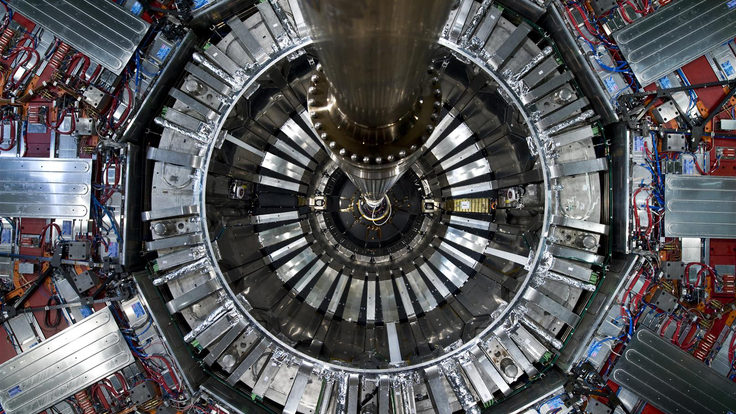
11/20/14 CERN frees LHC data Anyone can access collision data from the Large Hadron Collider through the new CERN Open Data Portal.
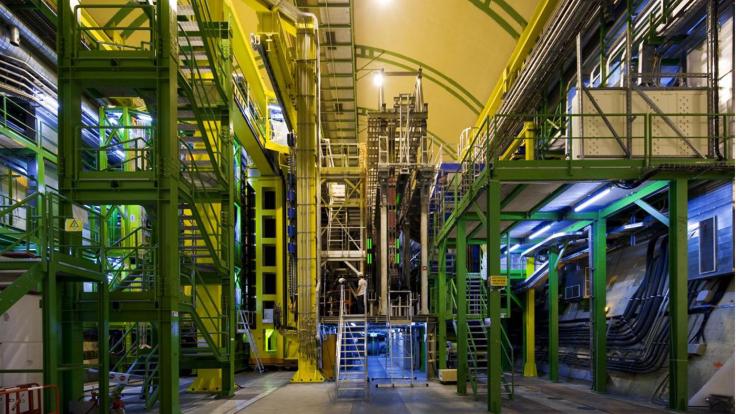
11/19/14 LHCb experiment finds new particles A new LHCb result adds two new composite particles to the quark model.
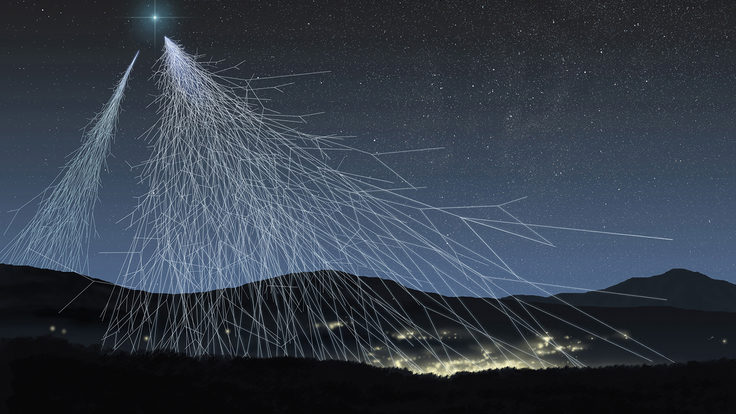
11/18/14 Auger reveals subtlety in cosmic rays Scientists home in on the make-up of cosmic rays, which are more nuanced than previously thought.
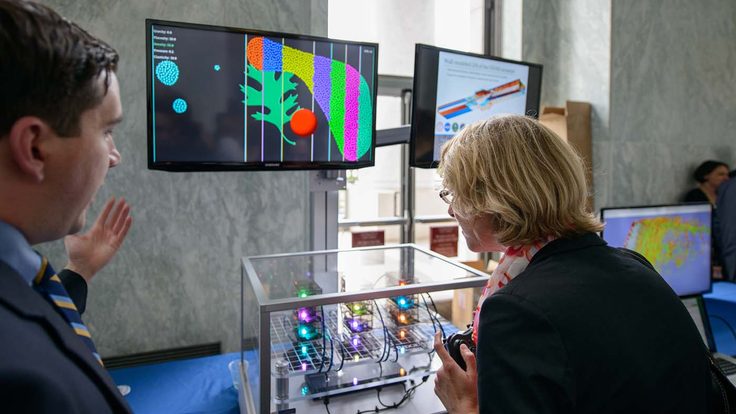
11/13/14 Big lessons from a Tiny Titan When it comes to explaining how a massive machine works, sometimes smaller is better.
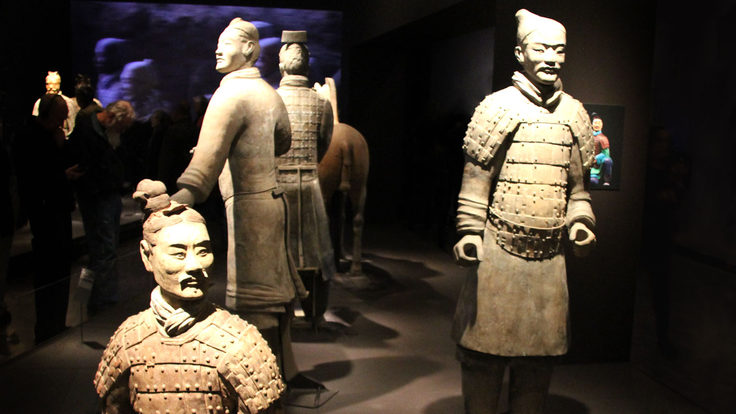
11/12/14 Ancient pigments, modern mystery When Chinese workers searching for water found the famous Terracotta Warriors instead, they brought to light a scientific mystery.
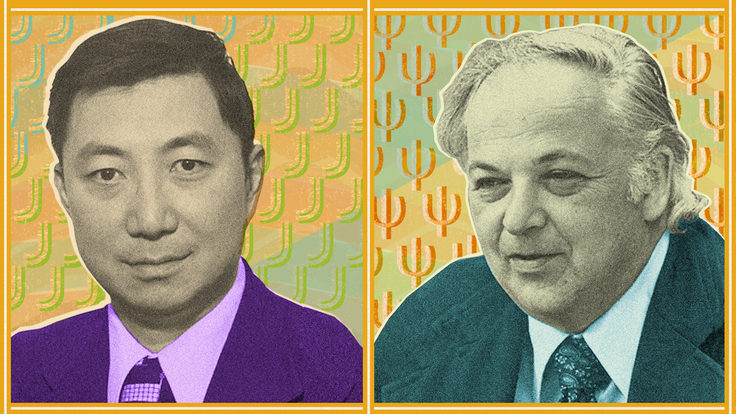
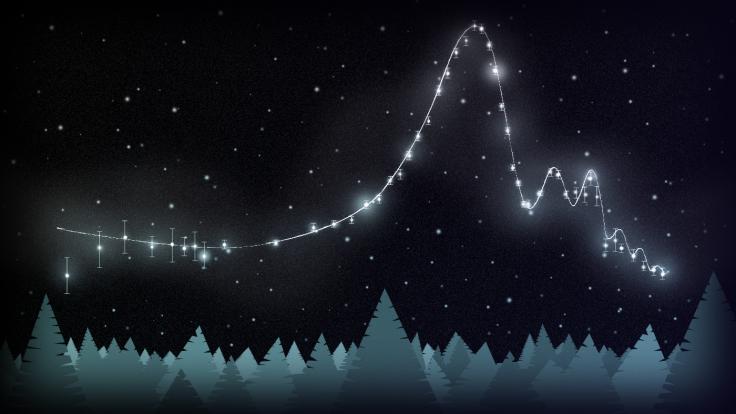
11/11/14 The November Revolution Forty years ago, two different research groups announced the discovery of the same new particle and redefined how physicists view the universe.
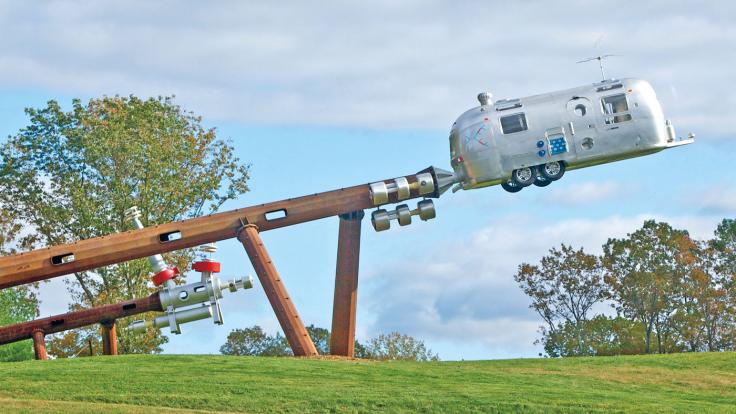
11/06/14 The intersection of art and science Statistician Edward Tufte turns scientific notations into artwork.
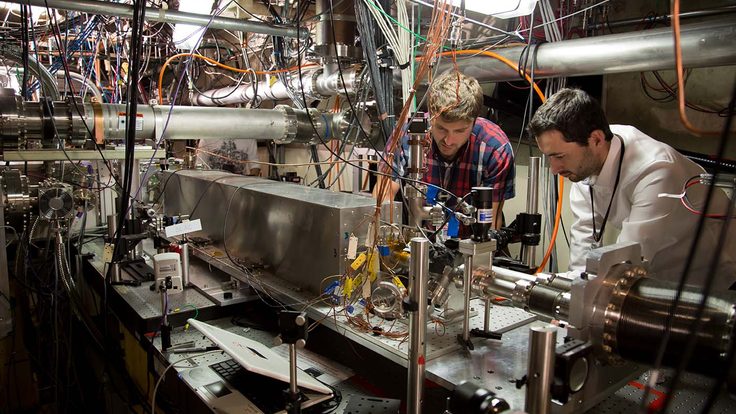
11/05/14 Scientists progress toward plasma acceleration Scientists have demonstrated the particle acceleration technique is powerful and efficient enough to drive future accelerators.
11/04/14 The rise of astrostatistics Astrophysicists and cosmologists are turning to statisticians to help them analyze an ever-increasing deluge of data.
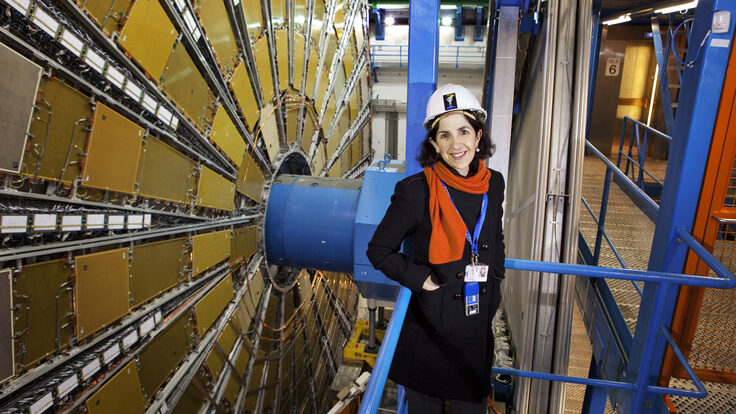
11/04/14 Fabiola Gianotti chosen as next head of CERN The former head of the ATLAS experiment at the LHC will be the first female leader of Europe's largest particle physics laboratory.
10/30/14 Reading the heavens with your phone Two groups have released early versions of apps to turn your smart phone into a cosmic ray detector.
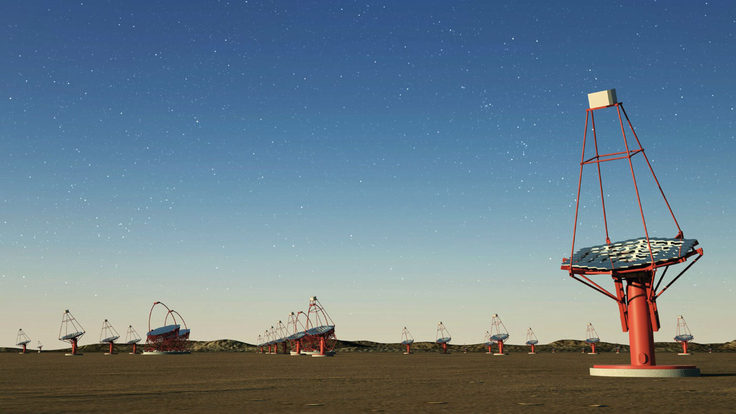
10/28/14 Scientists mull potential gamma-ray study sites An international panel is working to determine the two locations from which the Cherenkov Telescope Array will observe the gamma-ray sky.
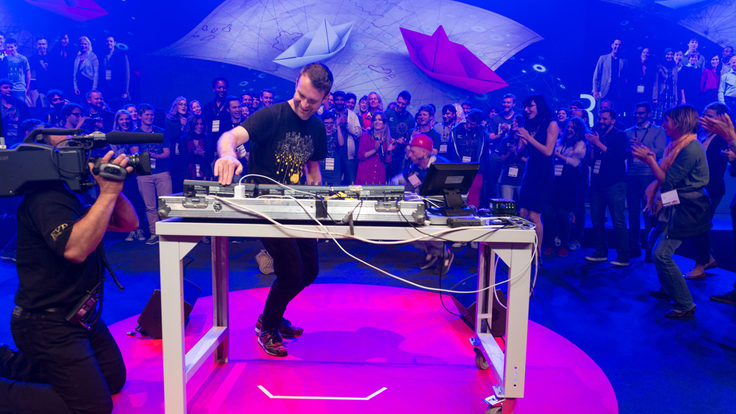
10/27/14 TEDx goes to CERN Inventors, educators and scientists inspired audiences at this year’s TEDxCERN.
10/24/14 Cosmic inflation Cosmic inflation refers to a period of rapid, accelerated expansion that scientists think took place about 14 billion years ago.
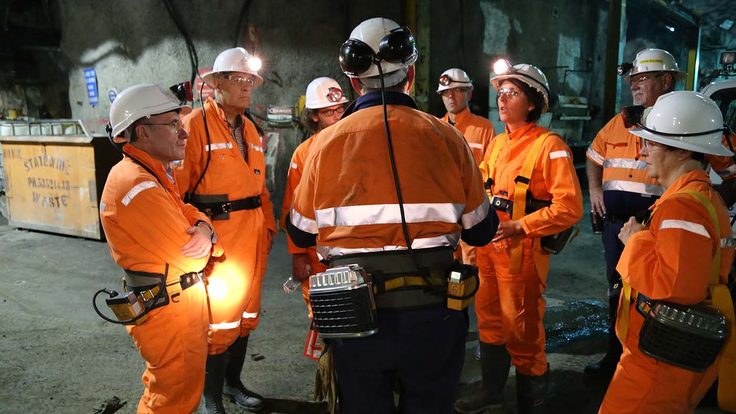
10/23/14 Australia’s first dark matter experiment A proposed dark matter experiment would use two underground detectors, one in each hemisphere.