Flags, arts and crafts from different nations, and a warm welcome transformed the DOE Brookhaven Site Office's Second Annual Unity Day into a celebration of people and cultures working together.
When physicists at Fermilab smash particles together, most of what comes out of the collisions is well understood. But every once in awhile strange things appear in the data—incidents popularly known as zoo events.
When exploring the mysteries of the universe, don't neglect the floorboards. Last December at Fermilab, repairs to the ceiling over the kitchen in the Aspen East users' center, targeting a joist that had distorted the floor of the dorm room above, produced some startling debris.
The young people who will build our future appear to be largely unaware of how attractive and rewarding careers in science can be. We should not be surprised. In many high schools, physics is an elective subject lasting just a year, not nearly enough time to ignite curiosity in hungry minds.
Pick a number: 2, 3, 5, 7, 11, 13, 17, 19, 23, 29, 31, 37, 41, 43, 47, 53, 59, 61, 67, 71, 73, 79, 83, 89, 97, 101, 103, 107, 109, 113 and so on and on and on and on . Get the picture?
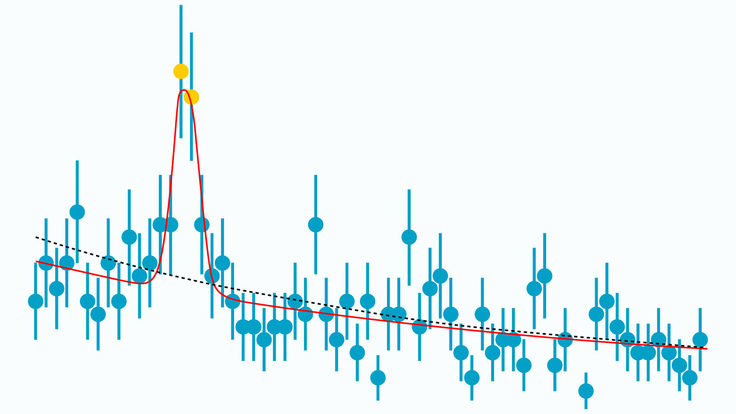
Although initial results were encouraging, physicists searching for an exotic five-quark particle now think it probably doesn't exist. The debate over the pentaquark search shows how science moves forward.
The history of Louisiana is closely intertwined with tragedies. My father, who turns 90 this fall, vividly remembers the Great Flood of 1927. "You could take a boat from Monroe, Louisiana, to Jackson, Mississippi," he says, a trip of over 120 miles.
Physicists are dedicated to their work, but it often bleeds into their home and personal lives. Reading this issue of symmetry gives me a converse impression—just how human physicists are as they work.
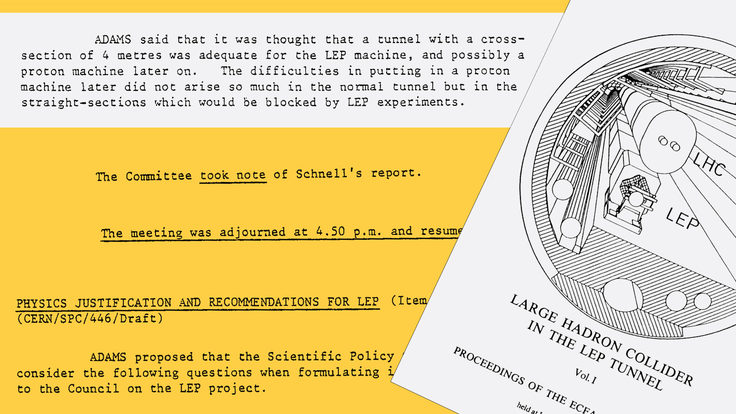
At the CERN Scientific Policy Committee meeting held on June 18-19, 1979, the construction of LEP, the Large Electron-Positron collider, was on the agenda.
This August, one hundred and fifty postdocs and advanced graduate students from around the world will gather on the Illinois prairie to enhance their understanding of particle colliders at the CERN-Fermilab Hadron Collider Physics Summer School.
When the LHC collider and its experiments are being switched on in 2007, scientists around the world will be eager to monitor the start-up in real time. But physicists won't have to be at the LHC site to monitor the hardware they built or to determine what tuning they need to do.
The Large Hadron Collider, to start up in late 2007, traces its inception back to 1979. There are already more than 4000 papers in the SPIRES database that are about the LHC, either mentioning its name in the title or referring to it in a significant way.