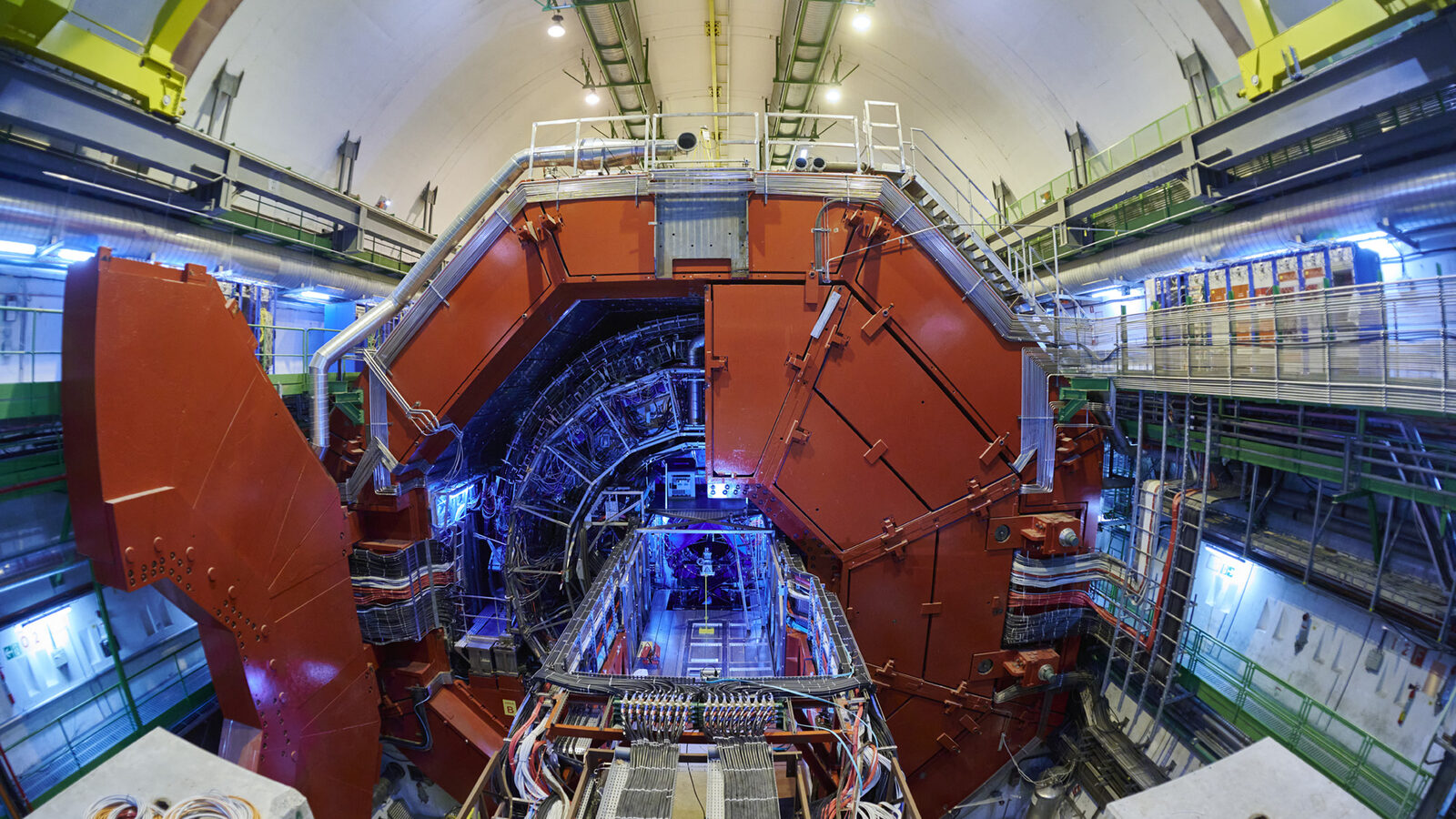
The first high-energy collisions between light nuclei at the Large Hadron Collider confirm the unusual “bowling-pin” shape of neon nuclei and offer up a new tool to study the extreme state of matter produced in the aftermath of the Big Bang.
Spotted in January, the spacetime ripples from a black hole merger are the clearest yet discovered, cutting through the background noise better than any previous detection.
In 2023, the ALICE experiment was ready for their best year yet, until a mysterious signal threatened everything. As the LHC wraps up its 2025 lead-ion run, physicists recall how they worked together to solve the puzzle.
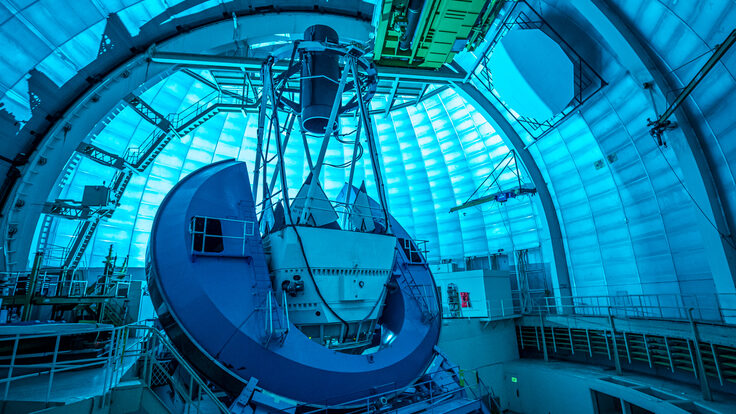
Combining the DESI data with other experiments shows signs that the impact of dark energy may be weakening over time—and the standard model of how the universe works may need an update.
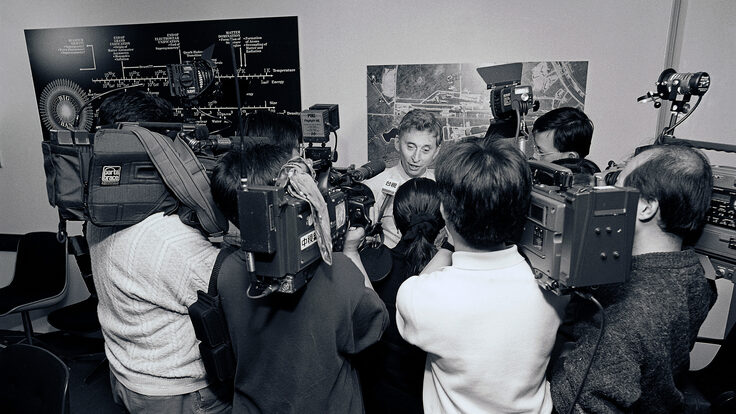
On March 2, 1995, the top quark discovery at Fermilab was announced by scientists on the CDF and DZero collaborations, and the sixth and final quark was added to the Standard Model.
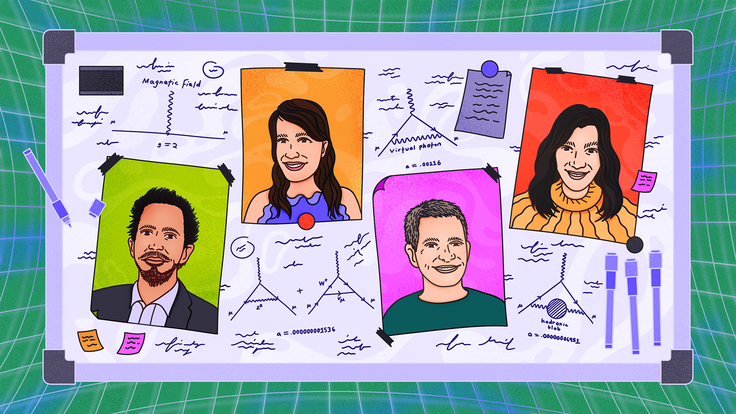
Most students who earn a PhD in physics build careers outside of research. Meet four physicists who went from particle physics research to teaching high school physics and math.