For the first time, scientists have measured the rate at which high-energy neutrinos are absorbed by our planet, a development that could lead to discoveries about physics and the Earth.
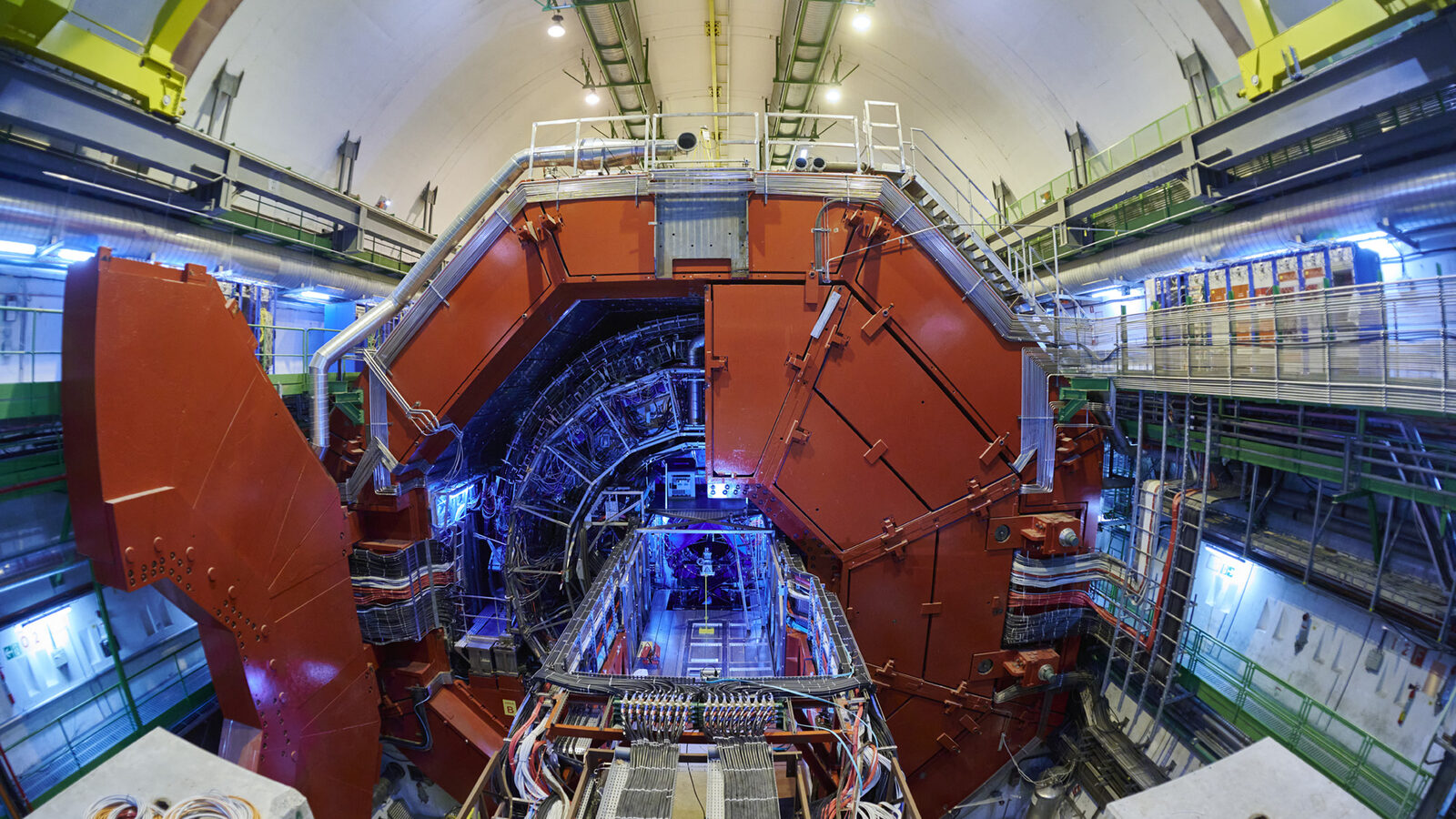
In 2023, the ALICE experiment was ready for their best year yet, until a mysterious signal threatened everything. As the LHC wraps up its 2025 lead-ion run, physicists recall how they worked together to solve the puzzle.
Unless you're looking for them, you might not notice the two stone gargoyles standing watch over building 280 at Stanford Linear Accelerator Center. In fact, for the first month they were in place, not many people did notice them.
Physicists and scientists of other disciplines around the world have created countless research sites that remind me of the colossal dimensions of ancient temples, in one way; and, in another, of fragile, beautiful little altars where they orchestrate experiments, with research objects largely in
I have heard conflicting reports as to who decided to call one of the most spectacular intellectual innovations of human history "the Standard Model," physicists' best construct for explaining the range and behavior of elementary particles that make up the universe as we know it.
Do you know why Louis Victor de Broglie won a Nobel Prize in 1929? Or why a Nobel Prize wasn't given out in 1934? What about Nils Gustaf Dalen's invention of an automatic sun valve beating out Max Planck and Albert Einstein for the Nobel Prize in 1912?
Because particle physicists cannot directly see the objects they study, they rely on deduction and decay products to detect nature's tiny, ephemeral particles.