For the first time, scientists have measured the rate at which high-energy neutrinos are absorbed by our planet, a development that could lead to discoveries about physics and the Earth.
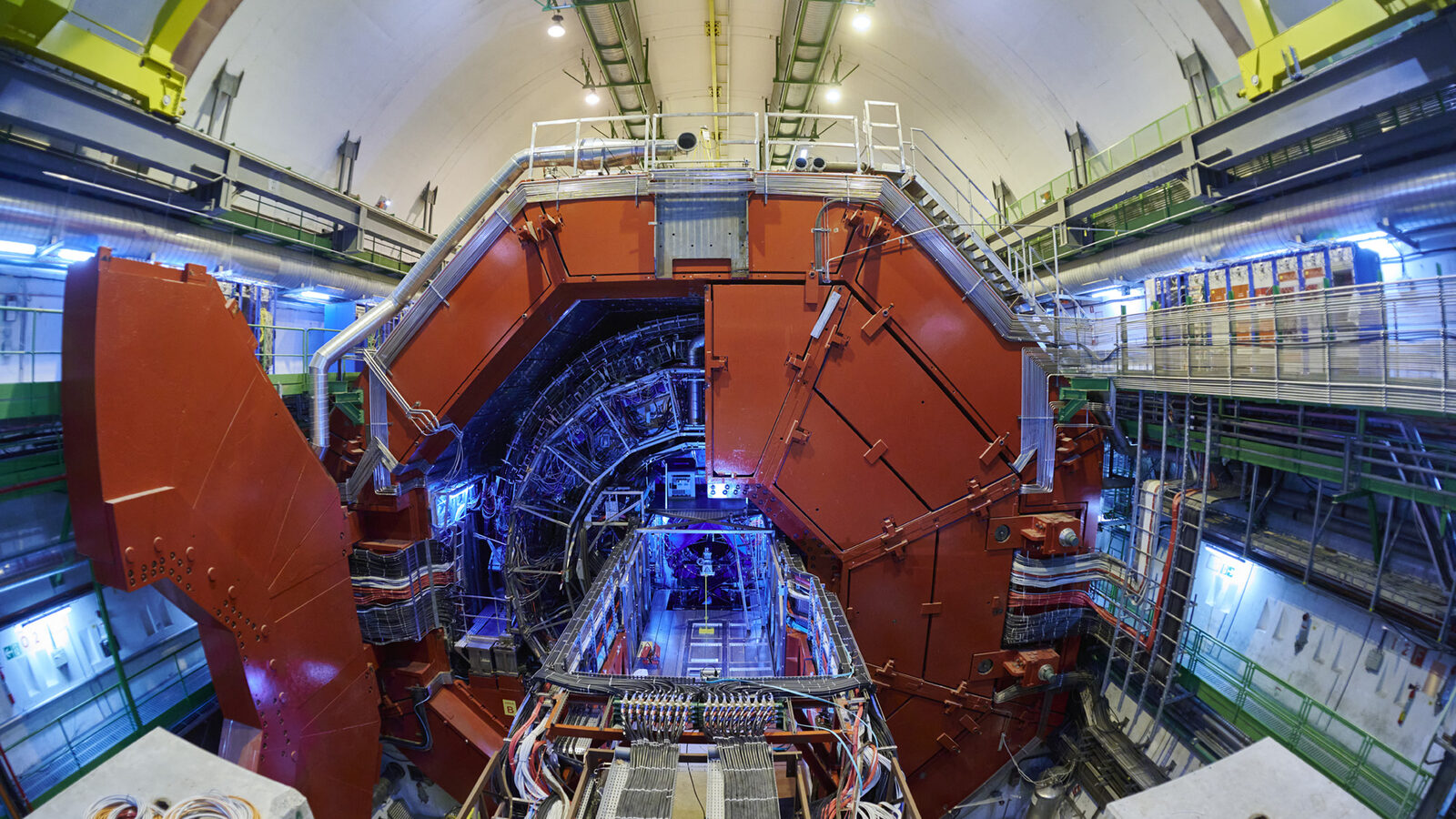
In 2023, the ALICE experiment was ready for their best year yet, until a mysterious signal threatened everything. As the LHC wraps up its 2025 lead-ion run, physicists recall how they worked together to solve the puzzle.
I have heard conflicting reports as to who decided to call one of the most spectacular intellectual innovations of human history "the Standard Model," physicists' best construct for explaining the range and behavior of elementary particles that make up the universe as we know it.
Because particle physicists cannot directly see the objects they study, they rely on deduction and decay products to detect nature's tiny, ephemeral particles.
Fermilab's new Girl Scout badge has troop #312 excited about "atoms and buffalo." Unlike a field trip where kids visit Fermilab to learn about physics in an "educational environment," the Girl Scouts' Fermilab outing lets kids come with their friends and a scout lead
Custom designed microchips have become essential in processing signals from modern physics experiments that generate lots of data. This chip, the QIE9, designed by Fermilab engineers, is just one example of the many Application Specific Integrated Circuits (ASICs) used in such experiments.
Working at Stanford Linear Accelerator Center, you never know what projects may come your way. So when Helen Quinn, head of education outreach at SLAC, asked me to plant trees with a class of fourth graders, I said sure, it's not rocket science.