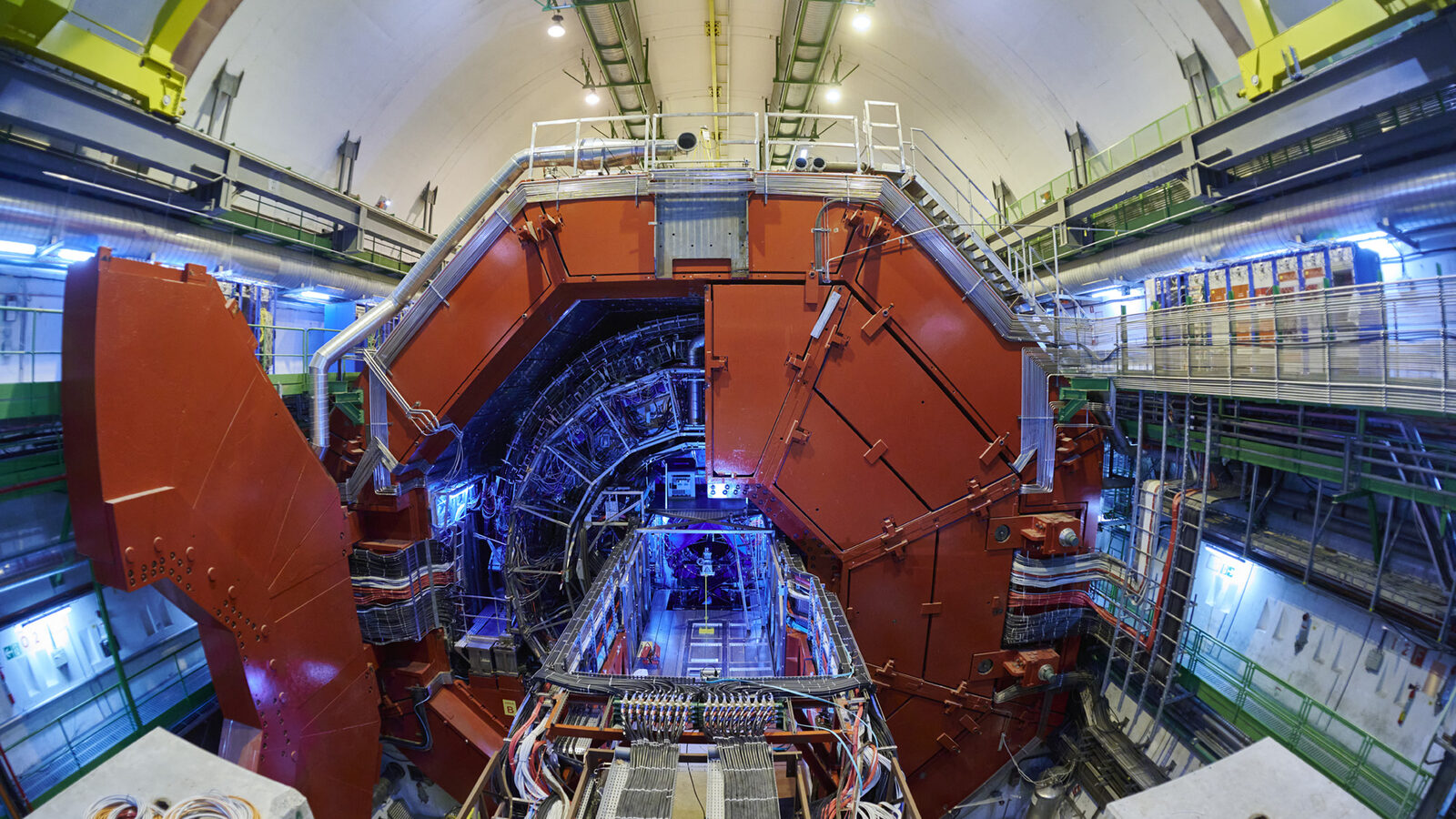
In 2023, the ALICE experiment was ready for their best year yet, until a mysterious signal threatened everything. As the LHC wraps up its 2025 lead-ion run, physicists recall how they worked together to solve the puzzle.
In January 2000, Tom Jordan had just finished up a conference in San Diego, where he had presented one of the new cosmic ray detectors to QuarkNet teachers.
Working at Stanford Linear Accelerator Center, you never know what projects may come your way. So when Helen Quinn, head of education outreach at SLAC, asked me to plant trees with a class of fourth graders, I said sure, it's not rocket science.
Before the days of the World Wide Web, scientists would mail their colleagues preprints, hard copies of papers submitted to scientific journals. In 1991, particle physicists began posting these papers on the Web, calling them e-prints.
Custom designed microchips have become essential in processing signals from modern physics experiments that generate lots of data. This chip, the QIE9, designed by Fermilab engineers, is just one example of the many Application Specific Integrated Circuits (ASICs) used in such experiments.