How do we hunt for elusive neutrinos emitted by distant astrophysical sources? Submerge a huge observatory under ice or water … and then wait patiently.
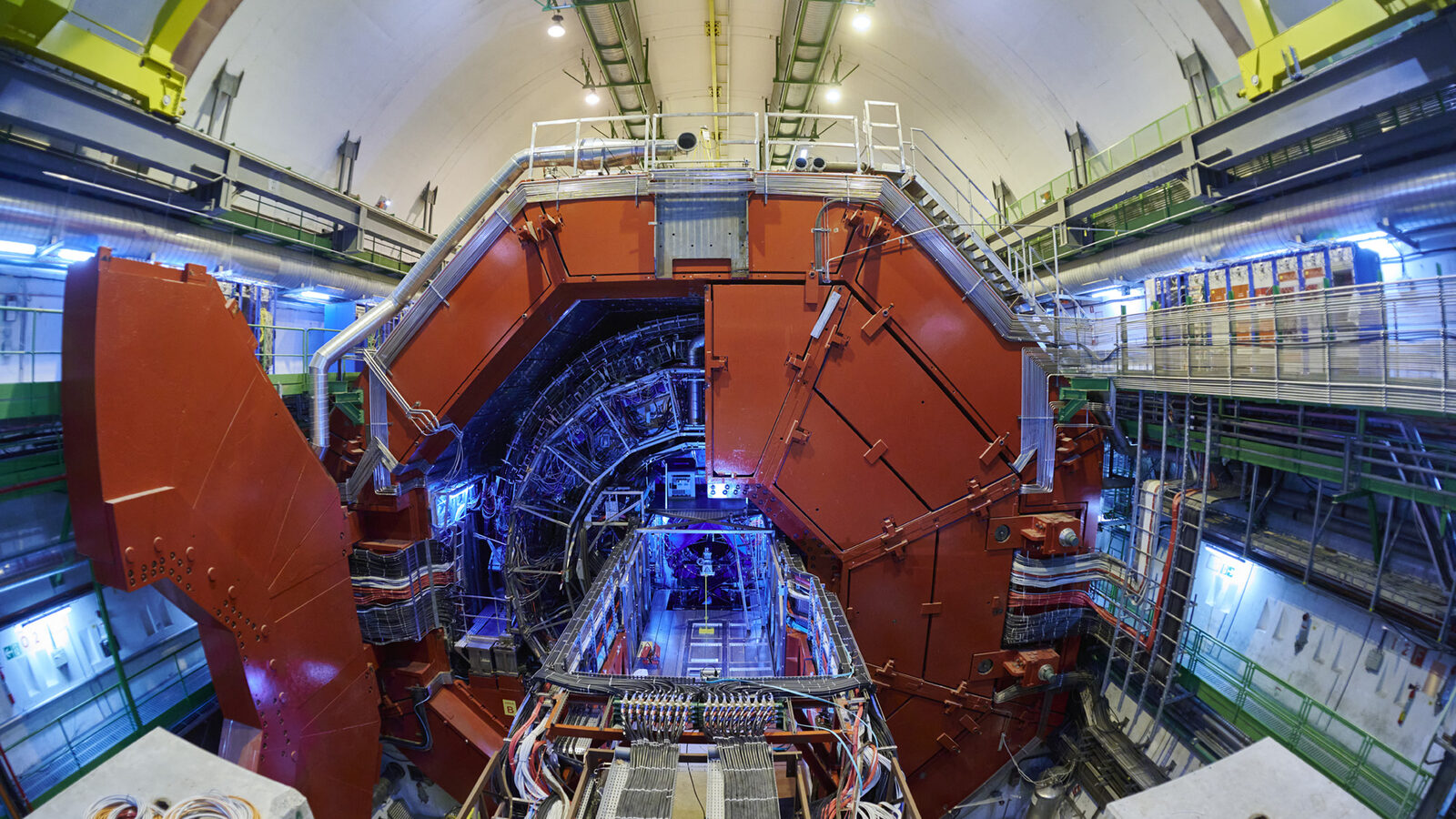
In 2023, the ALICE experiment was ready for their best year yet, until a mysterious signal threatened everything. As the LHC wraps up its 2025 lead-ion run, physicists recall how they worked together to solve the puzzle.
Neutrinos are like no other particle in the universe. The more we learn about these "little neutral ones," the less we seem to understand them. Physicists do not even yet know what type of particle the neutrino is.
As the newly-appointed Director of the Global Design Effort (GDE) for the proposed International Linear Collider (ILC), Barry Barish will lead teams of scientists worldwide in the research and development projects advancing the design of the next-generation discovery machine in high-energy physic
As spring arrived, so did the kids. Their knees wobbly and eyes wide open, they stayed close to their moms. Dad, weighing more than 2500 pounds, made sure that no harm came the babies' way.
In 1905, Albert Einstein published his Special Theory of Relativity and overthrew the notions of absolute space and time. His later General Theory of Relativity was so revolutionary that even he had trouble accepting its full implications.
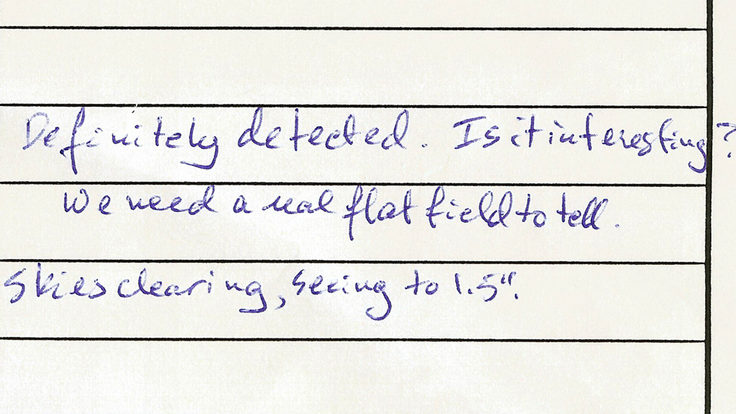
On the night of April 27, 2002, the Apache Point 3.5 m telescope in New Mexico captured the light signature of SDSS 1148+5251, the most distant quasar known. A quasar is a compact, ultraluminous object thought to be powered by material falling into a giant black hole.
In less than three years, scientists will start up the world's largest scientific instrument: The Large Hadron Collider. US scientists have built key components for the machine and its experiments, paving the way for their participation in a decade of discoveries.