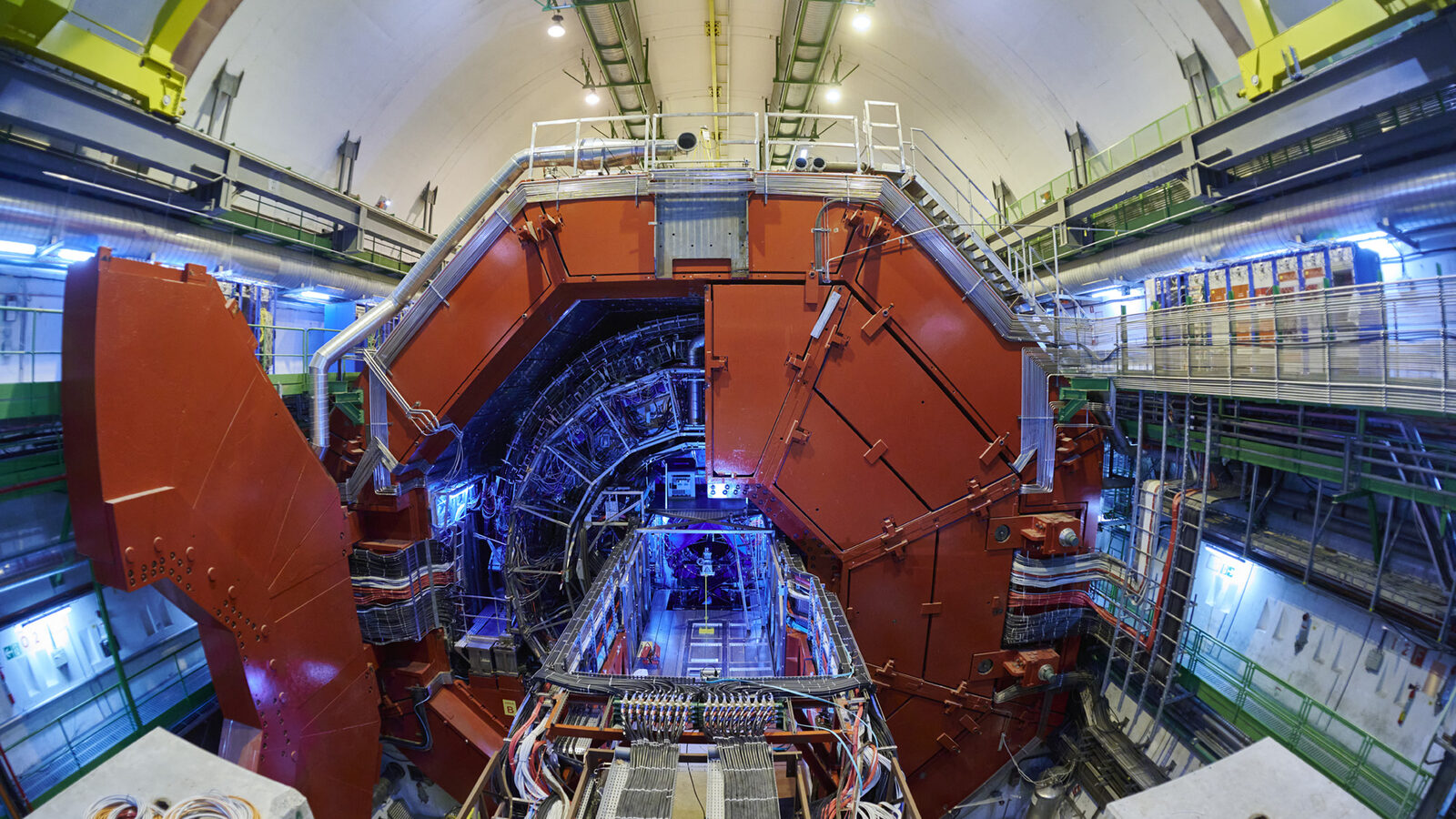
In 2023, the ALICE experiment was ready for their best year yet, until a mysterious signal threatened everything. As the LHC wraps up its 2025 lead-ion run, physicists recall how they worked together to solve the puzzle.
Tomorrow's particle physics experiments are redrawing the map for scientific collaboration. Although the field has long been accustomed to large groups of scientists, life in the new CERN collaborations will surely be different.
In 1998, theorists Lisa Randall and Raman Sundrum met in a coffee shop in Boston to discuss how extra dimensions of space would change the predictions of particle theories.
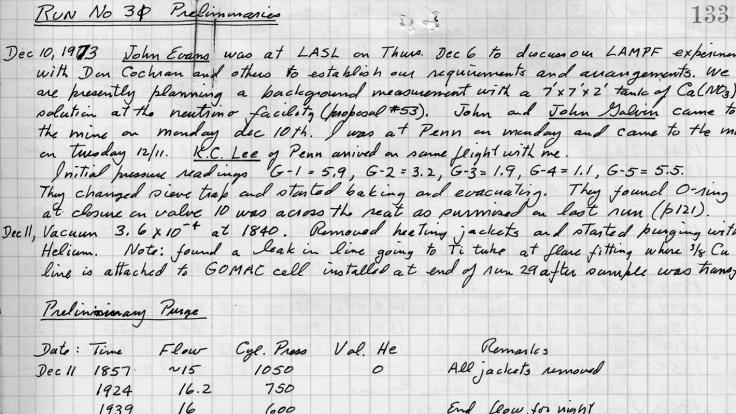
Deep in the Homestake Gold Mine in Lead, South Dakota, during the early 1970s, Ray Davis monitored a 100,000-gallon tank of perchloroethylene, a chlorine-rich dry-cleaning chemical.
As the newly-appointed Director of the Global Design Effort (GDE) for the proposed International Linear Collider (ILC), Barry Barish will lead teams of scientists worldwide in the research and development projects advancing the design of the next-generation discovery machine in high-energy physic
As spring arrived, so did the kids. Their knees wobbly and eyes wide open, they stayed close to their moms. Dad, weighing more than 2500 pounds, made sure that no harm came the babies' way.
In 1905, Albert Einstein published his Special Theory of Relativity and overthrew the notions of absolute space and time. His later General Theory of Relativity was so revolutionary that even he had trouble accepting its full implications.