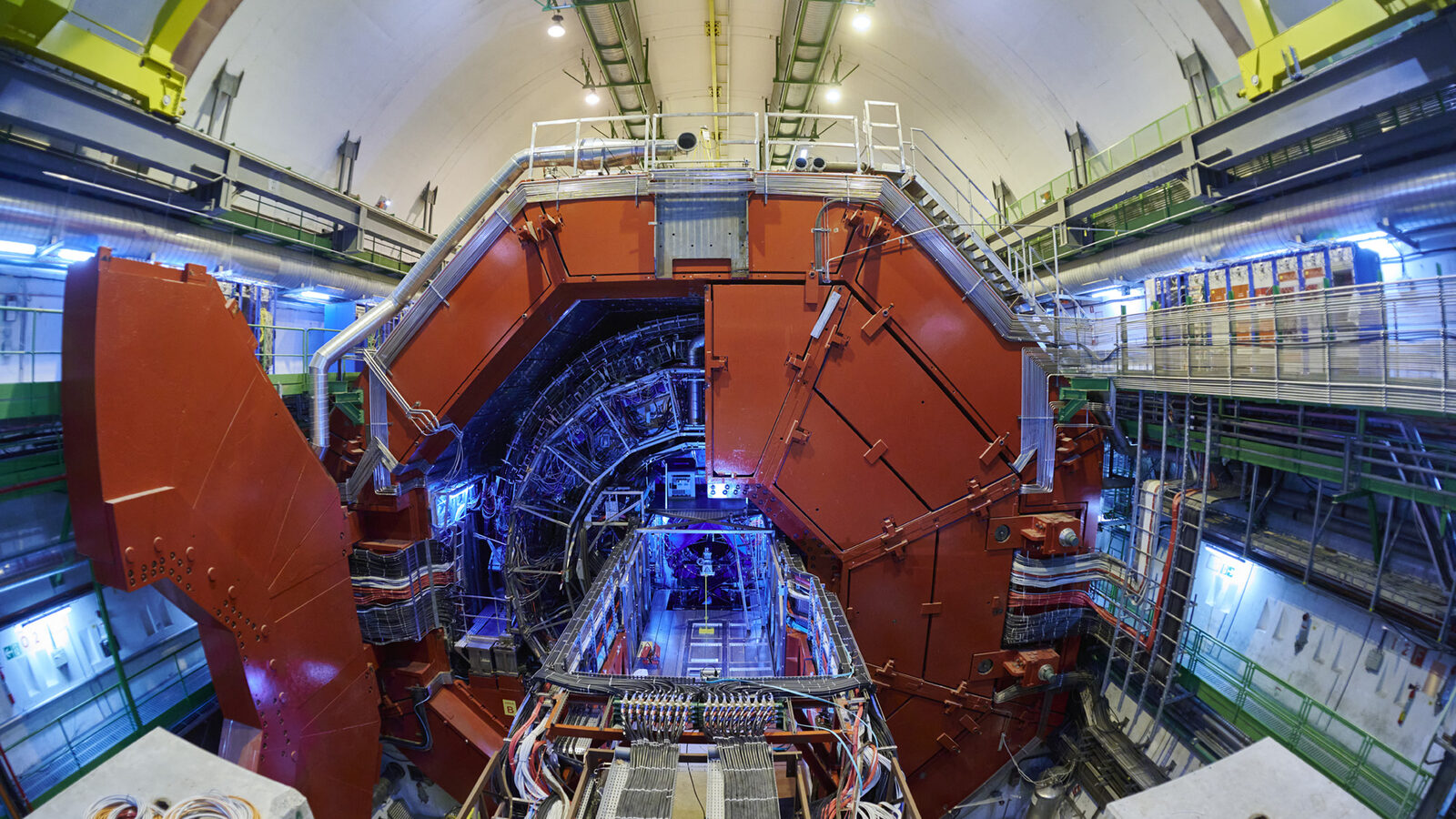
In 2023, the ALICE experiment was ready for their best year yet, until a mysterious signal threatened everything. As the LHC wraps up its 2025 lead-ion run, physicists recall how they worked together to solve the puzzle.
Phillipe Galvez wasn't even supposed to be on the flight. After a delay of his original flight, from Los Angeles to Frankfurt, he was placed on a flight to Munich.
The International Linear Collider is a proposed new electron-positron collider. Together with the Large Hadron Collider at CERN, it would allow physicists to explore energy regions beyond the reach of today's accelerators.
Planning designing, and funding the proposed International Linear Collider (ILC), a 40-kilometer-long electron-positron collider costing billions of dollars, will require global participation and global organization.
In May, Fermilab accelerator experts began to speculate about when the Tevatron collider would hit the inverse femtobarn mark, a measure of the gazillions of collisions produced since March 2001.
Research papers are traditionally written about data gathered in an experiment. However, research papers are also published before an experiment has even begun, and the International Linear Collider is an example.
A physicist who has devoted his career to developing linear colliders confronts the decision that changed the global physics community and the focus of his work.
When was the last time you met three Einsteins? Masa Hokari and his son Harumi had this opportunity during Stanford University's Community Day, held in April.
Robert Wilson, the first director of Fermilab, was both scientist and artist. There are many anecdotes about his interest in and promotion of art at Fermilab. Over many years I have observed that physical scientists often have a deep interest in the arts.