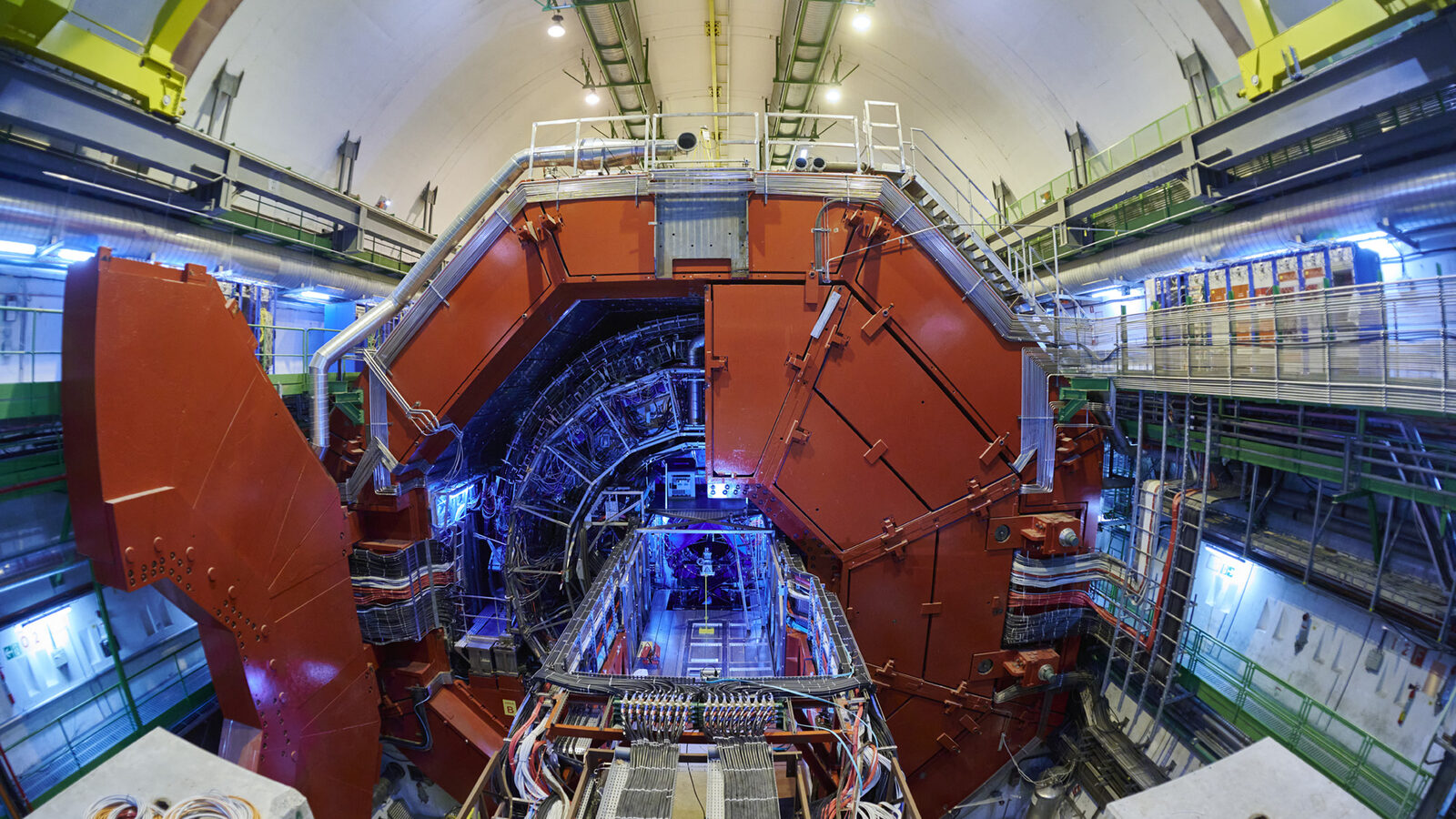
In 2023, the ALICE experiment was ready for their best year yet, until a mysterious signal threatened everything. As the LHC wraps up its 2025 lead-ion run, physicists recall how they worked together to solve the puzzle.
Designing the International Linear Collider is a global enterprise. Physicists and accelerator experts from around the world are collaborating to design the approximately 25-mile-long machine.
Photo: Diana Rogers, SLAC
Busloads of new Stanford graduates and their families admired the field of golden grass on SLAC's eastern-most hill on a sunny Saturday in May. But their stunned tour guides looked in dismay as they sought 50 bright red balloons.
Particle physics is at a critical time, and its future depends on how well scientists can make their case to a diverse National Academy of Sciences panel.
As the Global Design Effort for the proposed International Linear Collider starts to take shape, an international collaboration of scientists simultaneously works on an alternative linear collider technology that pushes physics and engineering to the edge.
The International Linear Collider is a proposed new electron-positron collider. Together with the Large Hadron Collider at CERN, it would allow physicists to explore energy regions beyond the reach of today's accelerators.
The 1940s saw the origins of linear electron accelerators that directly led to the 2-mile-long accelerator at Stanford Linear Accelerator Center. SLAC archivist Jean Deken presents a pictorial history of early linear accelerator development at Stanford University.