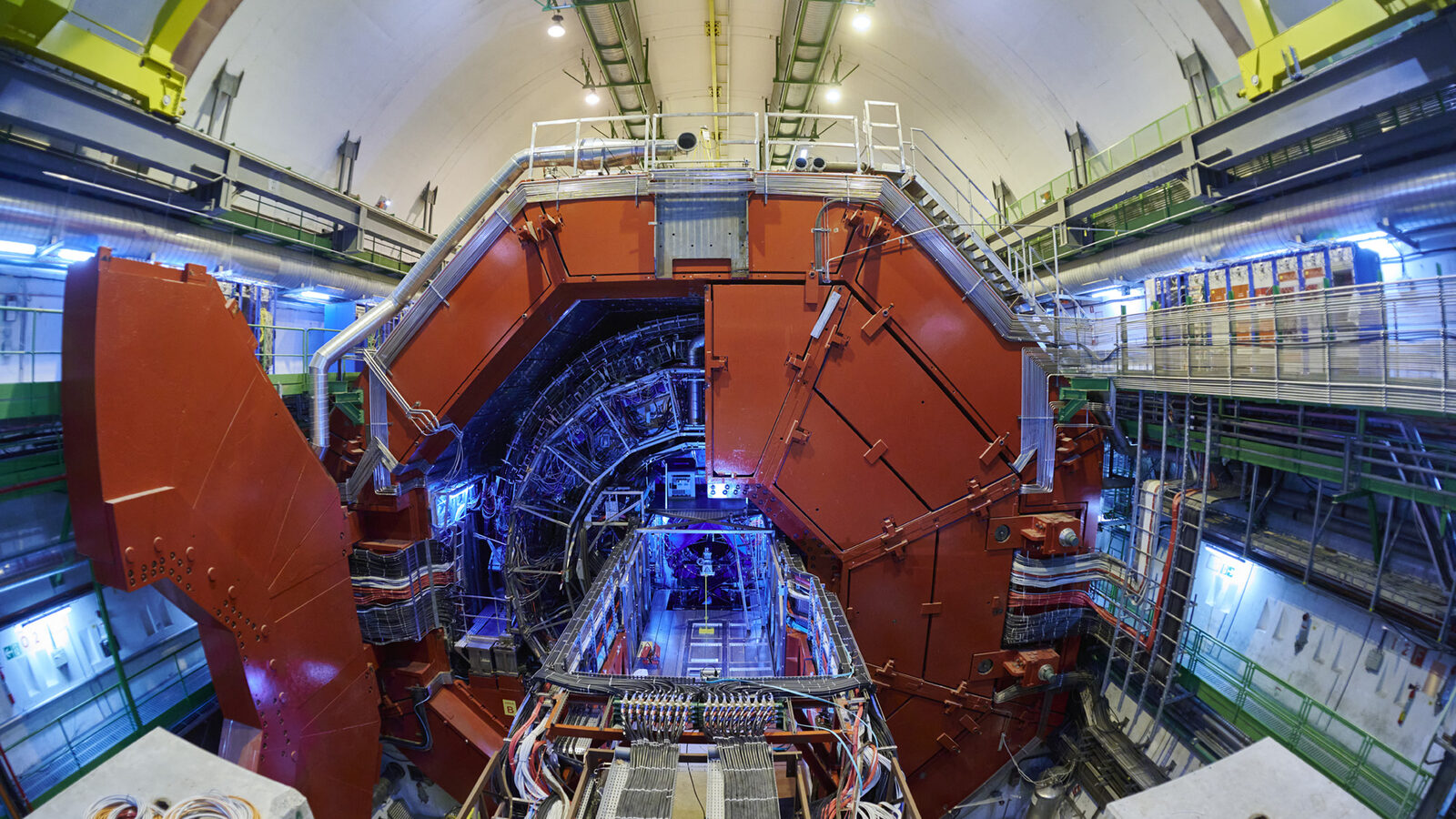
In 2023, the ALICE experiment was ready for their best year yet, until a mysterious signal threatened everything. As the LHC wraps up its 2025 lead-ion run, physicists recall how they worked together to solve the puzzle.
As the Global Design Effort for the proposed International Linear Collider starts to take shape, an international collaboration of scientists simultaneously works on an alternative linear collider technology that pushes physics and engineering to the edge.
The International Linear Collider is a proposed new electron-positron collider. Together with the Large Hadron Collider at CERN, it would allow physicists to explore energy regions beyond the reach of today's accelerators.
The 1940s saw the origins of linear electron accelerators that directly led to the 2-mile-long accelerator at Stanford Linear Accelerator Center. SLAC archivist Jean Deken presents a pictorial history of early linear accelerator development at Stanford University.
Photo: Diana Rogers, SLAC
Busloads of new Stanford graduates and their families admired the field of golden grass on SLAC's eastern-most hill on a sunny Saturday in May. But their stunned tour guides looked in dismay as they sought 50 bright red balloons.
Planning designing, and funding the proposed International Linear Collider (ILC), a 40-kilometer-long electron-positron collider costing billions of dollars, will require global participation and global organization.
In mid-June, Fermilab employees got a surprise as they drove through the DZero parking lot. Sitting in a prime spot in the small parking lot in front of the main building was a car, completely covered in aluminum foil and adorned with decorations.
In February, the Department of Energy's Office of Science and the National Science Foundation asked the High Energy Physics Advisory Panel "to form a committee to write a document" that addresses the synergies and complementarities of the Large Hadron Collider, now under constructi