This year’s Nobel Prize laureates conducted experiments with an electrical circuit in which they demonstrated both quantum mechanical tunnelling and quantised energy levels in a system big enough to be held in the hand.
Scientists at Fermilab and Caltech have demonstrated the feasibility of their method of using squeezed light to dramatically increase the rate at which quantum networks can generate entangled particle pairs over long distances.
Smoot, a physicist at UC Berkeley and Berkeley Lab, shared the 2006 Nobel Prize in Physics for detecting minute temperature variations in the cosmic microwave background, a prediction of the Big Bang theory.
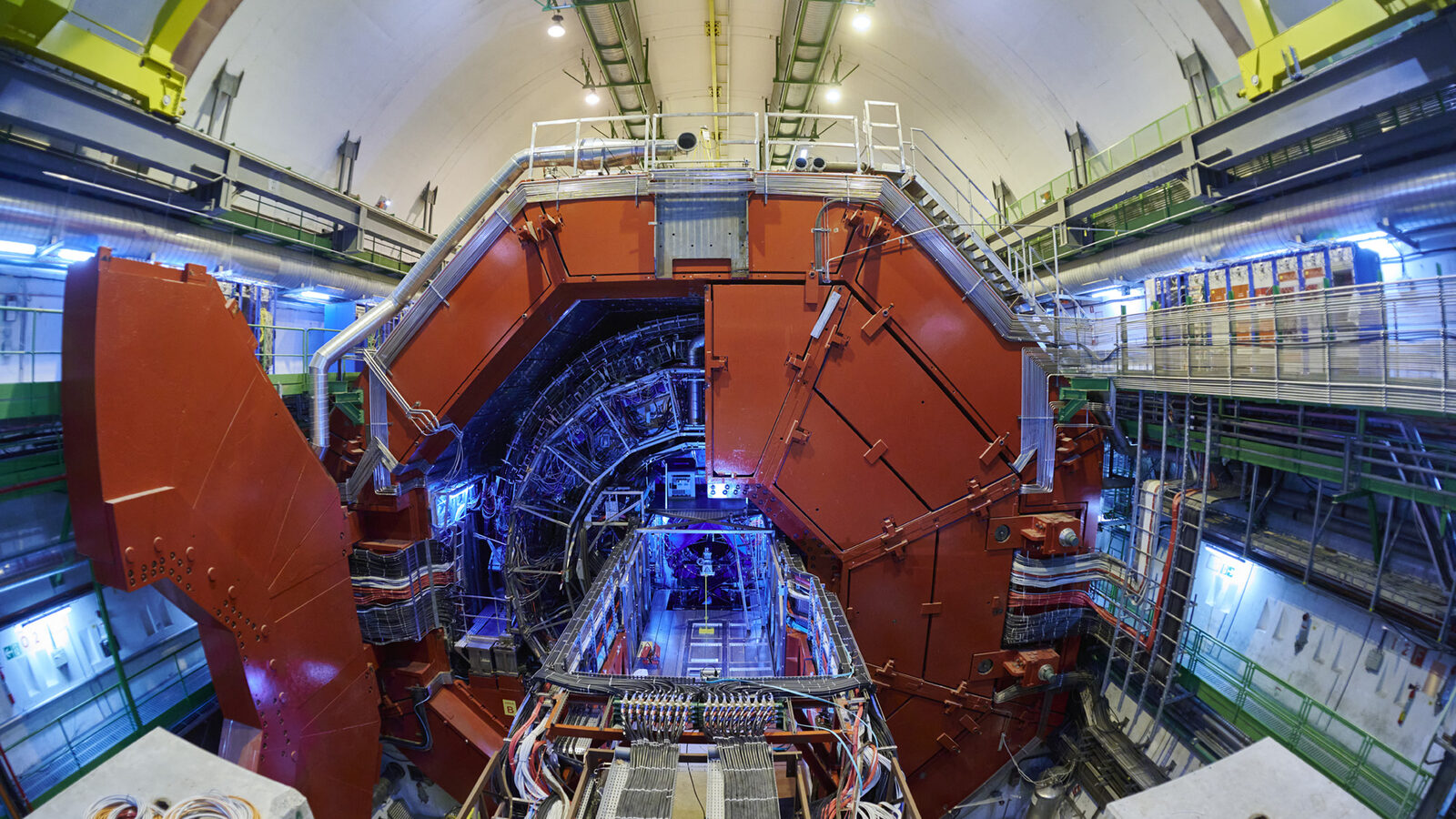
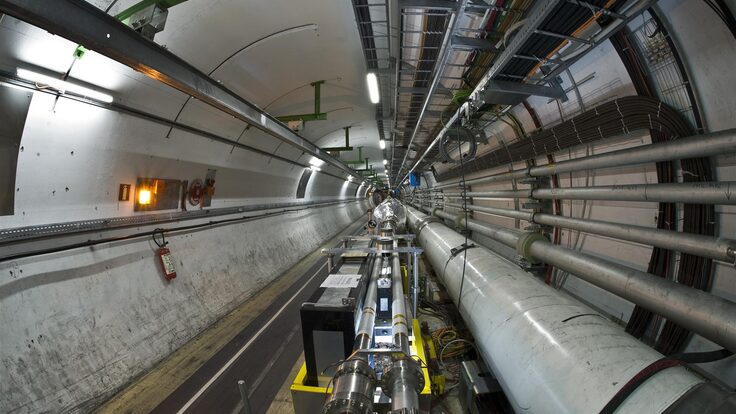
In 2023, the ALICE experiment was ready for their best year yet, until a mysterious signal threatened everything. As the LHC wraps up its 2025 lead-ion run, physicists recall how they worked together to solve the puzzle.
LHCb’s discovery of proton-like particles behaving differently than their antimatter counterparts brings scientists one step closer to finding out why antimatter disappeared in the early universe.