An international team of astrophysicists has discovered a galaxy 65 million light years away with so little dark matter that it may contain none at all.
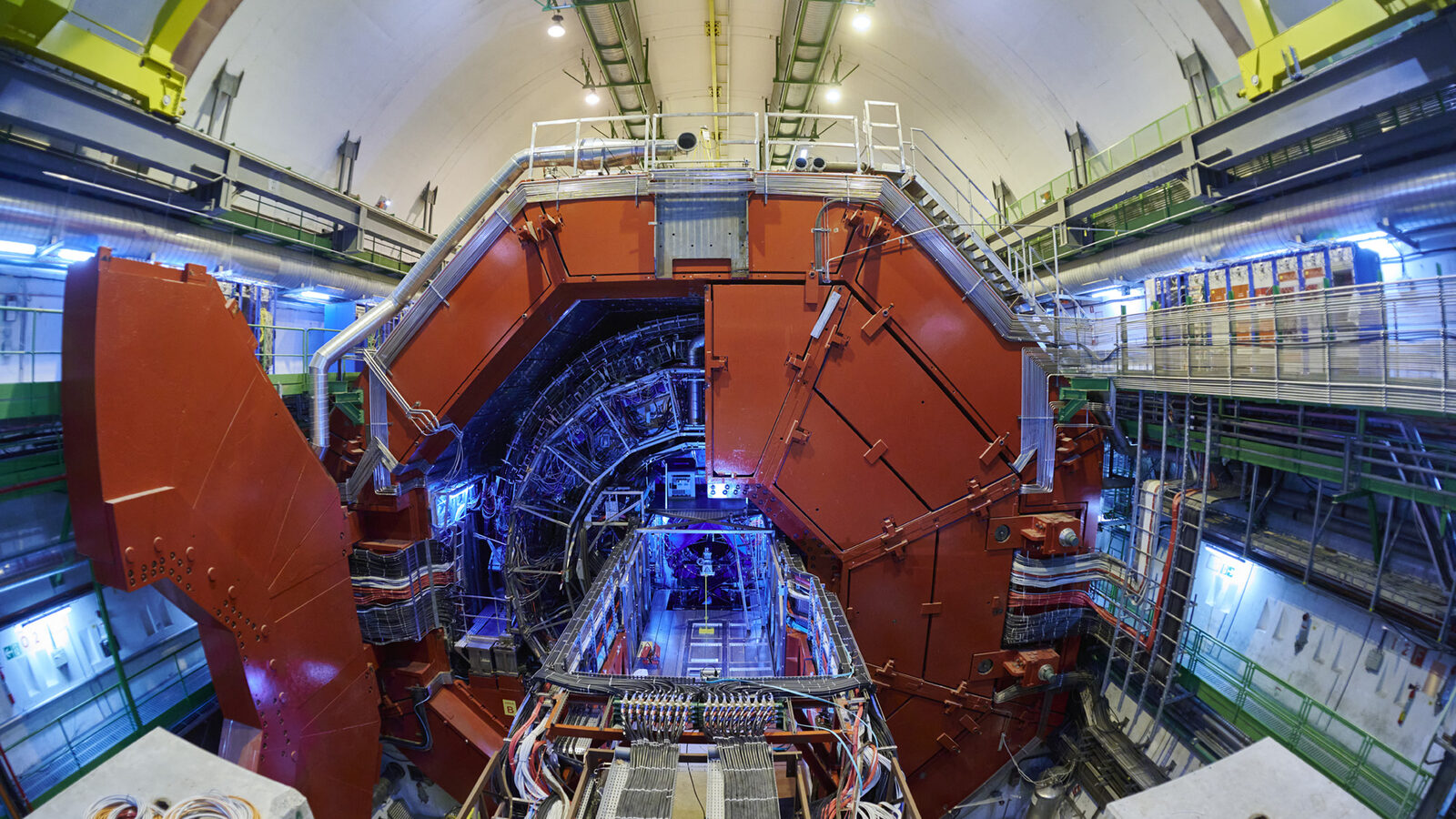
In 2023, the ALICE experiment was ready for their best year yet, until a mysterious signal threatened everything. As the LHC wraps up its 2025 lead-ion run, physicists recall how they worked together to solve the puzzle.
The SLAC archives, in the windowless basement of the Central Laboratory Annex, are no greenhouse. Yet for the past few years, a small tree has adorned the den of SLAC's archivist Jean Deken.
SPIRES is not only an archive for scientific papers; it also provides information on researchers. The HEPNames database contains the names and verified records of over 7000 high-energy physicists, from graduate student to professor emeritus.
Louis Barrett, physicist at Western Washington University, drives a lot. His daily commute to the university, located in Bellingham, Washington, is more than 80 miles.
Michael Salamon brings an outward vision to Office of Science and Technology Policy. He says Walt Whitman got it wrong: the more one learns about nature, the more beautiful it becomes.
Almost in time with the rhythmic open-mouthed chewing and the occasional call for more ketchup during lunchtime at Fermilab's day care center comes the repeated mantra, "Careful of your milk."
More than 500 tons of niobium would go into building the ILC. What's so great about niobium? Where does it come from? And is the Earth's supply going to run out?