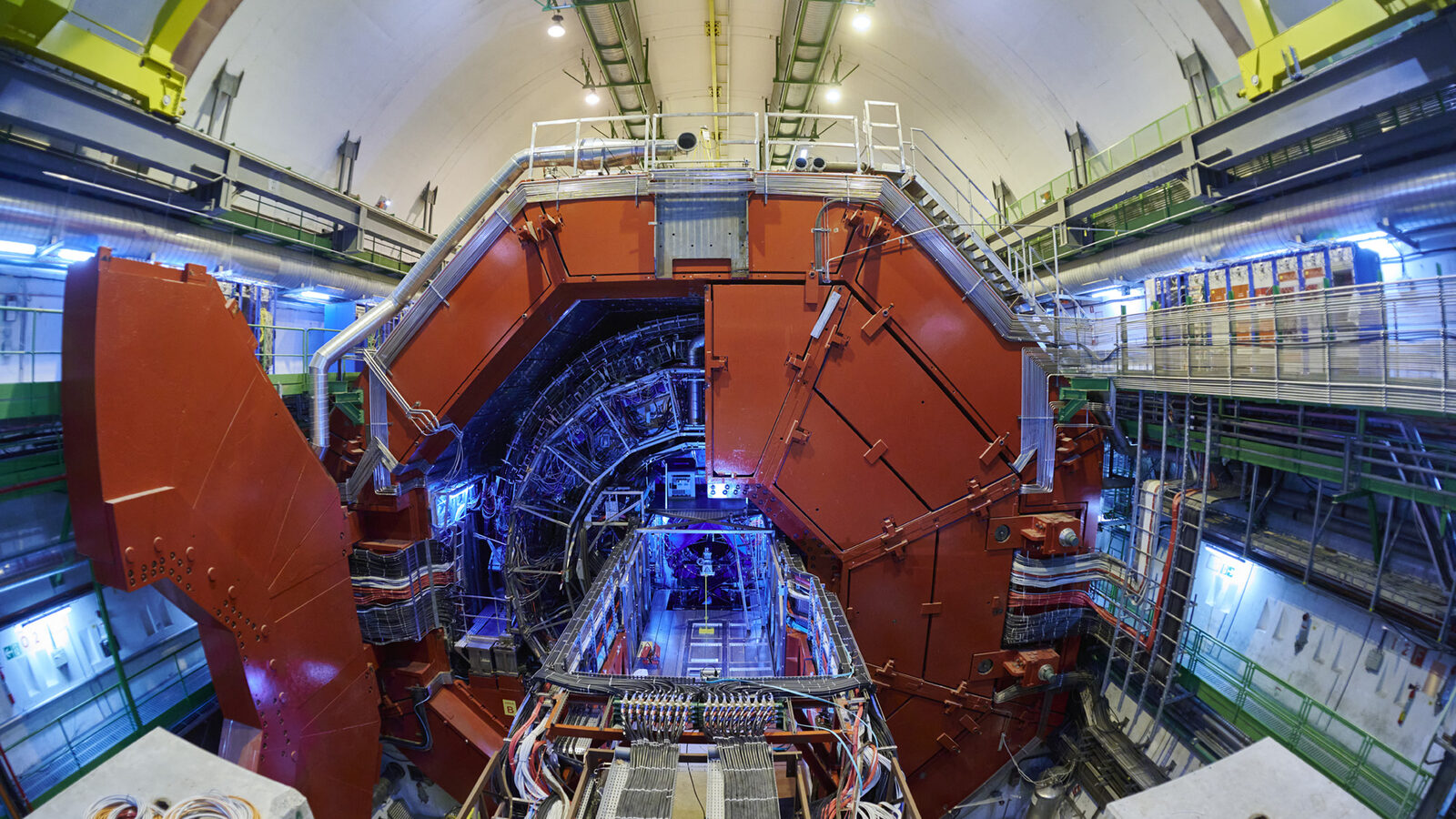
In 2023, the ALICE experiment was ready for their best year yet, until a mysterious signal threatened everything. As the LHC wraps up its 2025 lead-ion run, physicists recall how they worked together to solve the puzzle.
Believe it or not, most of Fermilab's power comes from pi. Electrical power, that is, as the shape of the lab's power poles is modeled after pi, the symbol for the famous number.
Nearly 700 physicists from around the world met in Snowmass, Colorado, to advance plans to create an International Linear Collider, a next generation machine that would answer the most fundamental questions about the universe.
Like climbers assessing a new route before making the ascent, physicists have been looking for footholds on a vertiginous new terrain. These footholds contain important information for trekking to TeV heights (the lofty trillion electron volts energy scales of future colliders).
In need of a computer monitor? How about a forklift? Or maybe a sousaphone? If you are working for the US federal government or an approved agency, all this and more is available to your organization—for merely the cost of shipping a few boxes or a crate.
After darkness sets in each night, a wall of TV monitors in the control room of Apache Point Observatory continually displays the telescope's view of the heavens.
The amazing properties of spider webs have fascinated scientists for years. Some of the mysteries of the spider's thread (such as the radii and spirals of threads produced by the Nephila pilips spider shown above) are unraveling through the use of synchrotron light sources.