latest news

Muons: Emblems of discovery

01/13/26

Once a surprise to physicists, these particles are useful tools inside and outside the realm of particle physics. 

01/01/06

A dry run for money

Graduate students acclimate to sparse levels of comfort, but present and former Fermilab doctoral students Matt Leslie (Oxford University, CDF), James Monk (Manchester University, DZero), and Simon Waschke (Glasgow University, formerly CDF) are reaching for extremes: Taking a 1987 Renault purchas

01/01/06

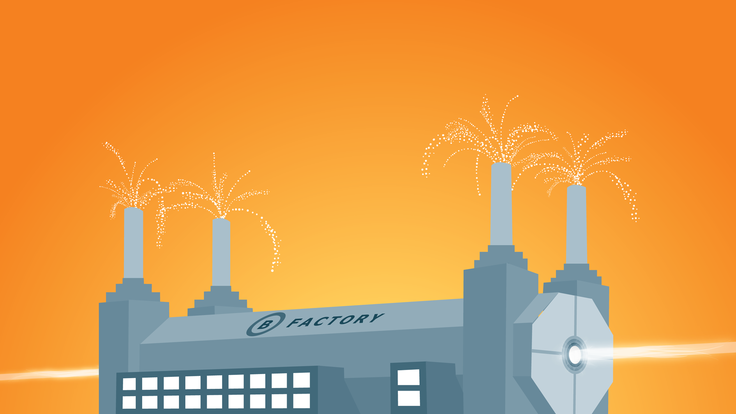
B factories

B factories mass-produce B mesons, particles that contain a bottom quark.

11/01/05

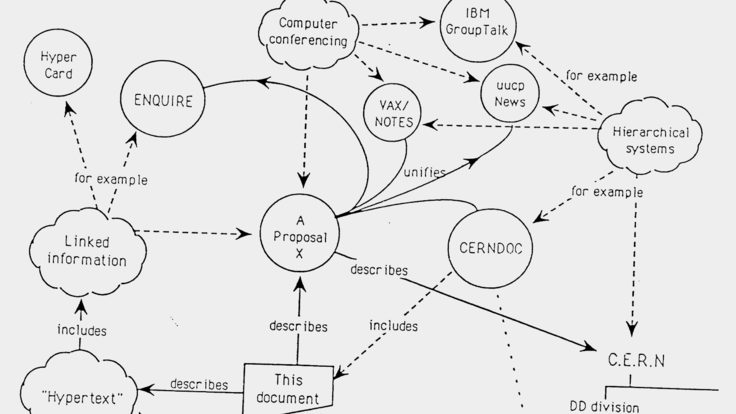
Inventing the web

The idea for the World Wide Web first appeared in a memo dubbed “vague but exciting.”

11/01/05

LIGO analysis

Scientists at the Laser Interferometer Gravitational-Wave Observatory (LIGO) are hoping to catch a wave a gravitational one.

11/01/05

Robert Lang: Much more than paper hats

Artist Robert Lang has folded intricate paper sculptures from flat sheets that, in some cases, started out over nine feet long. He uses the same method many of us used to make cranes and party hats in elementary school–a series of precise folds. But Lang’s designs are far more complex.

11/01/05

A bright machine

The Fermilab Tevatron achieved a world-record peak luminosity, or brightness, in colliding protons and antiprotons on October 4, 2005.

11/01/05

Meet the Grid

Today's cutting-edge scientific projects are larger, more complex, and more expensive than ever. Grid computing provides the resources that allow researchers to share knowledge, data, and computer processing power across boundaries.