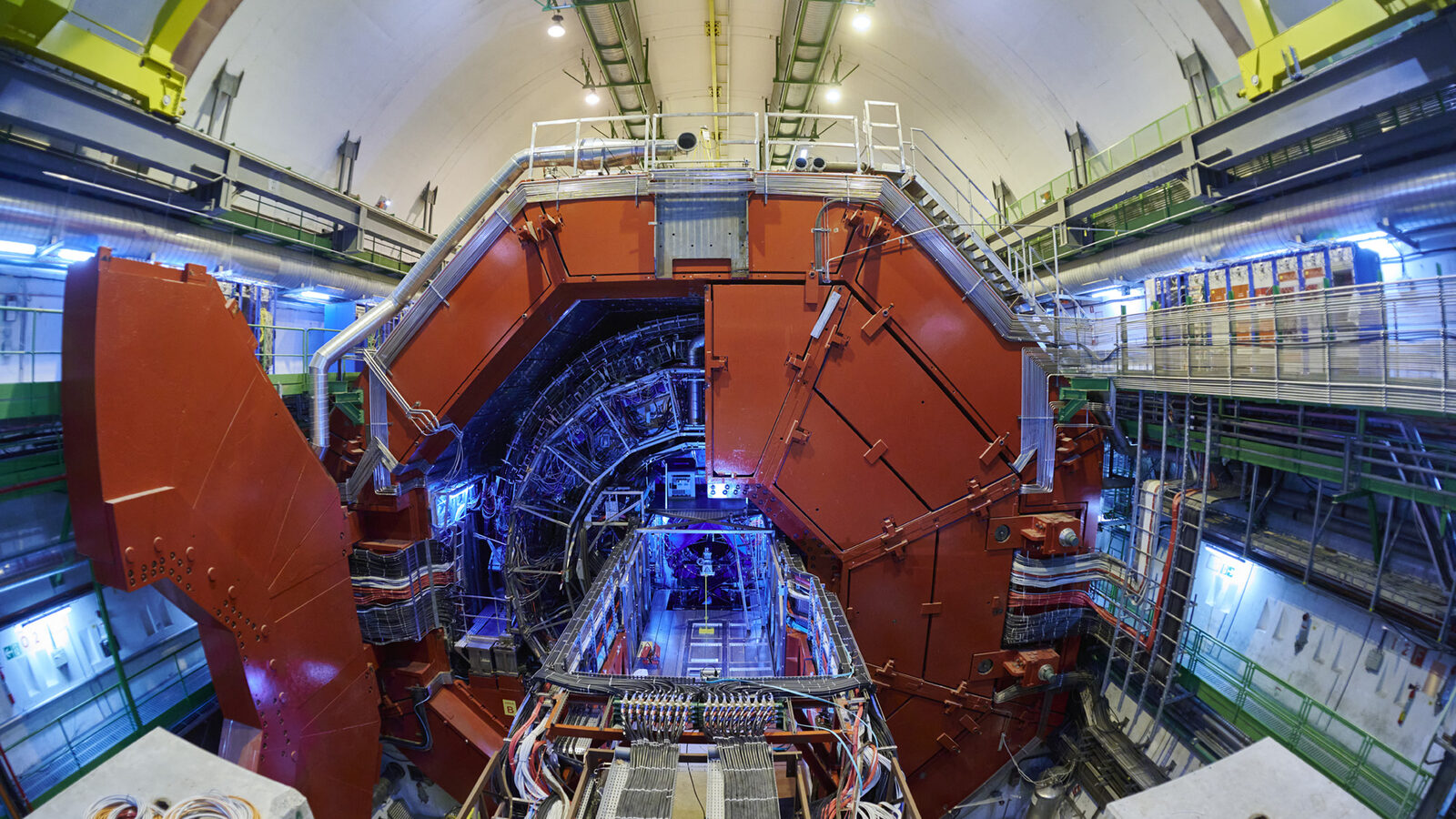
In 2023, the ALICE experiment was ready for their best year yet, until a mysterious signal threatened everything. As the LHC wraps up its 2025 lead-ion run, physicists recall how they worked together to solve the puzzle.
Quick, give an example of a first name of a physicist. Albert? Benjamin? Sure, Albert Einstein and Benjamin Franklin are famous examples. But their first names are rather unusual.
Sometimes it takes the most impressive equipment in the world to find the smallest, most easily overlooked particles in the universe. Fermilab's Neutrinos at the Main Injector (NuMI) project is a perfect example.
During a recent trip to CERN on the Franco-Swiss border, my fellow International Linear Collider communicators and I gathered in the cafeteria for tea and coffee.
Here they measure the time not in minutes or hours. Instead they think in terms of how many antiprotons are ready to stack and how soon the Tevatron will be ready to accept new beam. Or how fast they need to fix something, any time of the day or night. Or how long they can stay awake.
Roger Erickson was annoyed with all the calls to the main control room. People were eager for news of the Stanford Linear Collider (SLC). Was it running? Did they already observe the first Z particle, one of the carriers of the weak force?