In addition to serving as director of a major Department of Energy laboratory, he also became known in his later years for other contributions to academic and public life.
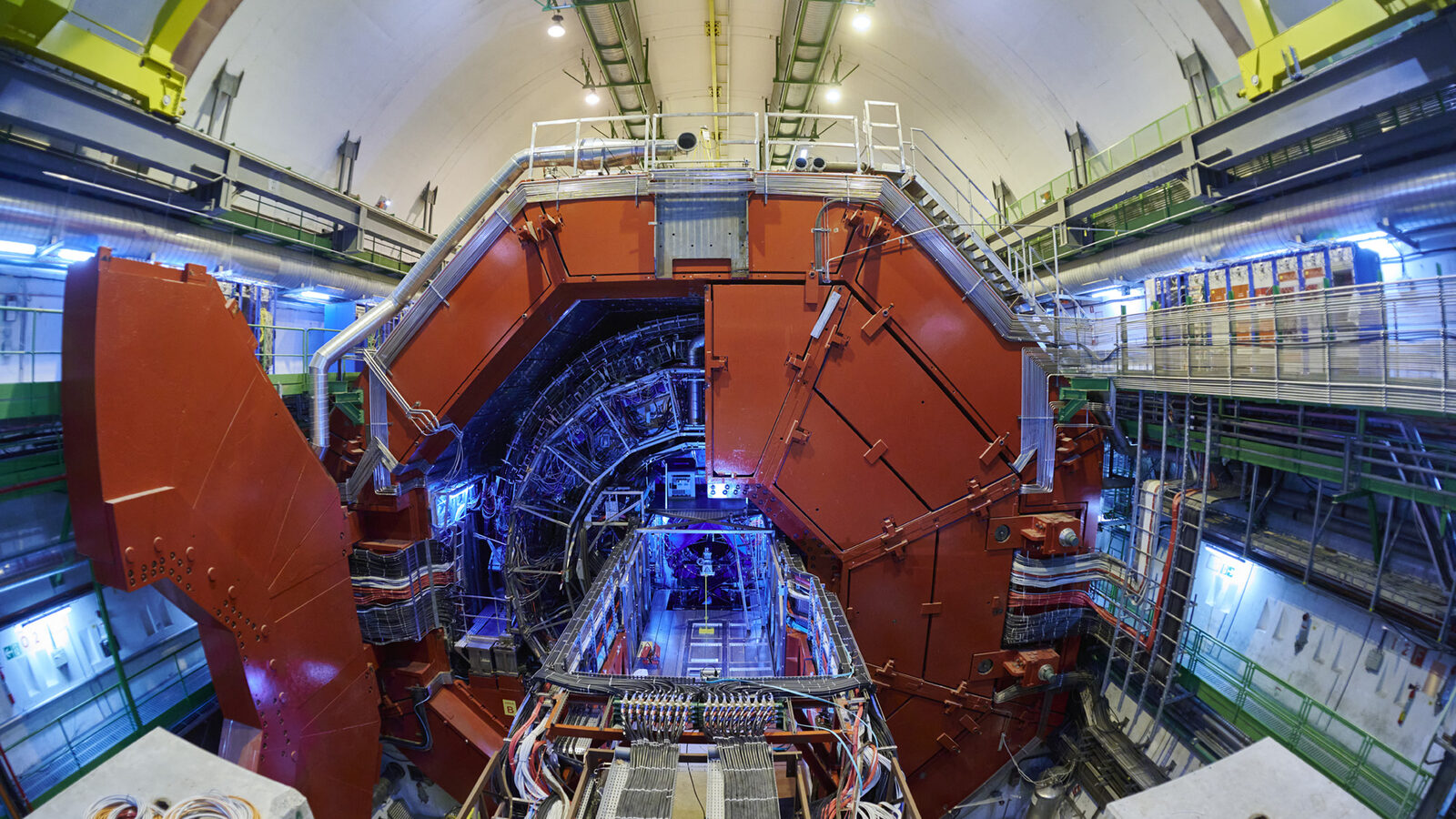
In 2023, the ALICE experiment was ready for their best year yet, until a mysterious signal threatened everything. As the LHC wraps up its 2025 lead-ion run, physicists recall how they worked together to solve the puzzle.
Pakistan does not have a long history of domestic particle physics experiments, but the country is nevertheless finding ways to contribute to international efforts.
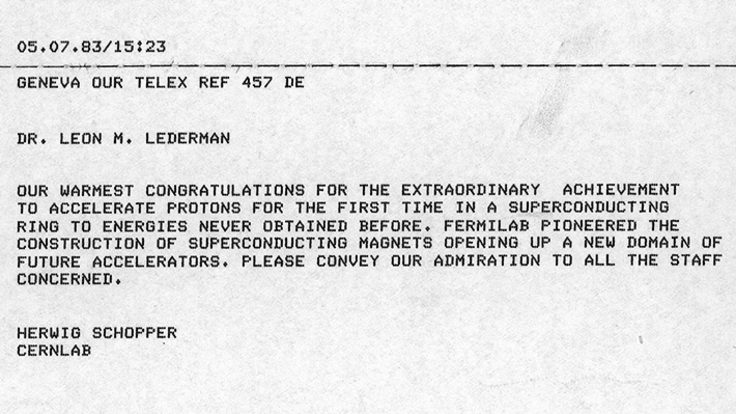
The Tevatron accelerator at Fermilab set a world record on Sunday afternoon, July 3, 1983, achieving a beam energy of 512 billion electronvolts (GeV). Accelerator operators had made the first-ever attempt at accelerating a beam in the Tevatron at 3:12 a.m. that day, reaching 250 GeV.
A newly structured High Energy Physics Advisory Panel met in Washington, DC, to provide advice to the Department of Energy and National Science Foundation and to hear science policy-makers’ responses to the President’s budget request.
A surgeon and a scratch golfer most of his adult life, a US Army officer in World War II, the doctor gave up his medical practice in his 60s while exhibiting increasingly erratic behavior–such as meandering down to a favorite car dealer in his prosperous New Jersey town, and signing the pap
The Stanford Linear Accelerator pumps large amounts of energy into beams of electrons and positrons, sending them into the PEP-II storage ring where the particles can collide, revealing the secrets of fundamental particle processes.
In biology, there is a loose rule of thumb that says the bigger an organism, the longer its life will be. If Fermilab's "Jolly Green Giant" is any indication, the rule may also apply to equipment in high-energy physics.