In addition to serving as director of a major Department of Energy laboratory, he also became known in his later years for other contributions to academic and public life.
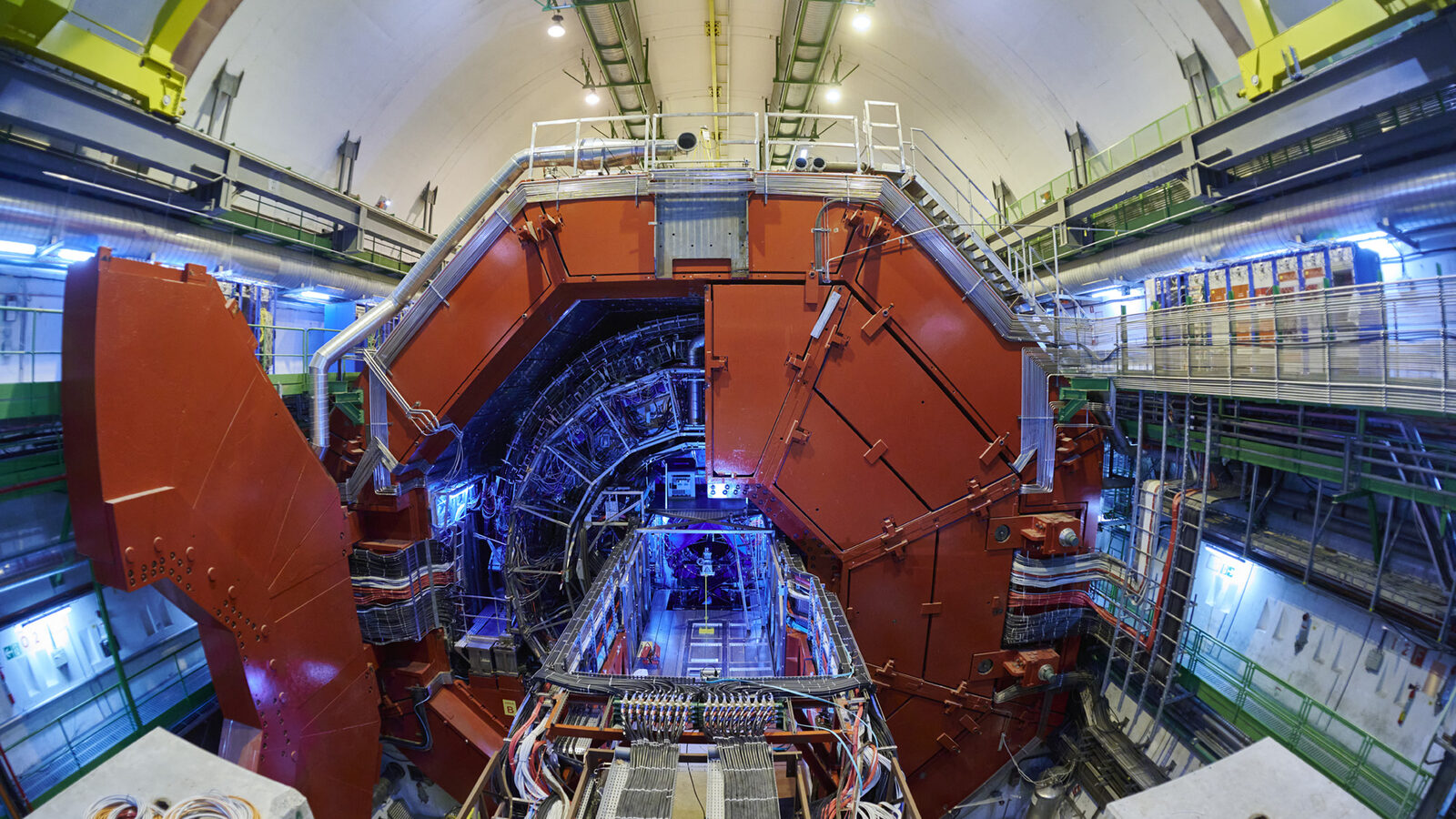
In 2023, the ALICE experiment was ready for their best year yet, until a mysterious signal threatened everything. As the LHC wraps up its 2025 lead-ion run, physicists recall how they worked together to solve the puzzle.
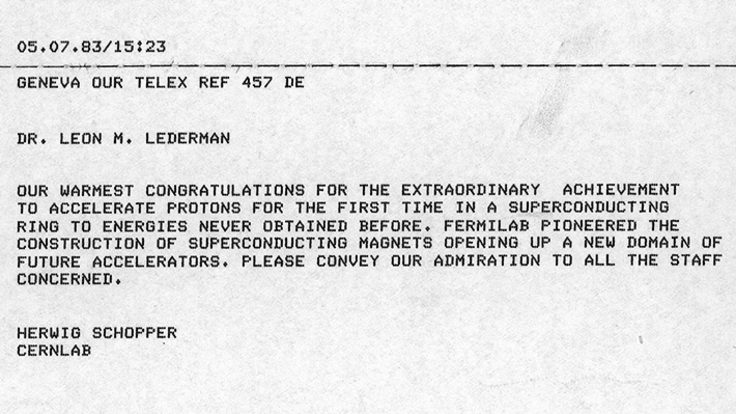
The Tevatron accelerator at Fermilab set a world record on Sunday afternoon, July 3, 1983, achieving a beam energy of 512 billion electronvolts (GeV). Accelerator operators had made the first-ever attempt at accelerating a beam in the Tevatron at 3:12 a.m. that day, reaching 250 GeV.
Here they measure the time not in minutes or hours. Instead they think in terms of how many antiprotons are ready to stack and how soon the Tevatron will be ready to accept new beam. Or how fast they need to fix something, any time of the day or night. Or how long they can stay awake.
In biology, there is a loose rule of thumb that says the bigger an organism, the longer its life will be. If Fermilab's "Jolly Green Giant" is any indication, the rule may also apply to equipment in high-energy physics.
A newly structured High Energy Physics Advisory Panel met in Washington, DC, to provide advice to the Department of Energy and National Science Foundation and to hear science policy-makers’ responses to the President’s budget request.
Quick, give an example of a first name of a physicist. Albert? Benjamin? Sure, Albert Einstein and Benjamin Franklin are famous examples. But their first names are rather unusual.