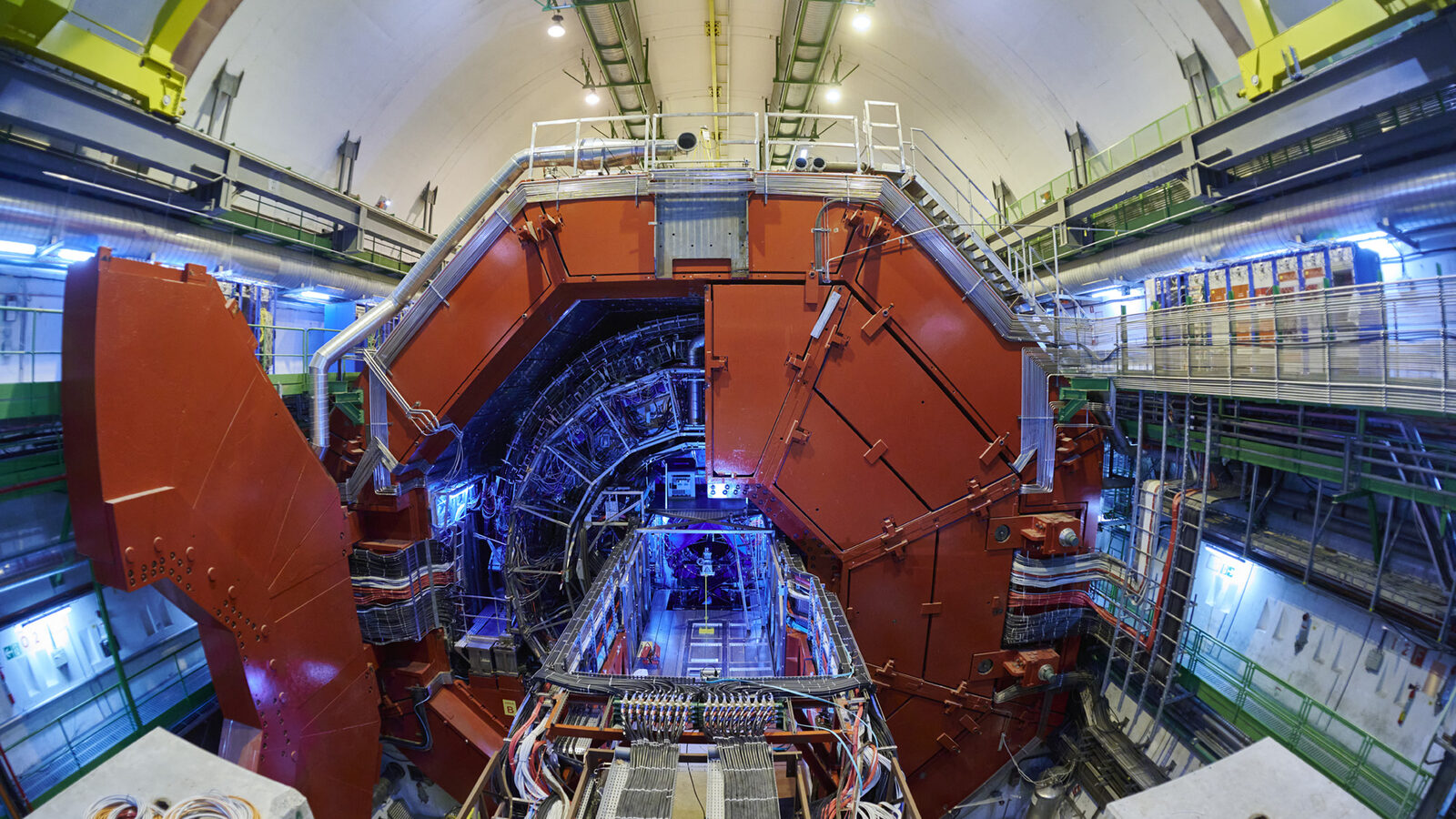
In 2023, the ALICE experiment was ready for their best year yet, until a mysterious signal threatened everything. As the LHC wraps up its 2025 lead-ion run, physicists recall how they worked together to solve the puzzle.
Armed with tin foil, GPS units, and sheets of black paper, two Fermilab educators headed to Bangalore to help high-school and college teachers set up a detector at a local planetarium.
You can't start a high-energy physics program in a remote third-world country overnight. But you might be able to do it in fifteen years. That is what Vietnamese and American physicists hope to do by helping Vietnamese students to become part of the worldwide particle physics community.
The Australian Synchrotron fits into the larger Australian and international research programs. Newly established e-Research Centres will link to the AS as part of the national data grid, allowing for remote collaboration and operation of the facility.
Pakistan does not have a long history of domestic particle physics experiments, but the country is nevertheless finding ways to contribute to international efforts.
Few parts of the world would relish a revisiting of conditions from nearly 200 years ago. For Asia, approximating the past could be the key to the future.