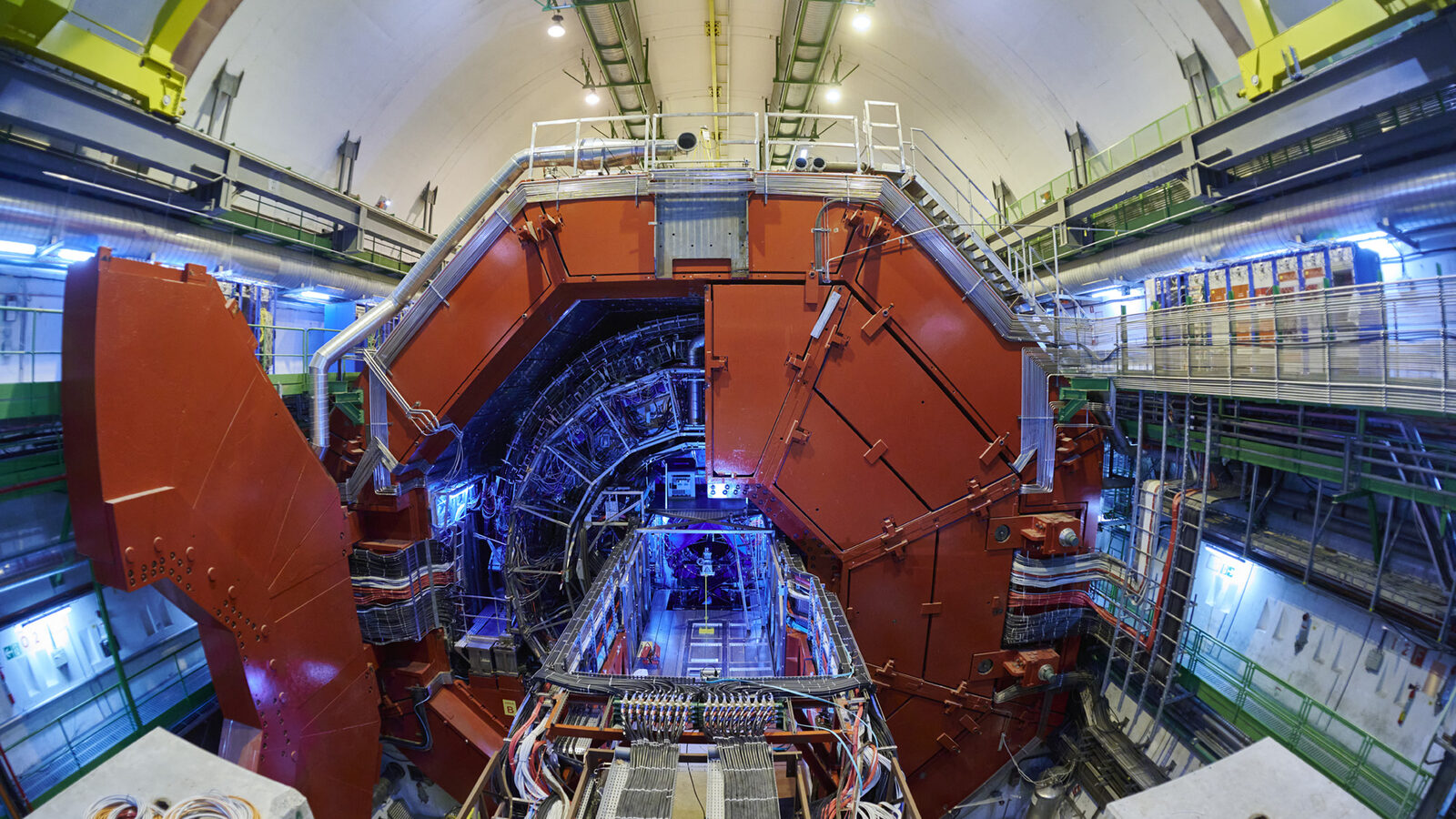
The location and the object for the 200 franc note are not hard to identify as representing CERN and the transformation of energy and matter in the LHC.
A measurement of the rate of change in high-energy neutrinos racing through Earth provides a record-breaking test of Einstein’s special theory of relativity.
In 2023, the ALICE experiment was ready for their best year yet, until a mysterious signal threatened everything. As the LHC wraps up its 2025 lead-ion run, physicists recall how they worked together to solve the puzzle.
The sighting of Jupiter's moons by Galileo Galilei resonates through science and history. Using a handmade telescope in January 1610, Galileo confirmed the Copernican theory that the planets moved around the sun; the Earth was not the center of the solar system.
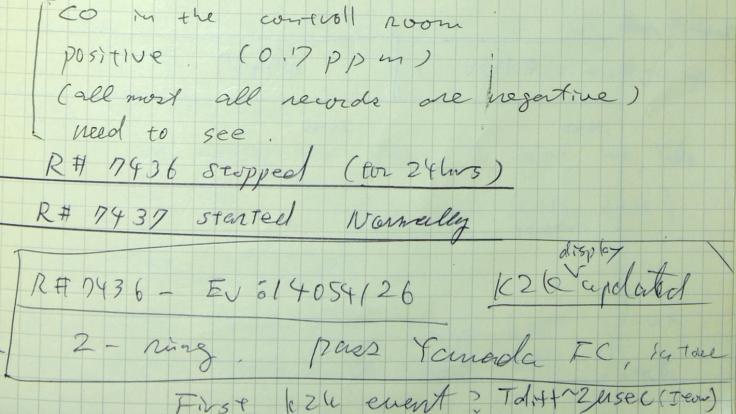
The neutrino experiment K2K (KEK to Kamioka) collaboration shares a logbook with Super-Kamiokande scientists at its far detector site 250 kilometers from KEK in Tsukuba.
U-Ser Jeng begins almost every morning with a refreshing 40-minute bike ride, meandering through a mountain road surrounded by the sound of birds singing.
Armed with tin foil, GPS units, and sheets of black paper, two Fermilab educators headed to Bangalore to help high-school and college teachers set up a detector at a local planetarium.
Forty years ago, Korea was a poor country with low per capita income, considered a developing nation by the rest of the world. Things have changed–enormously. Today, Korea is an industrial powerhouse; its 50 million citizens are recognized for the production of cars and electronic goods.
You can't start a high-energy physics program in a remote third-world country overnight. But you might be able to do it in fifteen years. That is what Vietnamese and American physicists hope to do by helping Vietnamese students to become part of the worldwide particle physics community.