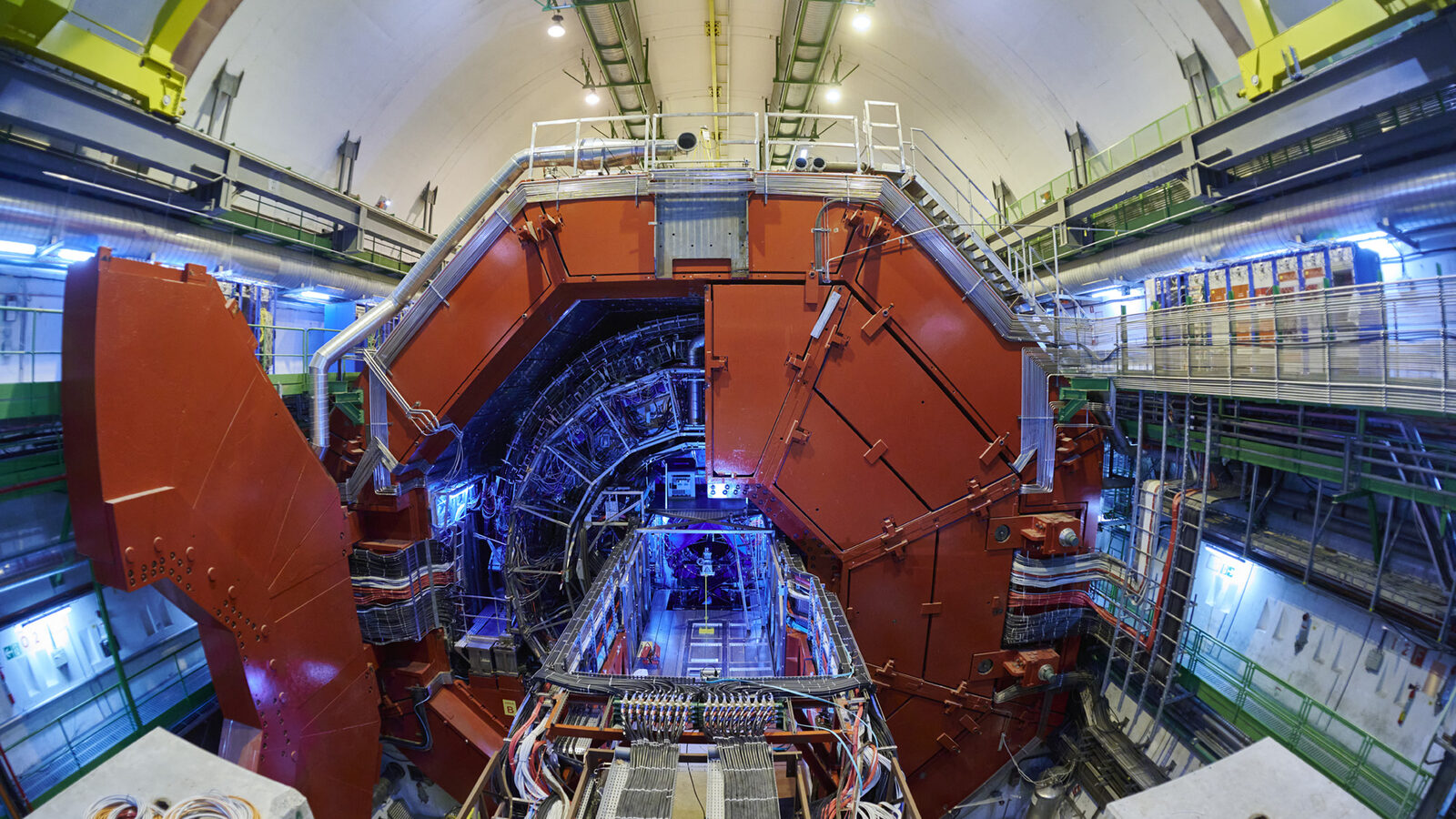
In 2023, the ALICE experiment was ready for their best year yet, until a mysterious signal threatened everything. As the LHC wraps up its 2025 lead-ion run, physicists recall how they worked together to solve the puzzle.
Building the parts for the Large Hadron Collider has presented challenges but taught many lessons for both particle physics laboratories and their industry partners.
The Large Hadron Collider, to start up in late 2007, traces its inception back to 1979. There are already more than 4000 papers in the SPIRES database that are about the LHC, either mentioning its name in the title or referring to it in a significant way.
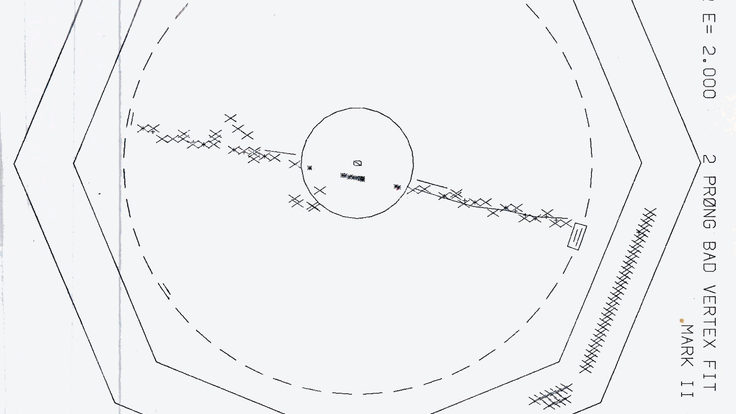
The Positron Electron Project (PEP) collider at the Stanford Linear Accelerator Center produced its first collisions in 1979. All sorts of particles burst out, including the tau lepton, an ephemeral cousin of the electron.
Physics has demonstrated that the everyday phenomena we experience are governed by universal principles applying at time and distance scales far beyond normal human experience.
Have you ever tossed a ball at a wall, playing a game of one-man catch? As you tossed that ball again and again and again, have you ever thought about the chance that it could go right through the wall? According to quantum mechanics, this is a real possibility.
The sighting of Jupiter's moons by Galileo Galilei resonates through science and history. Using a handmade telescope in January 1610, Galileo confirmed the Copernican theory that the planets moved around the sun; the Earth was not the center of the solar system.
Neutron scattering research has improved the quality of many everyday items: Shatter-proof windshields, credit cards, pocket calculators, airplanes, compact discs, and magnetic storage tapes are just some examples.