latest news

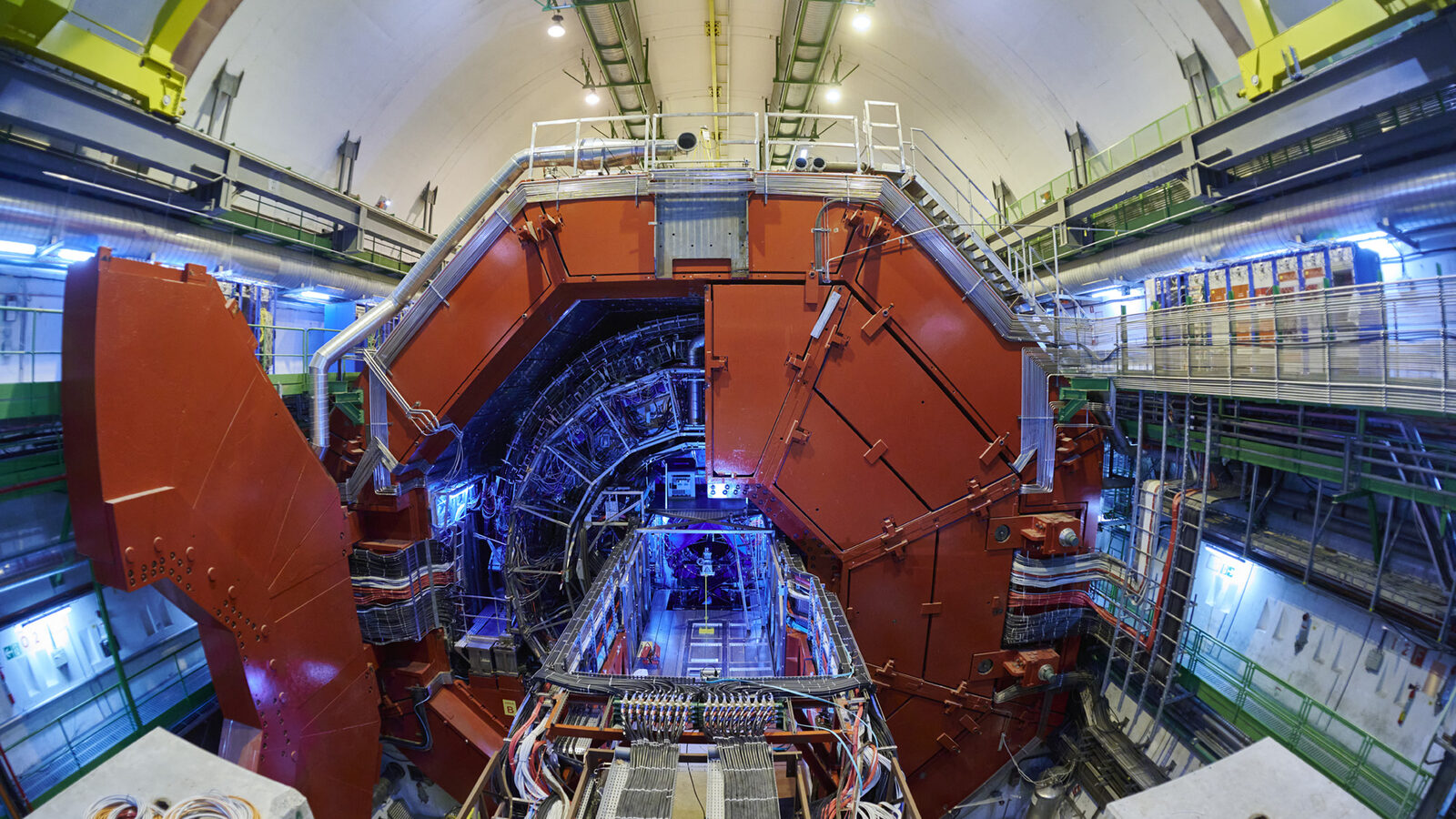
Curiouser and curiouser: a riddle at the ALICE detector

12/09/25

In 2023, the ALICE experiment was ready for their best year yet, until a mysterious signal threatened everything. As the LHC wraps up its 2025 lead-ion run, physicists recall how they worked together to solve the puzzle.

09/01/06

New life for a linac

How the Stanford Linear Accelerator Center is transforming the world's longest linear accelerator into a novel X-ray laser.

08/01/06

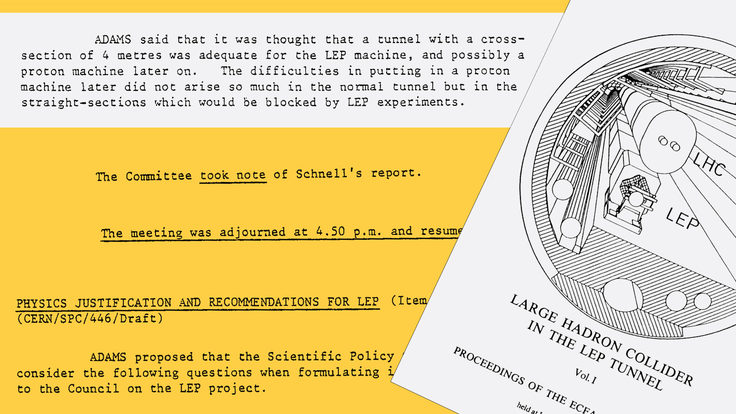
First thoughts of the LHC

At the CERN Scientific Policy Committee meeting held on June 18-19, 1979, the construction of LEP, the Large Electron-Positron collider, was on the agenda.

08/01/06

Higgs boson

The discovery of the Higgs boson provided insight into what gives elementary particles mass.

08/01/06

Magnet Jessica

What do an 18-month-old baby and a 19-foot-long superconducting magnet have in common?

08/01/06

Into a new world of physics and symmetry

The worldwide particle physics community is about to sail on a voyage into a New World of discovery. The Large Hadron Collider, a multi-billion-dollar particle collider that will begin operations in Europe in 2007, will take us into new realms of energy, space, time, and symmetry.

08/01/06

LHC papers

The Large Hadron Collider, to start up in late 2007, traces its inception back to 1979. There are already more than 4000 papers in the SPIRES database that are about the LHC, either mentioning its name in the title or referring to it in a significant way.

08/01/06

Extracting physics from the LHC

A proton travels around a 27-kilometer ring at nearly the speed of light. Along with a bunch of other protons, it passes through the hearts of each of a series of detectors more than ten thousand times per second. Then, on one pass, it slams into a proton coming from the other direction.

08/01/06

Monitoring the LHC from across the ocean

When the LHC collider and its experiments are being switched on in 2007, scientists around the world will be eager to monitor the start-up in real time. But physicists won't have to be at the LHC site to monitor the hardware they built or to determine what tuning they need to do.