The CERN Council has launched the update of the European Strategy for Particle Physics, a two-year process aimed at developing a vision for the future of particle physics in Europe.
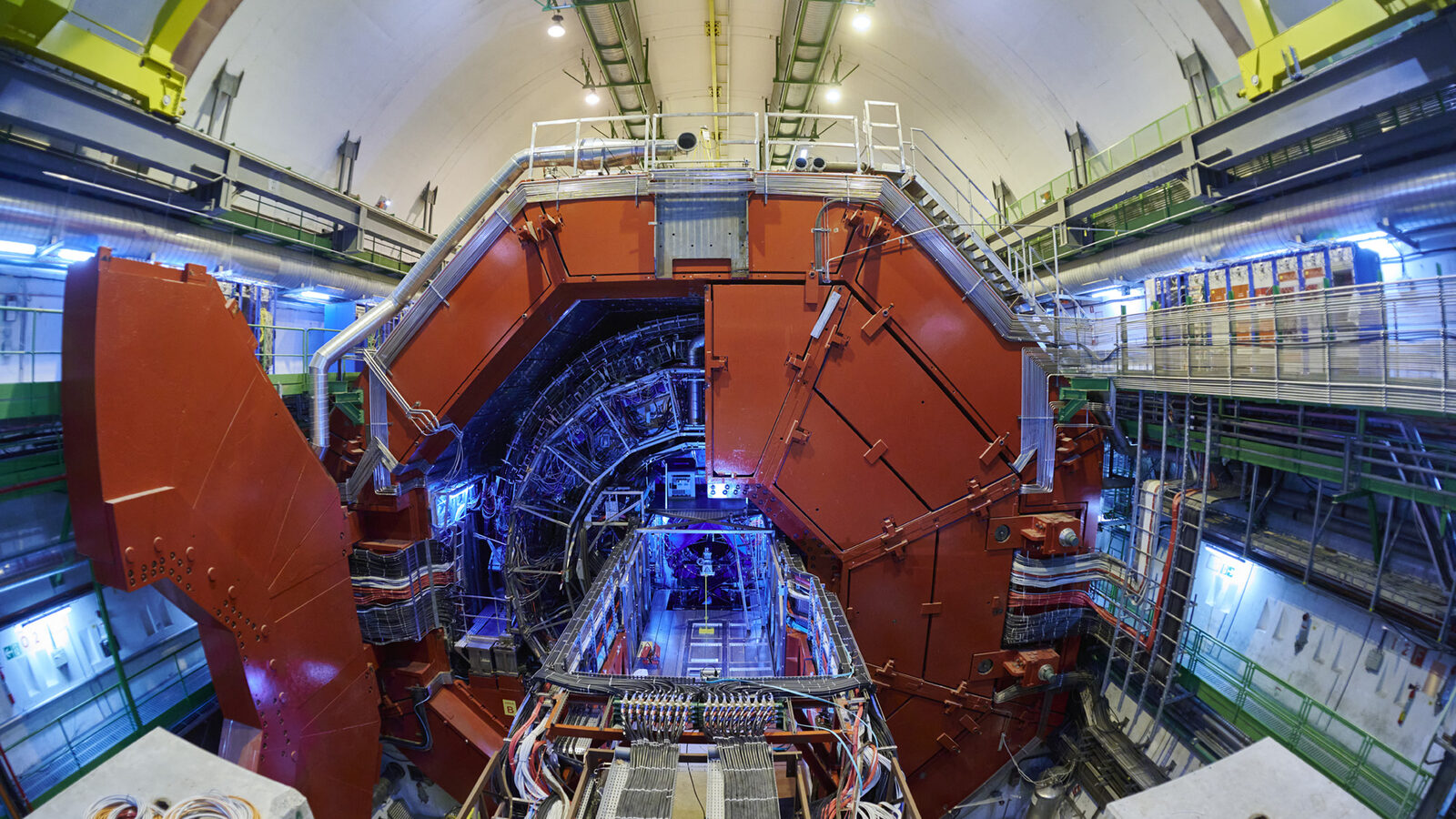
In 2023, the ALICE experiment was ready for their best year yet, until a mysterious signal threatened everything. As the LHC wraps up its 2025 lead-ion run, physicists recall how they worked together to solve the puzzle.
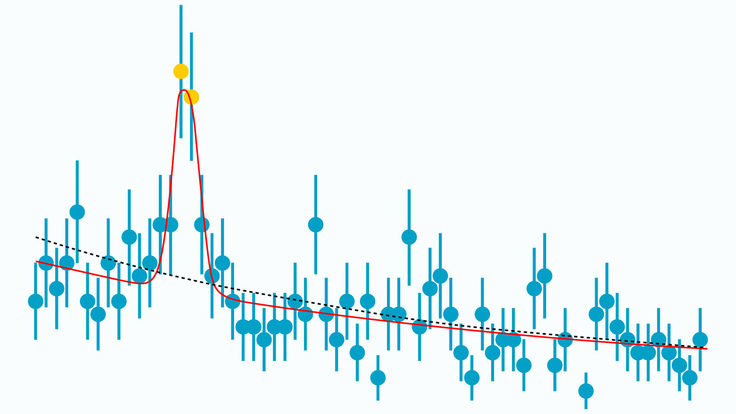
Although initial results were encouraging, physicists searching for an exotic five-quark particle now think it probably doesn't exist. The debate over the pentaquark search shows how science moves forward.
When researchers at Stanford Linear Accelerator Center realized their distance from Antarctica was a scientific inconvenience, they set about crafting an icy world of their own in Menlo Park, California.
When exploring the mysteries of the universe, don't neglect the floorboards. Last December at Fermilab, repairs to the ceiling over the kitchen in the Aspen East users' center, targeting a joist that had distorted the floor of the dorm room above, produced some startling debris.
As a mechanical designer, Catherine Carr's first big undertaking at SLAC was a vacuum transporter system that let operators install electron cathodes, under vacuum, into the injector gun of the Stanford Linear Collider.
Pick a number: 2, 3, 5, 7, 11, 13, 17, 19, 23, 29, 31, 37, 41, 43, 47, 53, 59, 61, 67, 71, 73, 79, 83, 89, 97, 101, 103, 107, 109, 113 and so on and on and on and on . Get the picture?
When physicists at Fermilab smash particles together, most of what comes out of the collisions is well understood. But every once in awhile strange things appear in the data—incidents popularly known as zoo events.