Twenty-five years ago this week, NASA held its collective breath as seven astronauts on space shuttle Endeavour caught up with the Hubble Space Telescope 353 miles above Earth.
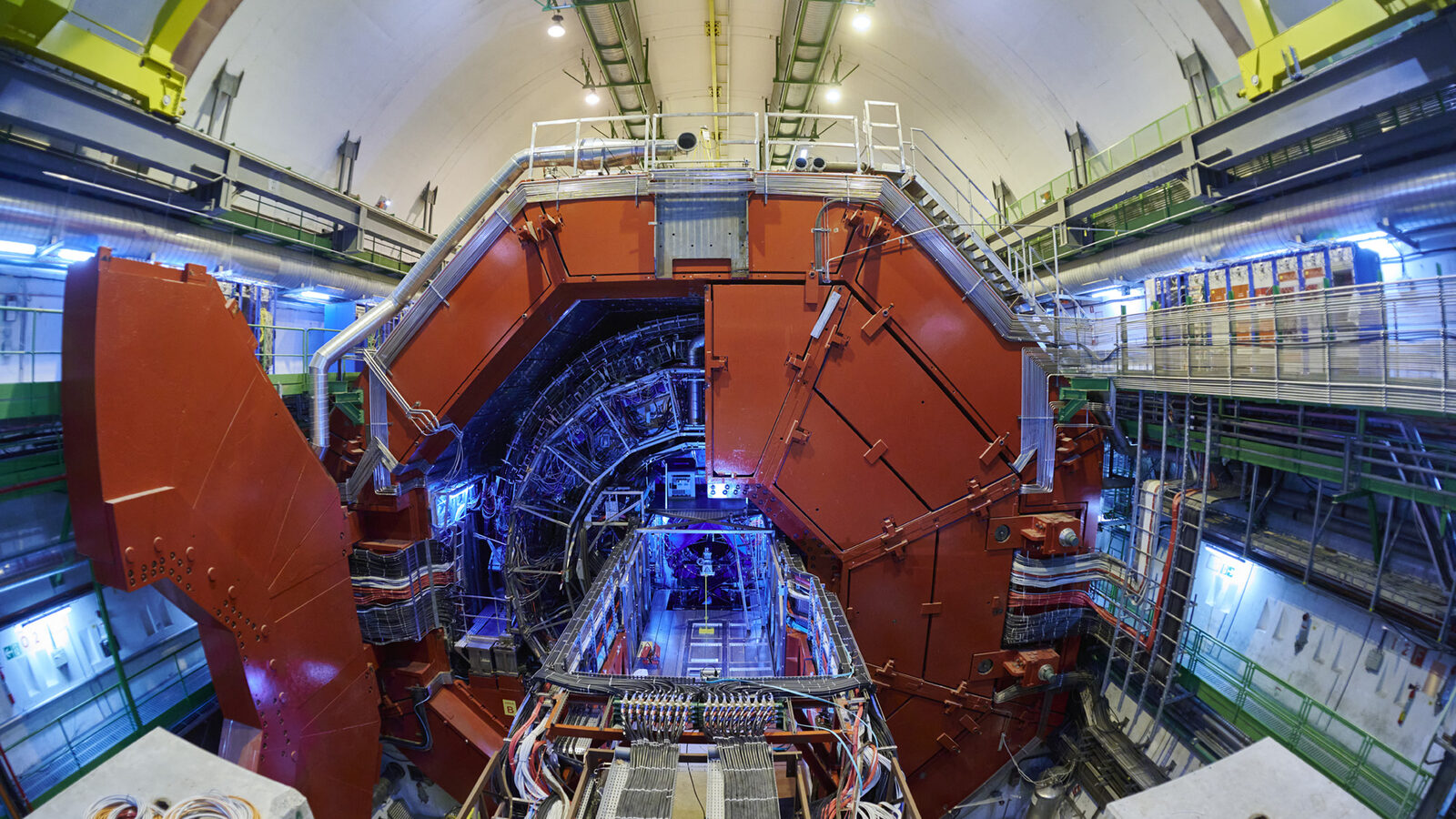
In 2023, the ALICE experiment was ready for their best year yet, until a mysterious signal threatened everything. As the LHC wraps up its 2025 lead-ion run, physicists recall how they worked together to solve the puzzle.
The sun is shining; the Earth is warm instead of icy. Life is good, thanks to the weak force. One of the four known forces that shape the universe, the weak force sustains our lives, driving the nuclear reactions that power the sun and heat the Earth’s core. It’s also tremendously useful.
How do you renovate a delicate, irreplaceable detector? Very carefully. During the last four months of 2006, the BaBar collaboration at SLAC successfully replaced a prematurely aging muon identification system.
As physicists and engineers devise ways to make the International Linear Collider perform better at a lower cost, the design evolves, sometimes with tweaks but at other times with major reconfigurations.
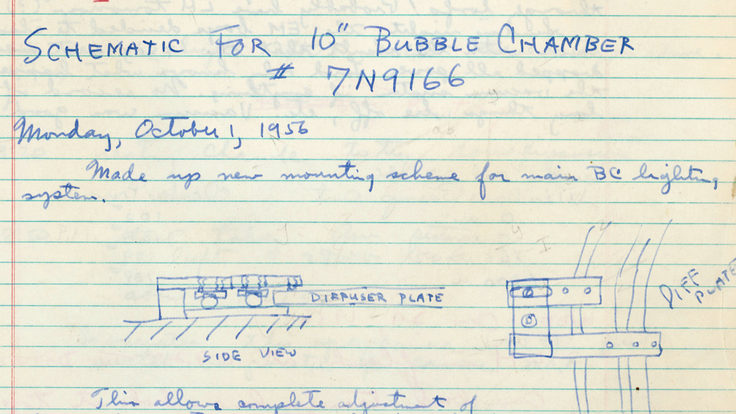
Luis Alvarez, a physicist at what today is the Lawrence Berkeley National Laboratory, attended a 1953 meeting of the American Physical Society and heard a young University of Michigan physicist named Donald Glaser describe a particle detector he’d developed and called a “bubble chambe
Security officers raise and lower 20 flags in front of Fermilab's Wilson Hall every day. Each flag represents a country that researchers come from to work at the lab. "The problem is that there are twenty flag poles," says Fermilab's Roy Rubinstein.
As work continues to complete the Large Hadron Collider in Europe and plans develop around the world for an International Linear Collider, one accelerator at the energy frontier is open for business right now. At Fermilab in Batavia, Illinois, the Tevatron collider is making discoveries.
The Japan Proton Accelerator Research Complex (J-PARC) isn't scheduled to open until 2008, but the Tokai campus facility is already the site of discovery—just not of the physics variety.