Twenty-five years ago this week, NASA held its collective breath as seven astronauts on space shuttle Endeavour caught up with the Hubble Space Telescope 353 miles above Earth.
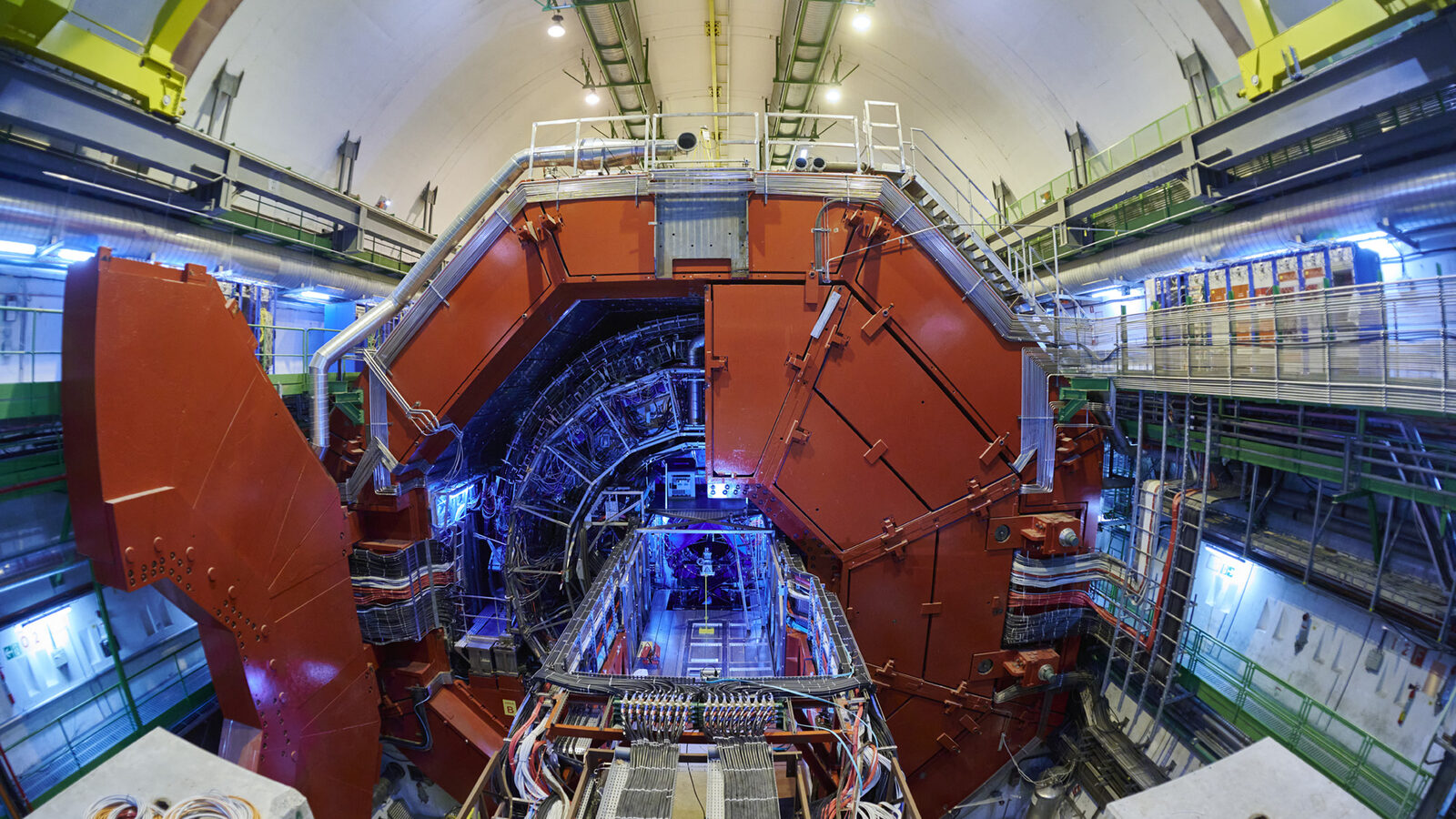
In 2023, the ALICE experiment was ready for their best year yet, until a mysterious signal threatened everything. As the LHC wraps up its 2025 lead-ion run, physicists recall how they worked together to solve the puzzle.
The world, by some accounts, was created in seven days. Not to try and top that, but a university band managed to re-enact the big bang in a period of less than an hour.
The Compact Muon Solenoid (CMS) detector is one of the two general purpose particle detectors being constructed at CERNs Large Hadron Collider (LHC) outside Geneva, Switzerland.
Guest houses are common among particle physics labs, and the Stanford Linear Accelerator Center is no exception. But in many ways, the Stanford Guest House, situated on the grounds of SLAC, is different.
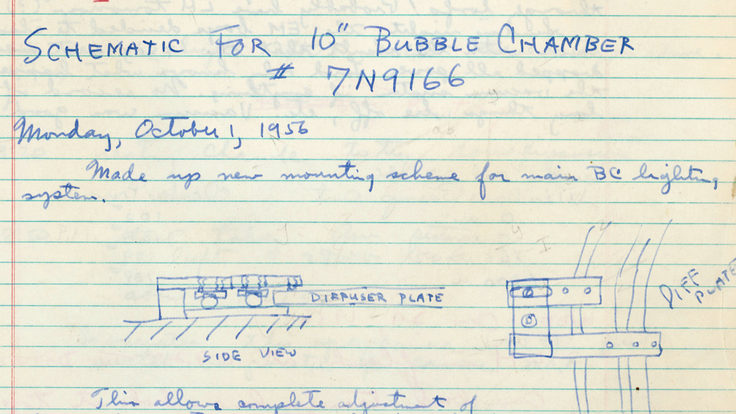
Luis Alvarez, a physicist at what today is the Lawrence Berkeley National Laboratory, attended a 1953 meeting of the American Physical Society and heard a young University of Michigan physicist named Donald Glaser describe a particle detector he’d developed and called a “bubble chambe
As work continues to complete the Large Hadron Collider in Europe and plans develop around the world for an International Linear Collider, one accelerator at the energy frontier is open for business right now. At Fermilab in Batavia, Illinois, the Tevatron collider is making discoveries.
Fermilab might not have the world's longest fingernails or the world's oldest man, but, according to Guinness World Records 2007, the lab does have the most powerful beam of neutrinos.
Jodi Cooley works half a mile underground, in a mine that stopped operating 40 years ago. A rattling elevator takes her to work, 27 floors beneath the surface. The ride down the mineshaft is five minutes of complete darkness. A colony of bats inhabits the mine.