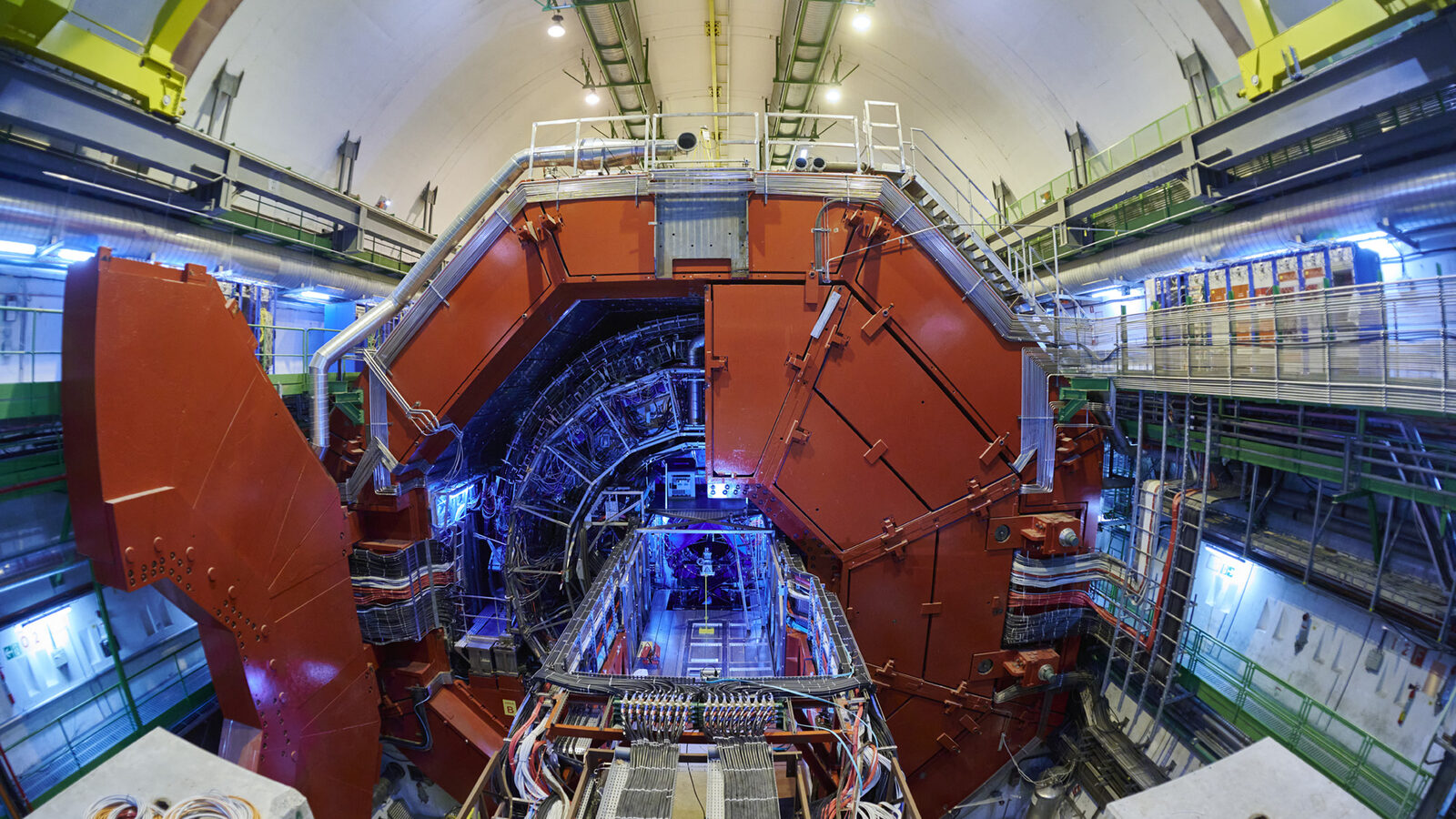
In 2023, the ALICE experiment was ready for their best year yet, until a mysterious signal threatened everything. As the LHC wraps up its 2025 lead-ion run, physicists recall how they worked together to solve the puzzle.
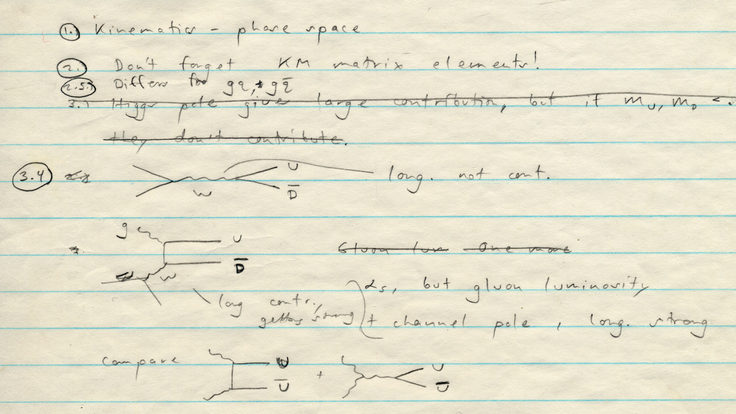
In 1985, ten years before scientists at Fermilab discovered the top quark, Scott Willenbrock was a graduate student at the University of Texas at Austin.
A one-time visitor to SLAC, the Antarctic Impulsive Transient Antenna (ANITA), recently took to the frigid skies over Antarctica on a mission looking for evidence of cosmic-ray neutrinos.
The world, by some accounts, was created in seven days. Not to try and top that, but a university band managed to re-enact the big bang in a period of less than an hour.
The Compact Muon Solenoid (CMS) detector is one of the two general purpose particle detectors being constructed at CERNs Large Hadron Collider (LHC) outside Geneva, Switzerland.
How do you renovate a delicate, irreplaceable detector? Very carefully. During the last four months of 2006, the BaBar collaboration at SLAC successfully replaced a prematurely aging muon identification system.
Guest houses are common among particle physics labs, and the Stanford Linear Accelerator Center is no exception. But in many ways, the Stanford Guest House, situated on the grounds of SLAC, is different.