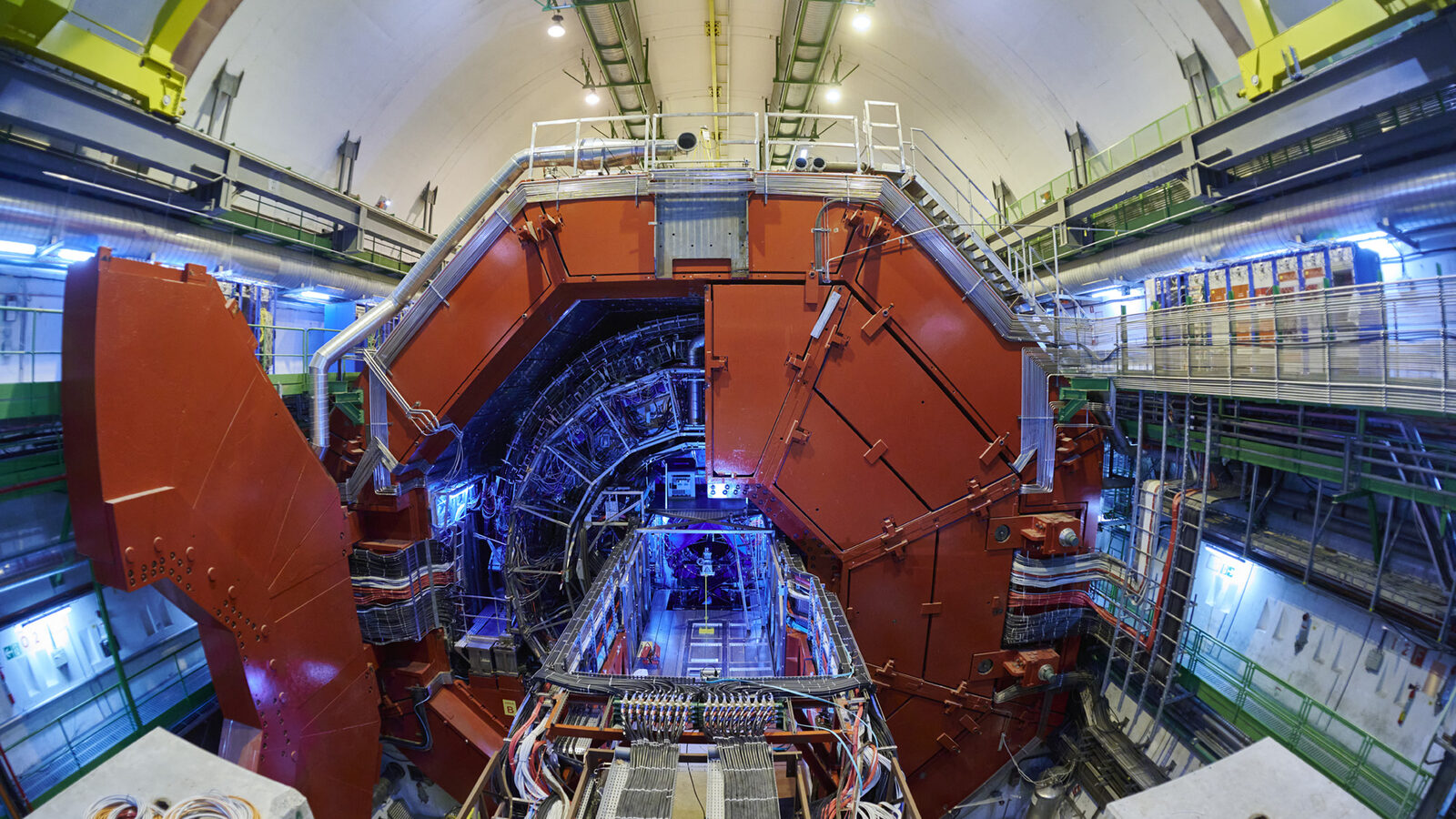
In 2023, the ALICE experiment was ready for their best year yet, until a mysterious signal threatened everything. As the LHC wraps up its 2025 lead-ion run, physicists recall how they worked together to solve the puzzle.
Canadian subatomic physics has a lot going for it: sparkling new hardware, an influx of bright young minds, and key roles in international projects. But only by doubling its operating budget can it live up to that potential, a new report suggests.
The article at the top of the spires lists of the most-cited articles in high-energy physics is, as always, the Review of Particle Physics (RPP), a compendium of experimental data and reviews put out by the Particle Data Group.
University scientists are the backbone of particle physics; like cogs in a complex machine, they deliver expertise, funding, and equipment exactly where needed. At Vanderbilt, theyre developing ways to handle a flood of data from the Large Hadron Collider.
Working at the same place in similar fields, Michael S. Smith and Chang-Hong Yu enjoy a situation not too unusual among married couples. Not so ordinary is their line of work.
Fermilab physicist Darren Crawford shares a birthdate, May 25, with the first Star Wars movie release. Now he is making his own mark on the fabled sci-fi fantasy series.