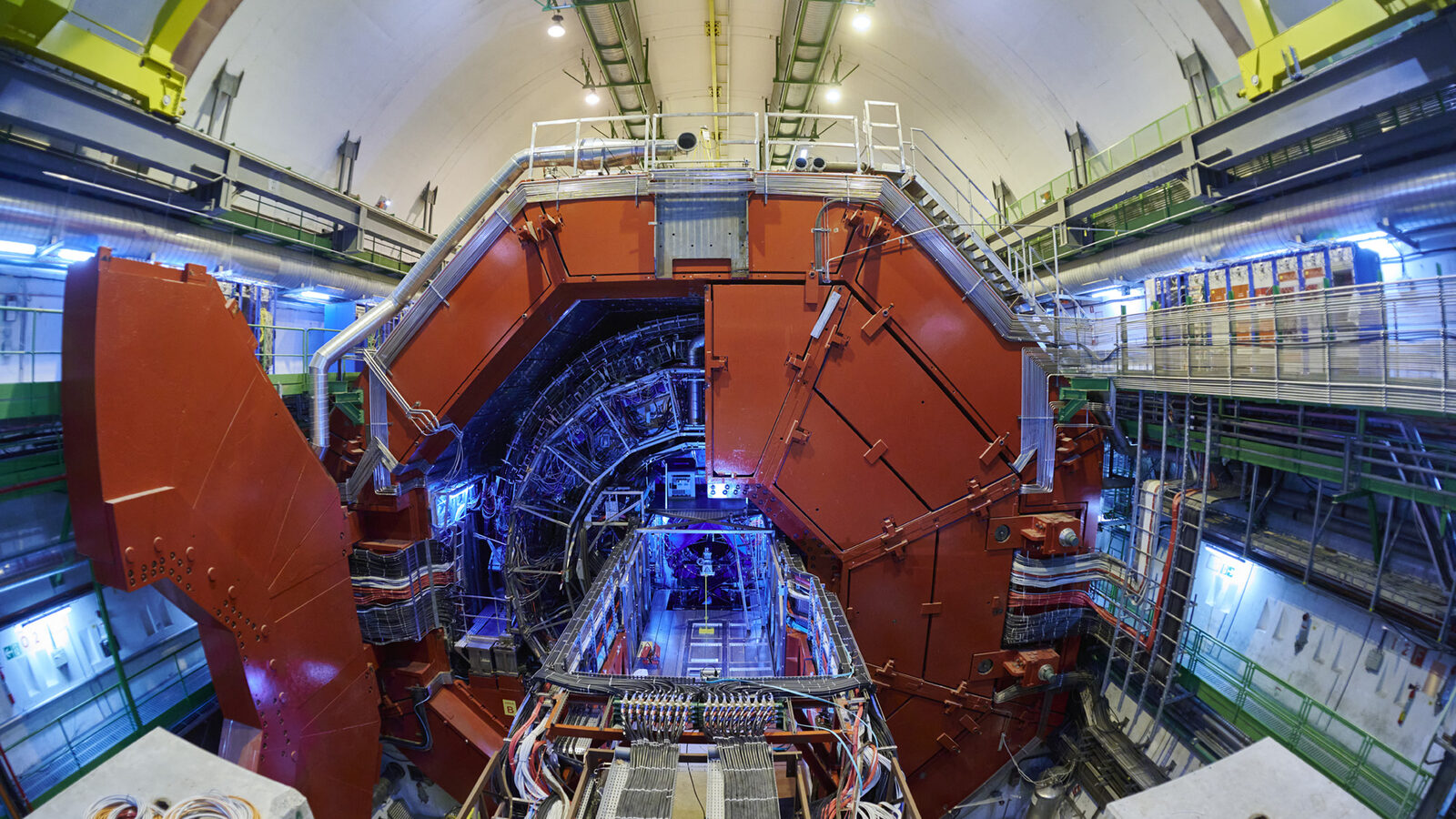
In 2023, the ALICE experiment was ready for their best year yet, until a mysterious signal threatened everything. As the LHC wraps up its 2025 lead-ion run, physicists recall how they worked together to solve the puzzle.
University scientists are the backbone of particle physics; like cogs in a complex machine, they deliver expertise, funding, and equipment exactly where needed. At Vanderbilt, theyre developing ways to handle a flood of data from the Large Hadron Collider.
The first results from the MiniBooNE neutrino experiment, released in April, showed no hints of a fourth neutrino. But they contained a puzzling signal that could lead to new physics.
Working at the same place in similar fields, Michael S. Smith and Chang-Hong Yu enjoy a situation not too unusual among married couples. Not so ordinary is their line of work.
People went to great lengths, traveling almost 9000 kilometers over more than 60 days, to deliver an essential, 200-ton component of the KATRIN neutrino experiment.
Take one part unidentified goop. Add three parts mysterious energy. Throw in a dash of ordinary atoms. Mix. Compress. Explode. Let expand for 13.7 billion years.