It was 80 degrees under a cloudless sky in St. Charles, Illinois. Thunder boomed. Lightning flashed, striking a kite and shooting down the string to a bald scarecrow. Its giant eyes glowed. “What’s that?” asked a Girl Scout working on a nearby display.
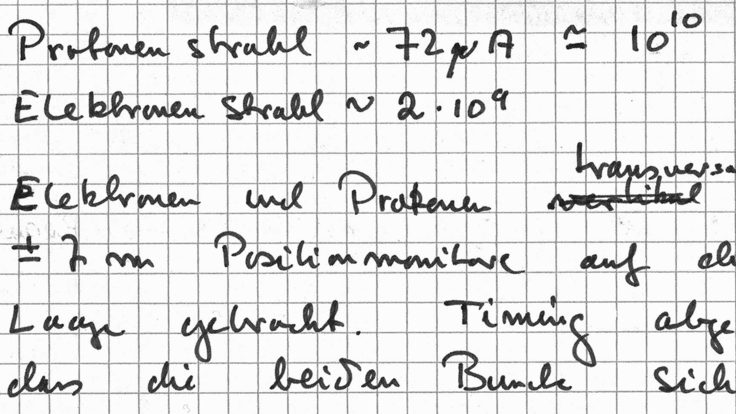
On October 19, 1991, at 6:50 p.m., Bjørn Wiik logged the first collisions in the new electron-proton particle collider at the Deutsches Elektronen-Synchrotron in Hamburg.
Men and women wearing gaudy dresses, looking for customers under garish neon signs—this is a common sight in Kabuki-cho, Shinjuku, a famous entertainment and red-light district in Tokyo, Japan.
To artist and engineer Amy Lee Segami, water is no ordinary substance—it is her canvas. Using her knowledge of fluid mechanics, Segami paints on water in a contemporary version of the ancient Asian art form of Suminagashi.
An impromptu frog habitat vanished with final repairs to the roof of Fermilab's Meson Lab. Leaks—lots of leaks—have plagued the lab's 12 blue and orange concave arches since it opened 32 years ago.
What is the universe made of? What are matter, energy, space, and time? How did we get here and where are we going? In particle physics, the classic place to look for answers is in giant accelerators where particles collide. But nature also provides a wealth of data.