Among the 10,000 people from around the world who are working on the Large Hadron Collider, 1000 hail from universities and national labs in the United States.
Every time Fermilab scientist Tom Schwarz starts up SpartyJet, he inwardly grimaces. The computer program works well. It does a fine job of finding and recording jets—sprays of subatomic particles that emerge from collisions involving protons.
ATLAS, a particle physics experiment at CERN’s Large Hadron Collider, boasts 2000-plus members from 35 countries. But on a map showing where those members come from, one continent is almost mark-free: Africa.
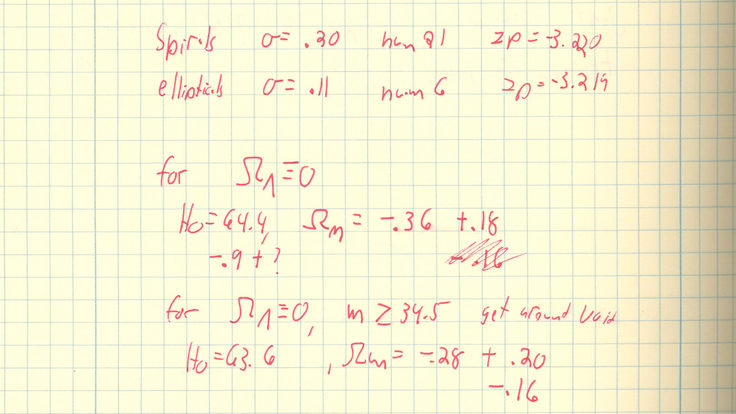
In the fall of 1997, I was leading the calibration and analysis of data gathered by the High-z Supernova Search Team, one of two teams of scientists the other was the Supernova Cosmology Projecttrying to determine the fate of our universe: Will it expand forever, or will it halt and contract, r
The next big experiment in particle physics won’t need an accelerator, detector, or other big machine. It doesn’t even involve subatomic particles—unless you count the electrons that flow through electronic circuits, carrying bits of information from one human brain to the next.