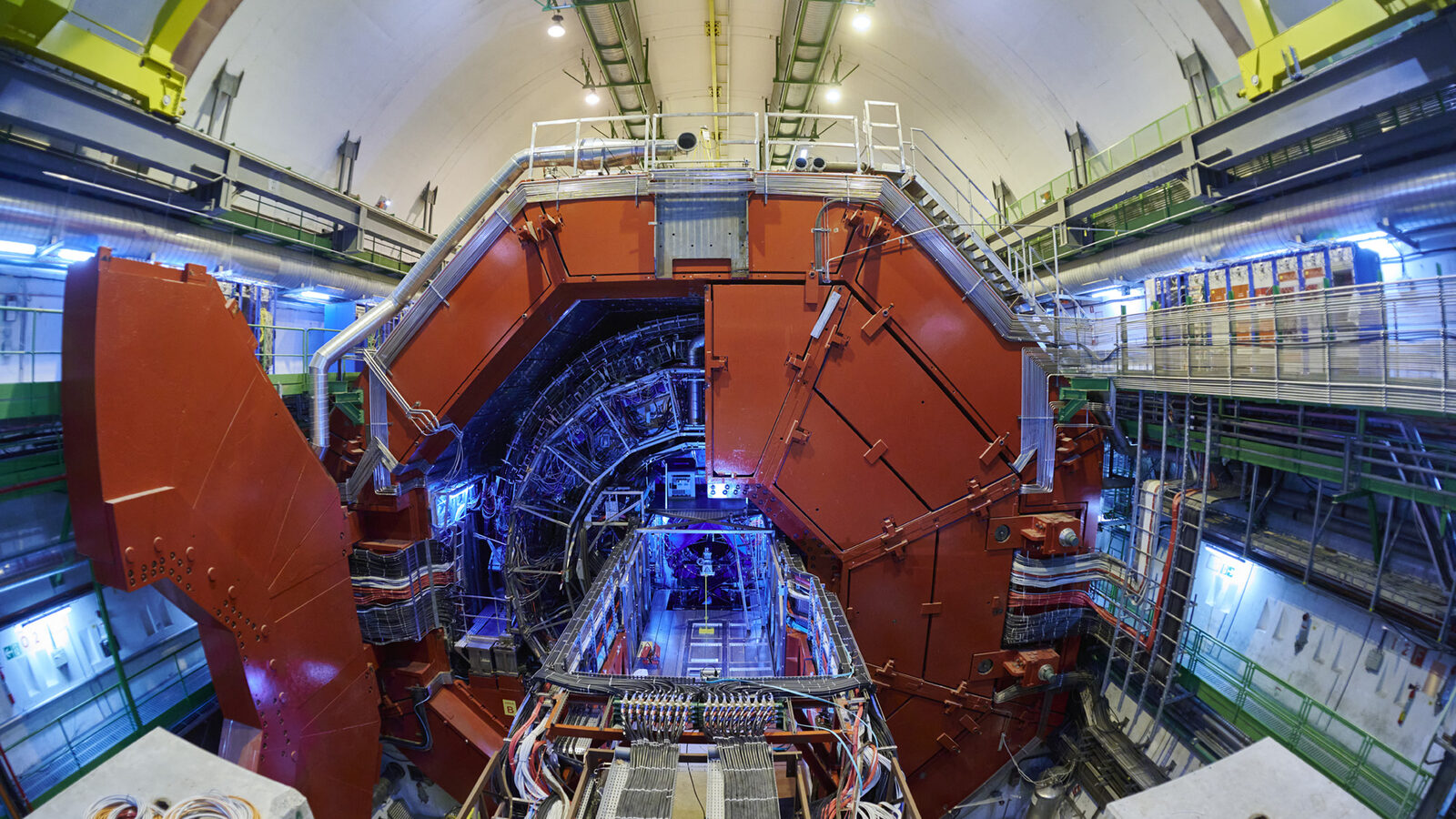
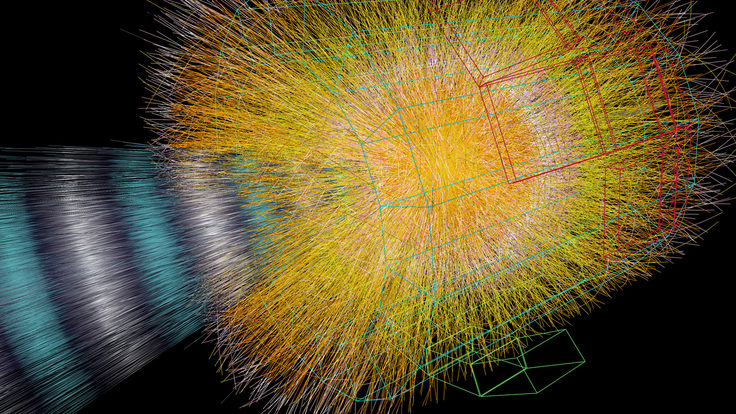
In 2023, the ALICE experiment was ready for their best year yet, until a mysterious signal threatened everything. As the LHC wraps up its 2025 lead-ion run, physicists recall how they worked together to solve the puzzle.
Every time Fermilab scientist Tom Schwarz starts up SpartyJet, he inwardly grimaces. The computer program works well. It does a fine job of finding and recording jets—sprays of subatomic particles that emerge from collisions involving protons.
ATLAS, a particle physics experiment at CERN’s Large Hadron Collider, boasts 2000-plus members from 35 countries. But on a map showing where those members come from, one continent is almost mark-free: Africa.
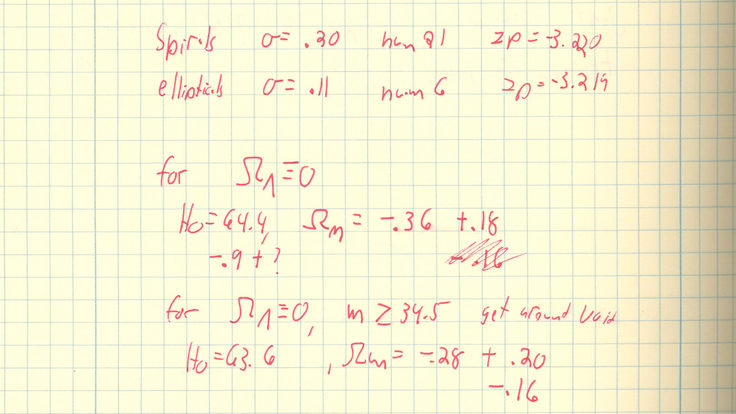
In the fall of 1997, I was leading the calibration and analysis of data gathered by the High-z Supernova Search Team, one of two teams of scientists the other was the Supernova Cosmology Projecttrying to determine the fate of our universe: Will it expand forever, or will it halt and contract, r
In March 2007, members of a US National Science Foundation panel went on a whirlwind bus tour of potential sites for the Deep Underground Science and Engineering Laboratory. Here's an account of that trip by Peter Fisher of the Massachusetts Institute of Technology.
The next big experiment in particle physics won’t need an accelerator, detector, or other big machine. It doesn’t even involve subatomic particles—unless you count the electrons that flow through electronic circuits, carrying bits of information from one human brain to the next.