A detector that was designed to probe dark matter has seen an elusive nuclear decay called two-neutrino double electron capture—with implications for nuclear and particle physics.
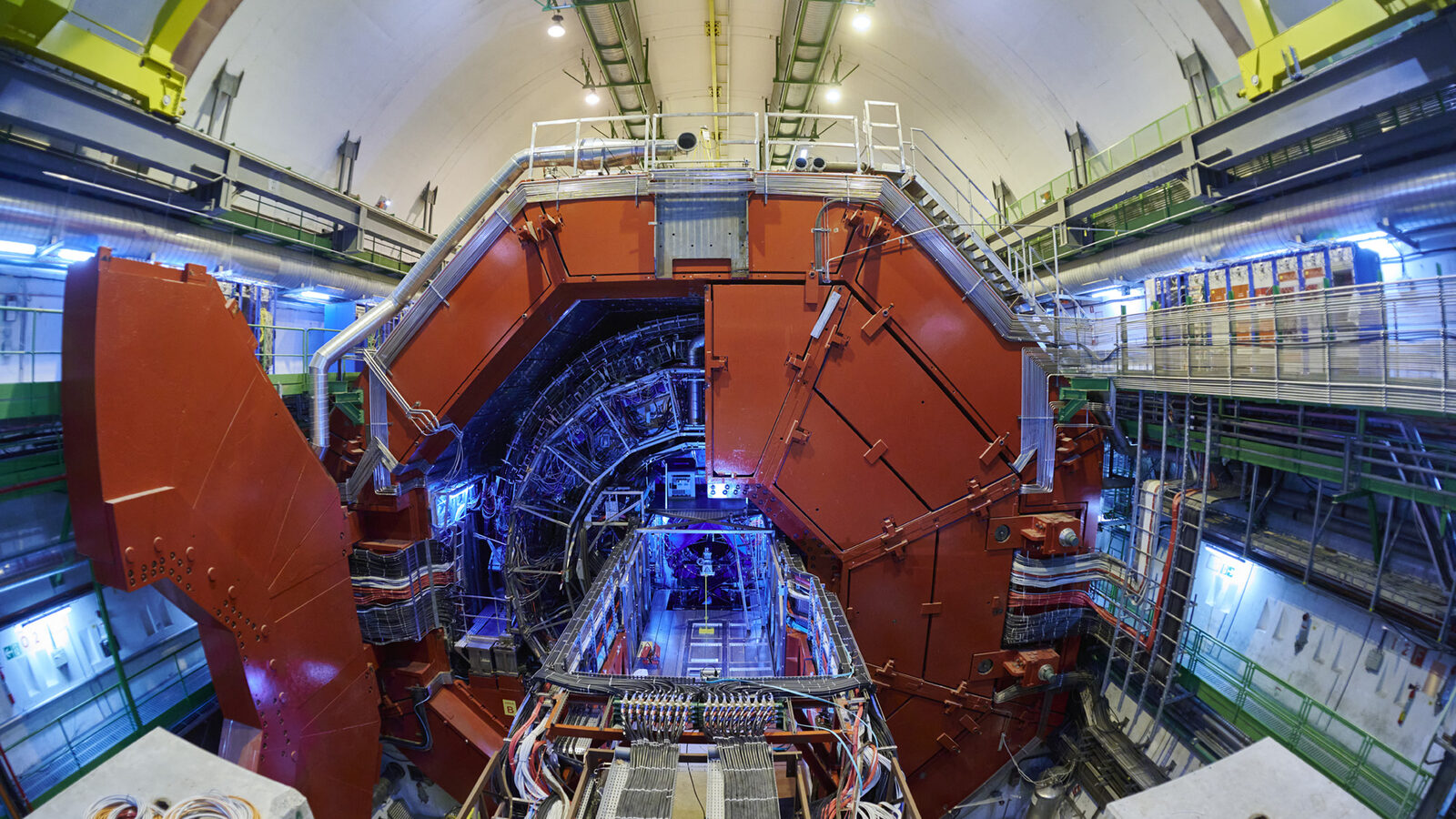
In 2023, the ALICE experiment was ready for their best year yet, until a mysterious signal threatened everything. As the LHC wraps up its 2025 lead-ion run, physicists recall how they worked together to solve the puzzle.
‘Tis the season for science at the bottom of the Earth. Researchers are flying to the South Pole from all over the globe to take advantage of the “ warm” summer months, when temperatures average minus 35 degrees Fahrenheit.
Among the 10,000 people from around the world who are working on the Large Hadron Collider, 1000 hail from universities and national labs in the United States.
They started out scanning the cosmos for signs of extraterrestrial intelligence with SETI@ home. They’ve plotted chess moves, battled malaria, and folded proteins, all from their home computers. Now, volunteers are tackling particle physics with LHC@home.
Meeting in CERN’s Restaurant 1, anthropologist Arpita Roy of the University of California, Berkeley is quick to declare that she will not be having any more coffee today. She has begun drinking multiple cups per day as she meets with CERN physicists to learn about their work.