A group of scientists at Fermilab has figured out how to use quantum computing to simulate the fundamental interactions that hold together our universe.
The sun radiates far more high-frequency light than expected, raising questions about unknown features of the sun’s magnetic field and the possibility of even more exotic physics.
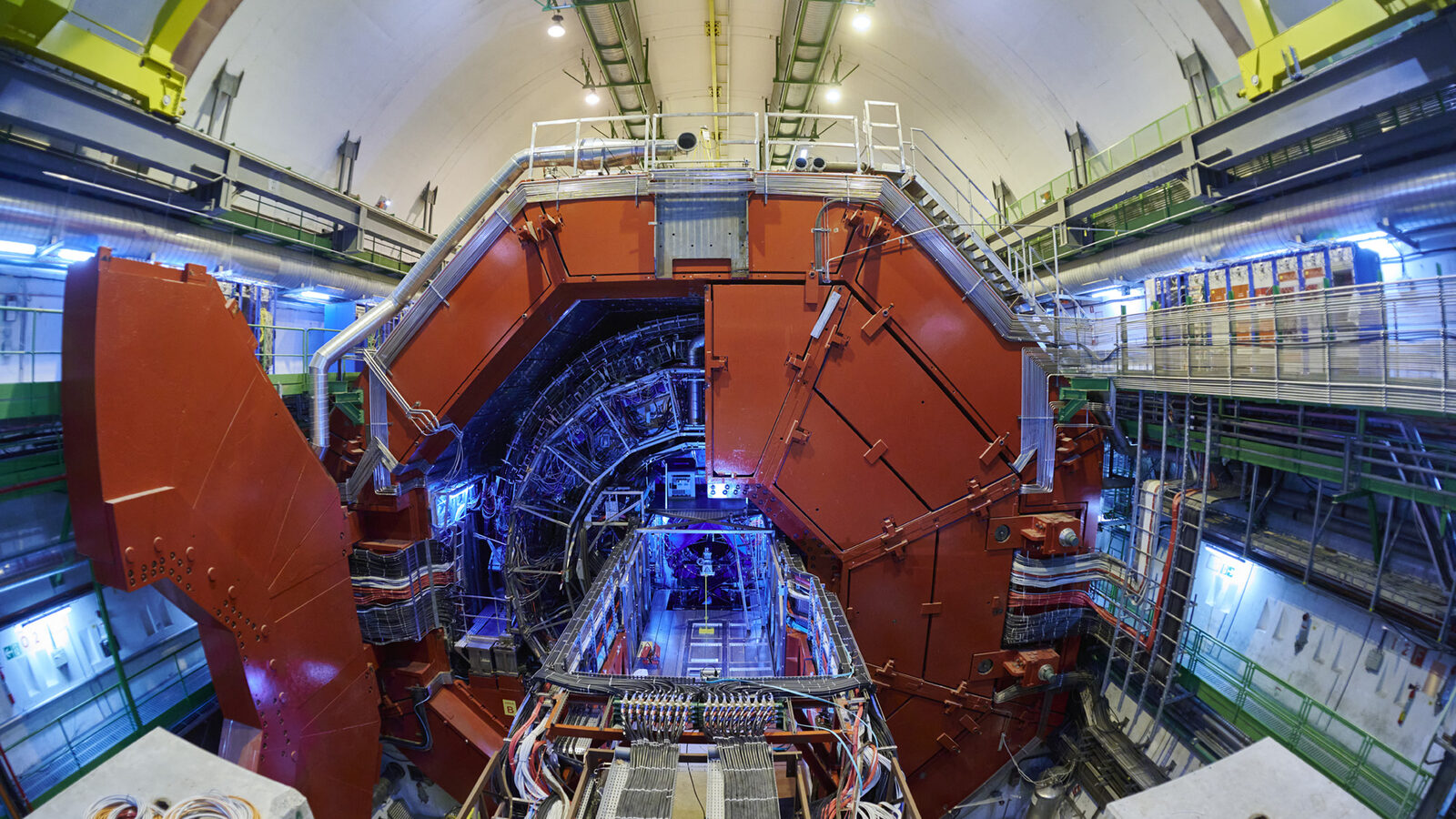
In 2023, the ALICE experiment was ready for their best year yet, until a mysterious signal threatened everything. As the LHC wraps up its 2025 lead-ion run, physicists recall how they worked together to solve the puzzle.
After seeing a documentary on Ernest Shackleton's 1914 Antarctic expedition, in which men ate shoe leather to survive in bone-chilling temperatures, David Peterson felt kind of silly about letting snow stop his bicycle ride to work.
Tokio Ohska had an opera to direct. As always, there were lighting, scenery, and music issues to contend with. But finding costumes to fit a cast of Europeans? That was a new challenge.
One of my favorite scenes in The Big Bang Theory involves the two main characters, Leonard and Sheldon, trying to move a large, flat box up two flights of stairs. Faced with no equipment and little upper-body strength, Leonard declares, “We are physicists!
No one is able to claim credit for the ancient wooden sign that hangs on the porch of the old Positron Electron Project buildings at the Stanford Linear Accelerator Center.
In August 2006, scientists working on the Compact Muon Solenoid experiment at CERN conducted a Cosmic Challenge to test components of their 12,500-ton CMS particle detector.