When particle accelerators gave birth to the powerful X-ray microscopes known as synchrotrons, they revolutionized the study of virtually every field of science.
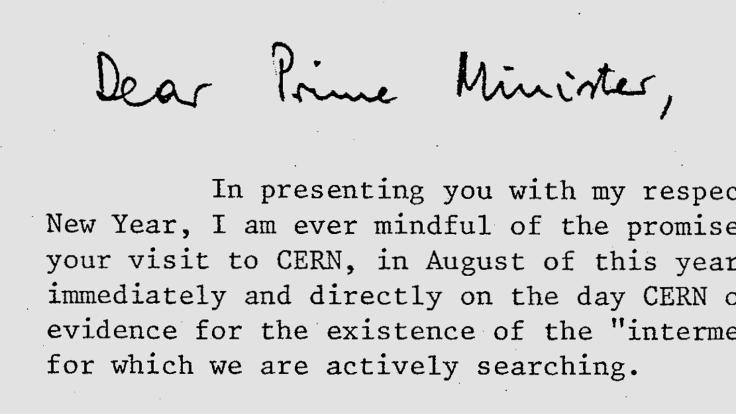
In August 1982, Margaret Thatcher, then prime minister of the United Kingdom, paid a private visit to the European laboratory CERN. On her arrival she told Director General Herwig Schopper that she wanted to be treated as a fellow scientist.
After seeing a documentary on Ernest Shackleton's 1914 Antarctic expedition, in which men ate shoe leather to survive in bone-chilling temperatures, David Peterson felt kind of silly about letting snow stop his bicycle ride to work.
Tokio Ohska had an opera to direct. As always, there were lighting, scenery, and music issues to contend with. But finding costumes to fit a cast of Europeans? That was a new challenge.
When Sal Rappoccio, a postdoctoral researcher from Johns Hopkins University, joined the Compact Muon Solenoid experiment in mid-2007, he did what any newcomer would do. He tried to start his analysis. It did not go well.
No one is able to claim credit for the ancient wooden sign that hangs on the porch of the old Positron Electron Project buildings at the Stanford Linear Accelerator Center.