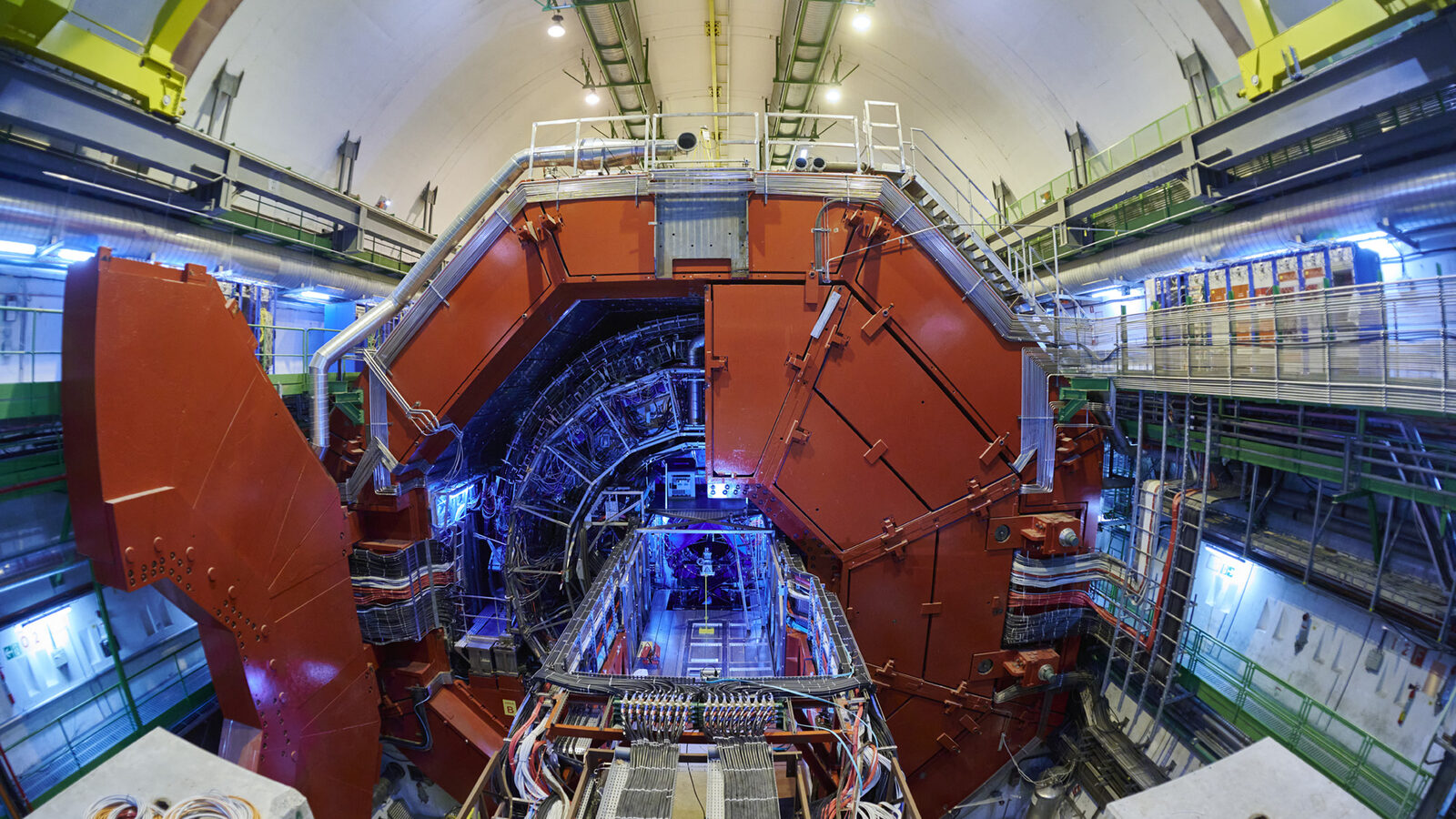
In 2023, the ALICE experiment was ready for their best year yet, until a mysterious signal threatened everything. As the LHC wraps up its 2025 lead-ion run, physicists recall how they worked together to solve the puzzle.
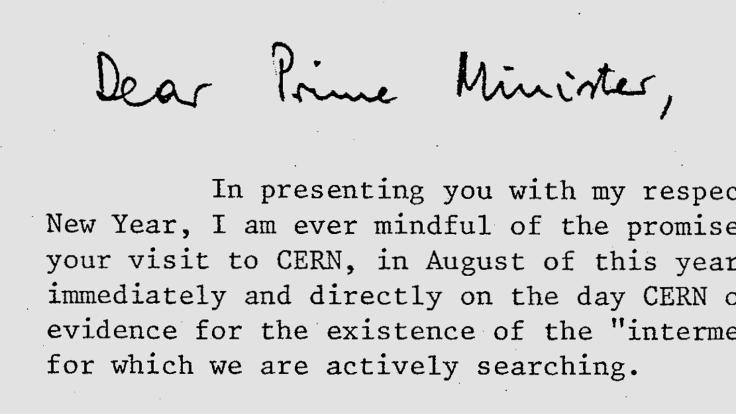
In August 1982, Margaret Thatcher, then prime minister of the United Kingdom, paid a private visit to the European laboratory CERN. On her arrival she told Director General Herwig Schopper that she wanted to be treated as a fellow scientist.
Tokio Ohska had an opera to direct. As always, there were lighting, scenery, and music issues to contend with. But finding costumes to fit a cast of Europeans? That was a new challenge.
No one is able to claim credit for the ancient wooden sign that hangs on the porch of the old Positron Electron Project buildings at the Stanford Linear Accelerator Center.
Ryan Schultz and Kris Anderson had a problem: how to inspect a window in a pipe that carries a powerful particle beam, 40 feet below ground and 100 feet down a narrow tunnel.
One of my favorite scenes in The Big Bang Theory involves the two main characters, Leonard and Sheldon, trying to move a large, flat box up two flights of stairs. Faced with no equipment and little upper-body strength, Leonard declares, “We are physicists!
When Sal Rappoccio, a postdoctoral researcher from Johns Hopkins University, joined the Compact Muon Solenoid experiment in mid-2007, he did what any newcomer would do. He tried to start his analysis. It did not go well.