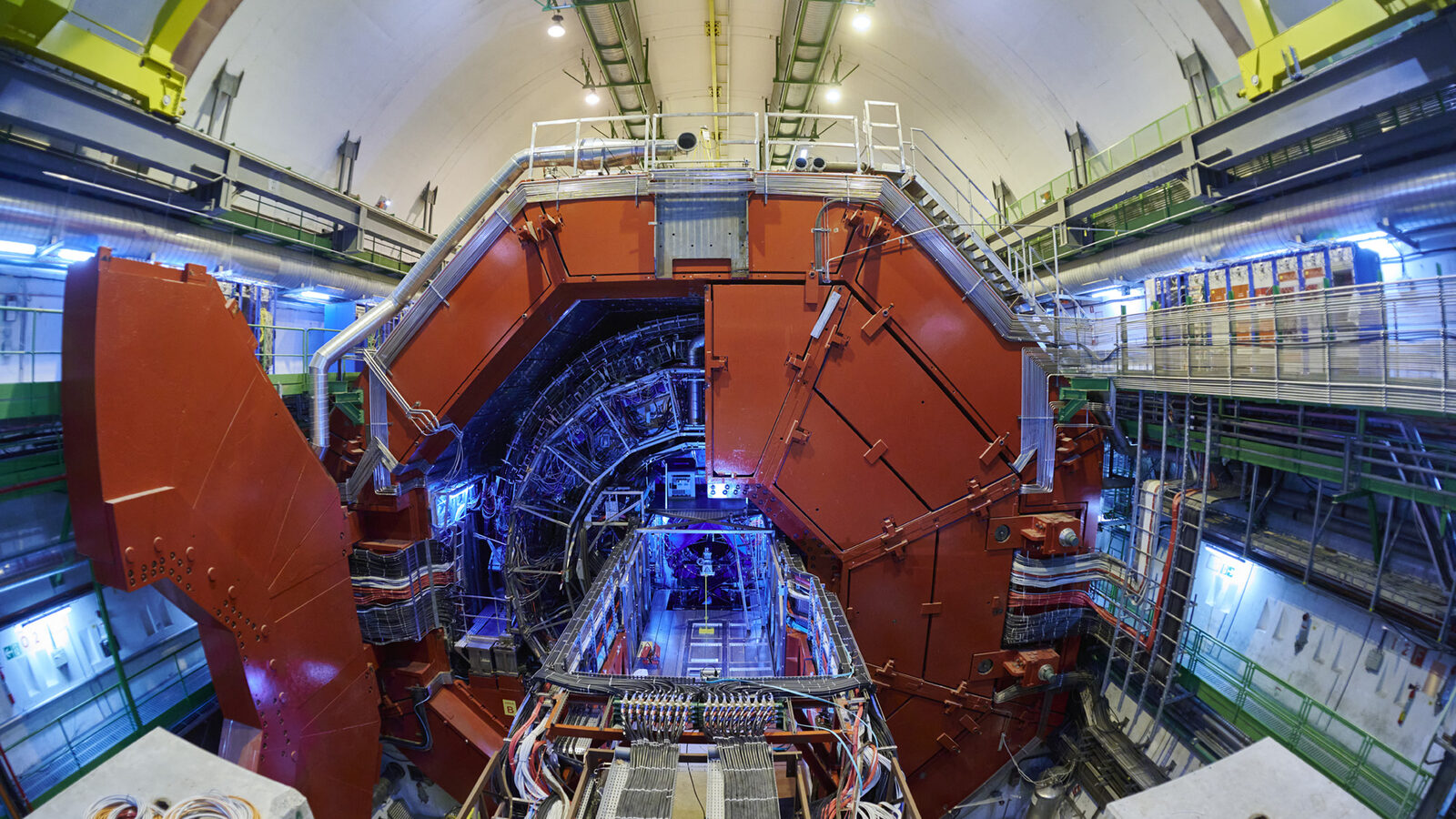
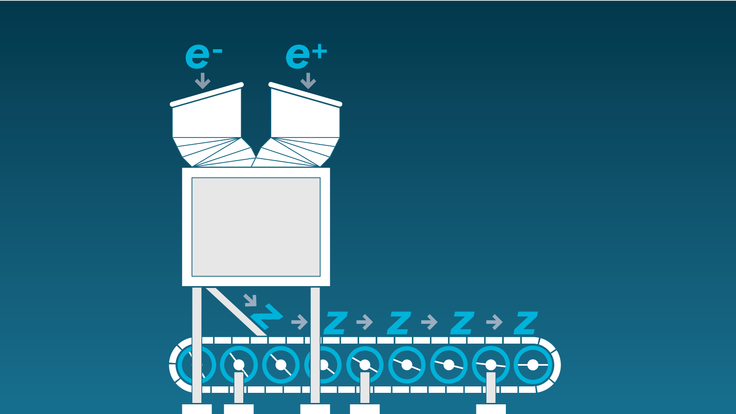
In 2023, the ALICE experiment was ready for their best year yet, until a mysterious signal threatened everything. As the LHC wraps up its 2025 lead-ion run, physicists recall how they worked together to solve the puzzle.
When you hear the descending flurry of 16th notes in the trumpets, you know the gamma rays are coming. They speed toward the detector in the Gamma-ray Large Area Space Telescope in chromatically harmonized notes.
As Reid Mumford pedals, sometimes he thinks about how to break away from the pack. Other times he thinks about how the smallest bits of the universe break apart in high-energy collisions.
US particle physics is pushing forward on three frontiers. Each has a unique approach to making discoveries, and all three are essential to answering key questions about the laws of nature and the cosmos.
Jason Steffen waited to board a plane in the Seattle airport. He waited to get his boarding pass scanned. Then he walked a few steps down the jet way, and waited some more. His frustration grew.
Inspired by heroes of Greek mythology, physicists are on a quest to find a cheaper, more efficient way to capture neutrinosone of the strangest and most fascinating particles in the universe.
Parked between a shiny green Camaro and a remodeled '63 Mustang, a 1929 Ford Model A pickup-turned-hot rod is a mosaic of rust and rot. A rag plugs the radiator, and ancient wooden slats border the truck bed.