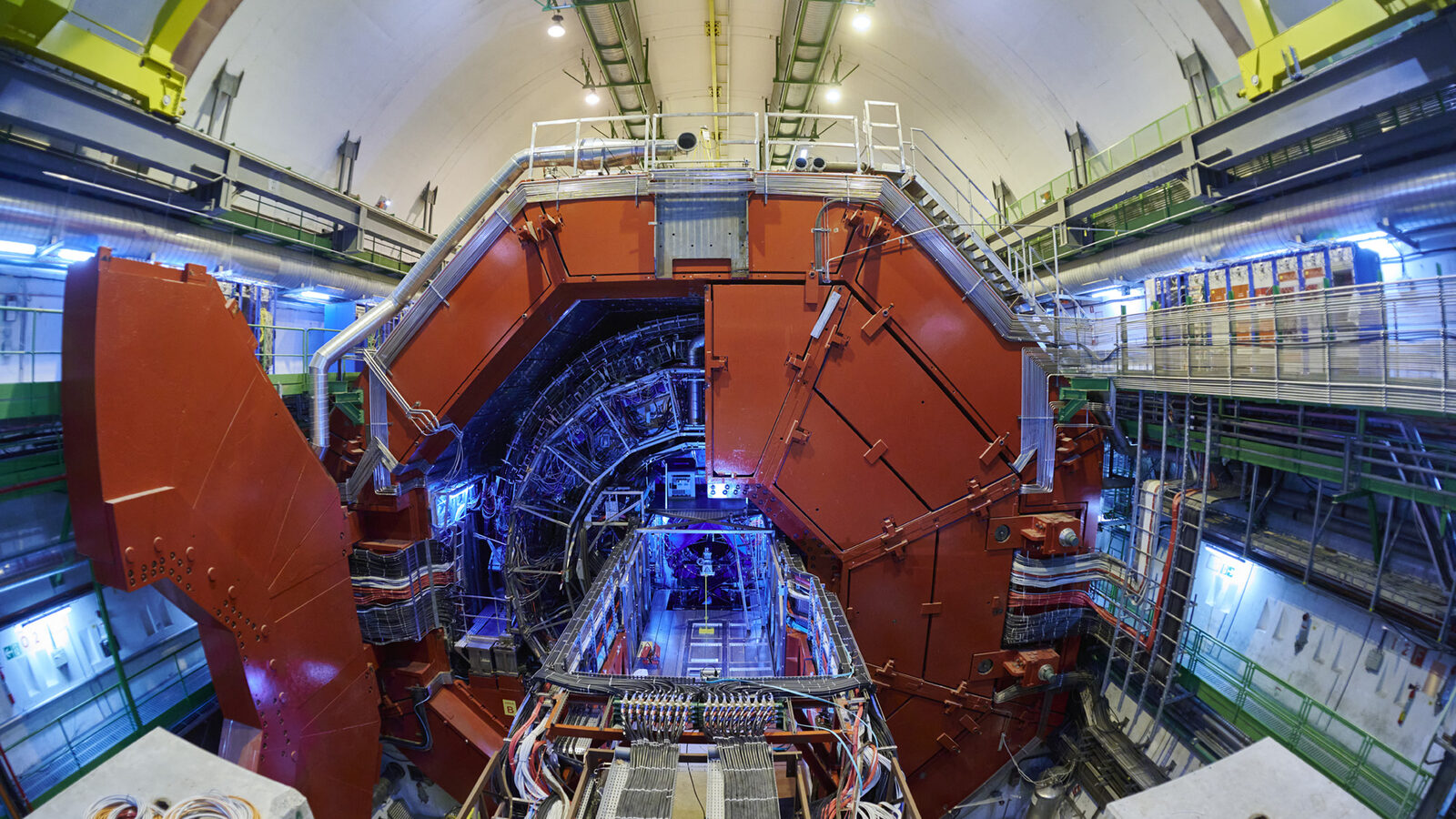
In 2023, the ALICE experiment was ready for their best year yet, until a mysterious signal threatened everything. As the LHC wraps up its 2025 lead-ion run, physicists recall how they worked together to solve the puzzle.
Blackboards filled with mathematical equations and scientific machines as large as cathedrals can awe, and sometimes overwhelm. But Koosh balls are another matter.
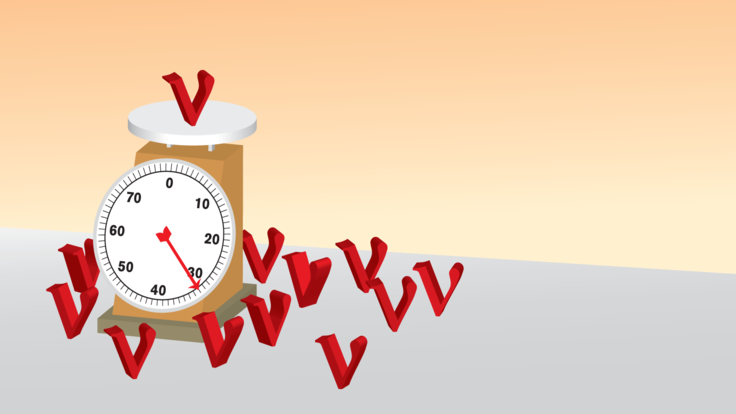
Neutrino masses are extremely difficult to measure. While we know precisely how much an electron weighs, we have little information on the mass of its neutral partner, the electron neutrino. The same is true of the muon neutrino and tau neutrino.
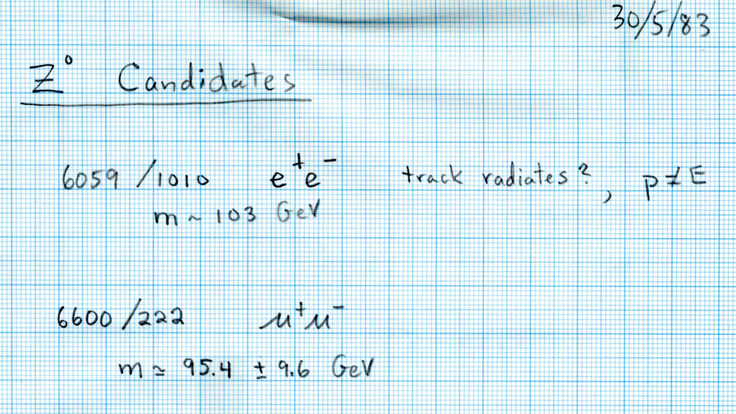
In May 1983, physicists on the UA1 detector for the Super Proton Synchrotron accelerator at CERN made the first definitive observations of the Z boson.
Donald Glaser of the University of California, Berkeley, won a Nobel Prize for inventing the bubble chamber in 1952 as a way of detecting subatomic particles. Now a University of Chicago professor, Juan Collar, is leading the charge to make the bubble chamber cool and cutting-edge again.
A Faraday Cup is (pick one) 1) a gadget named after the great experimentalist Michael Faraday, used to measure the current of a charged-particle beam, or 2) an award that recognizes the inventors of innovative instruments for particle accelerators.
When you hear the descending flurry of 16th notes in the trumpets, you know the gamma rays are coming. They speed toward the detector in the Gamma-ray Large Area Space Telescope in chromatically harmonized notes.