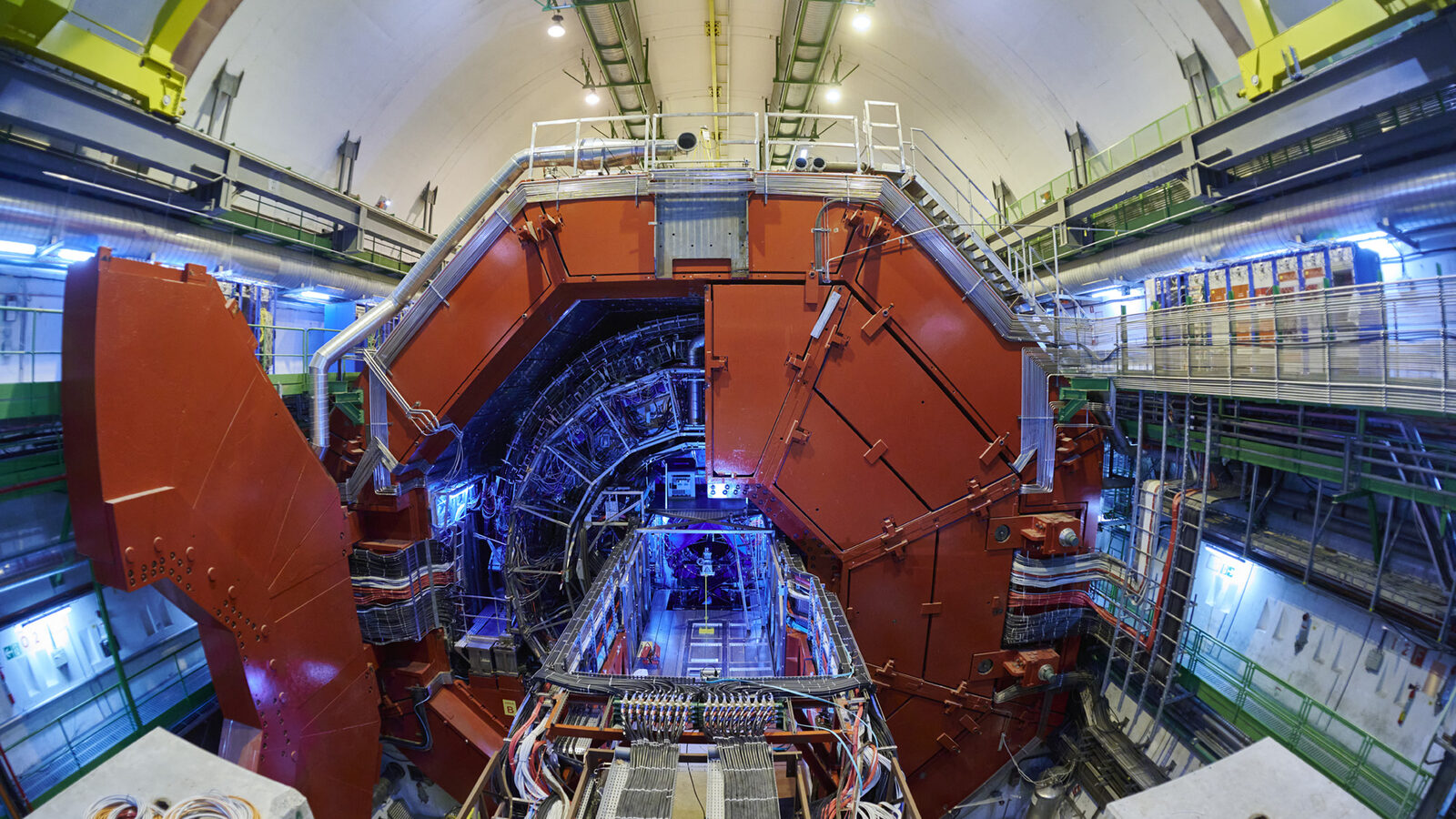
In 2023, the ALICE experiment was ready for their best year yet, until a mysterious signal threatened everything. As the LHC wraps up its 2025 lead-ion run, physicists recall how they worked together to solve the puzzle.
Blackboards filled with mathematical equations and scientific machines as large as cathedrals can awe, and sometimes overwhelm. But Koosh balls are another matter.
As passengers boarded the train in a Berlin suburb, researchers from the Large Hadron Collider greeted them: Imagine you are a proton and this train is the LHC tunnel. You will travel 37 km, slightly more than the 27 km it takes the protons to circle the LHC tunnel.
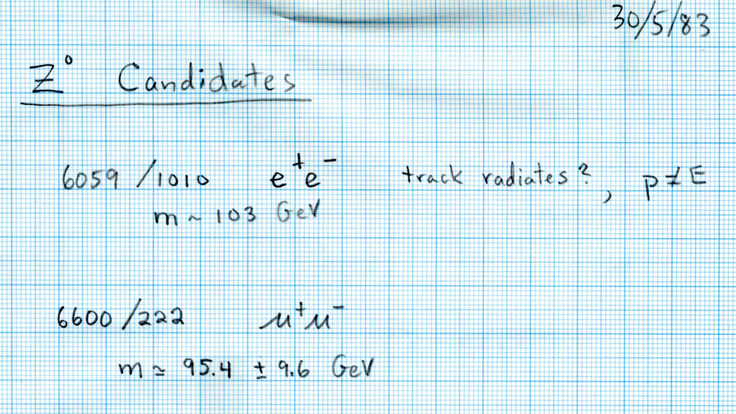
In May 1983, physicists on the UA1 detector for the Super Proton Synchrotron accelerator at CERN made the first definitive observations of the Z boson.
Jason Steffen waited to board a plane in the Seattle airport. He waited to get his boarding pass scanned. Then he walked a few steps down the jet way, and waited some more. His frustration grew.
Inspired by heroes of Greek mythology, physicists are on a quest to find a cheaper, more efficient way to capture neutrinosone of the strangest and most fascinating particles in the universe.