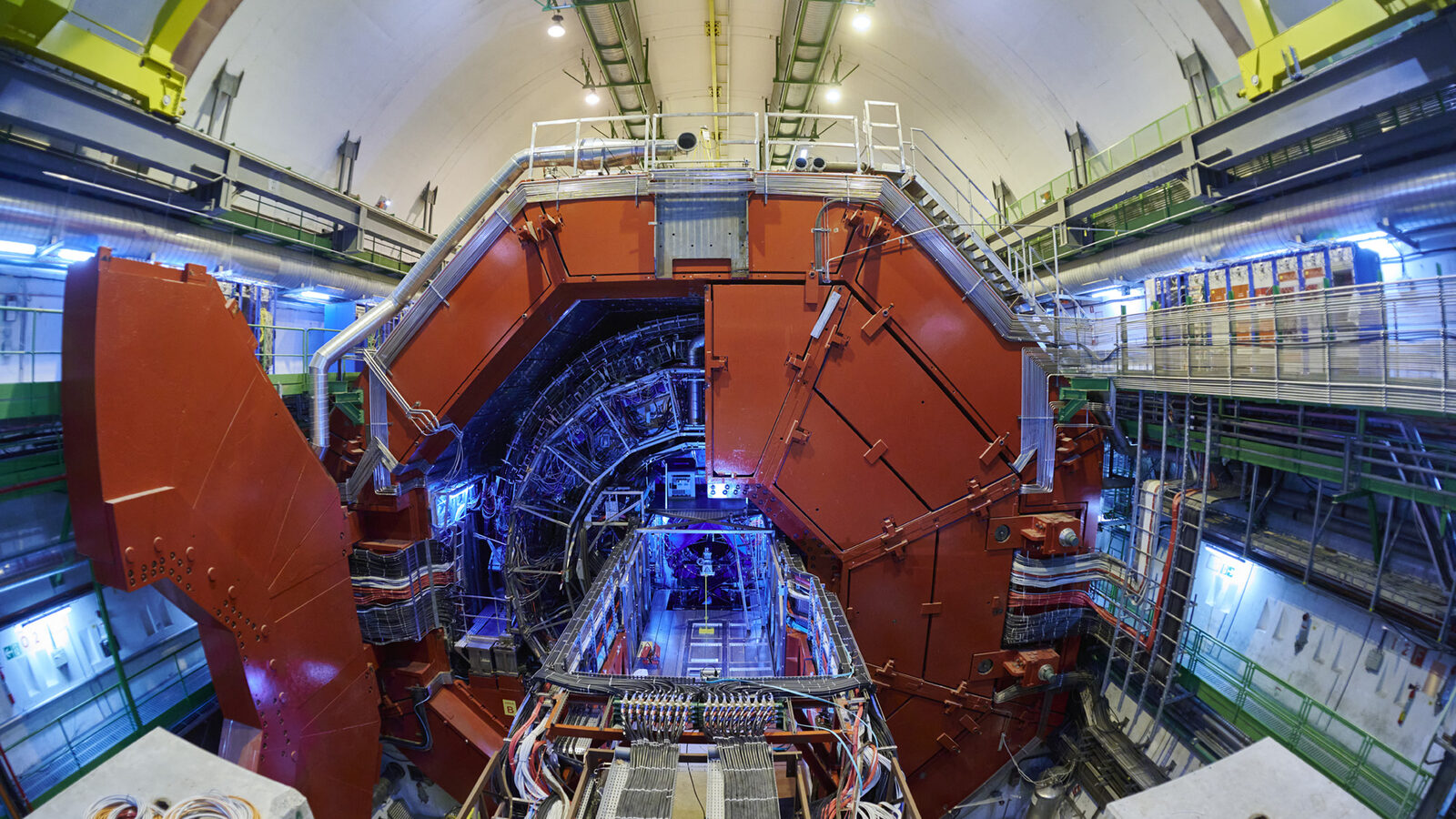
The ICARUS detector will soon start a second life seeking perhaps the strangest particles physicists have dreamed up, oddballs called sterile neutrinos.
In 2023, the ALICE experiment was ready for their best year yet, until a mysterious signal threatened everything. As the LHC wraps up its 2025 lead-ion run, physicists recall how they worked together to solve the puzzle.
Jennifer Gimmell's coworkers didn't believe she competitively pumped iron. But as the evidence piled up—including a photo of her pulling a 23,000 pound truck—her fellow physicists had to concede: The strong force had nothing on Gimmell.
Hugh Montgomery has taken the helm of the Department of Energys Thomas Jefferson National Accelerator Facility in Virginia after almost 25 years at Fermi National Accelerator Laboratory in Illinois. He is JLabs third director, replacing retiring Christoph Leemann.
Blackboards filled with mathematical equations and scientific machines as large as cathedrals can awe, and sometimes overwhelm. But Koosh balls are another matter.
As passengers boarded the train in a Berlin suburb, researchers from the Large Hadron Collider greeted them: Imagine you are a proton and this train is the LHC tunnel. You will travel 37 km, slightly more than the 27 km it takes the protons to circle the LHC tunnel.
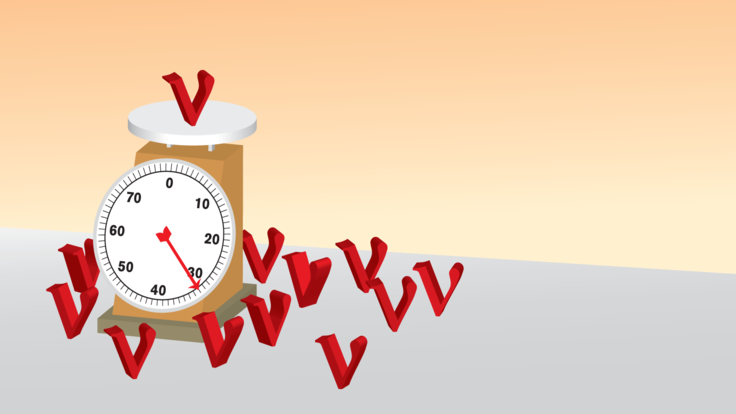
Neutrino masses are extremely difficult to measure. While we know precisely how much an electron weighs, we have little information on the mass of its neutral partner, the electron neutrino. The same is true of the muon neutrino and tau neutrino.
At a recent symposium honoring former Stanford Linear Accelerator Center Director Jonathan Dorfan, dinner guests were treated to a course of the unexpected.