Hopes that the “proton radius puzzle” would upend particle physics and reveal new laws of nature have now been dashed by a new measurement reported in Science.
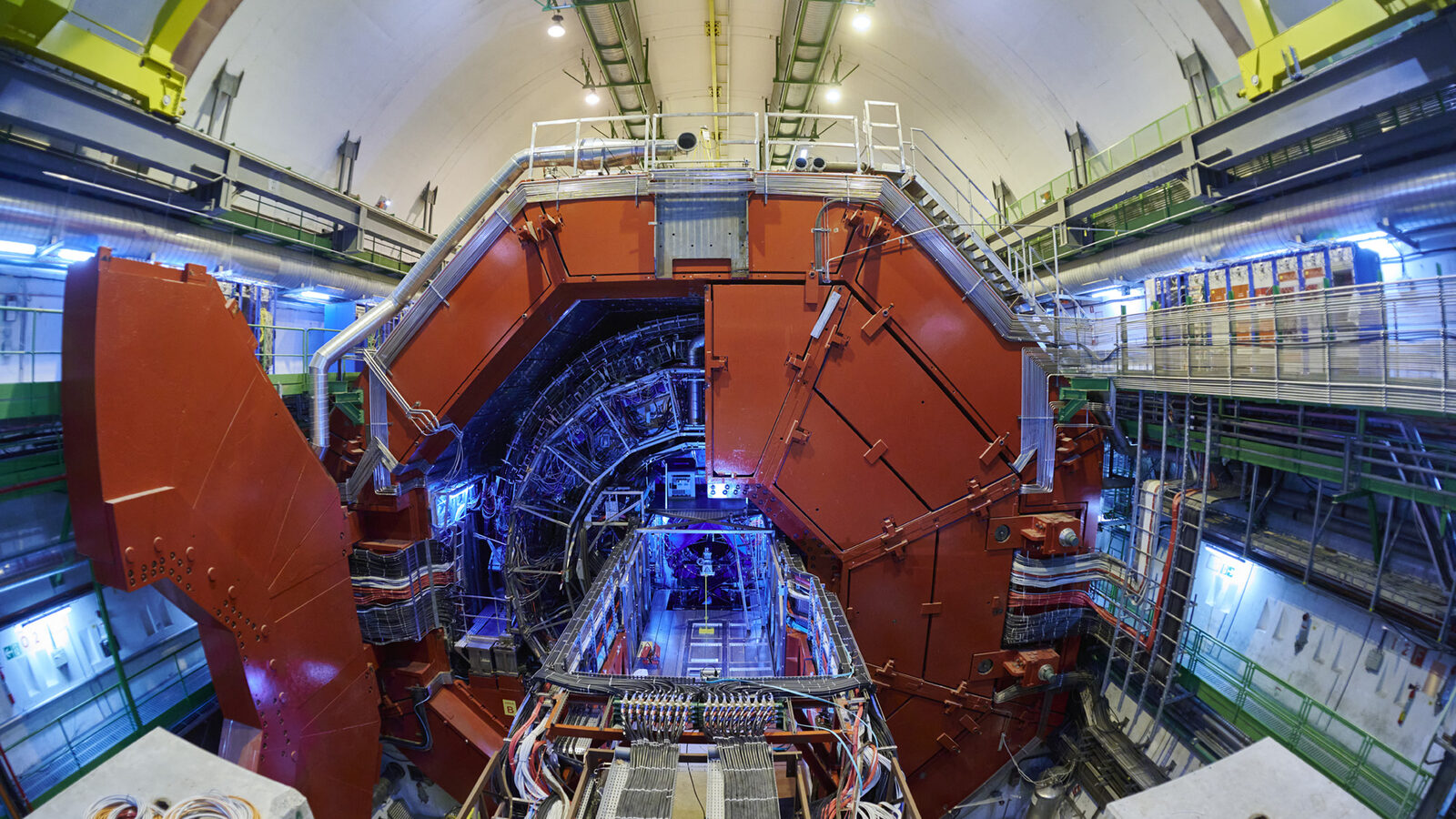
In 2023, the ALICE experiment was ready for their best year yet, until a mysterious signal threatened everything. As the LHC wraps up its 2025 lead-ion run, physicists recall how they worked together to solve the puzzle.
The life-saving medical technology known as Magnetic Resonance Imaging, or MRI, makes detailed images of soft tissue in the body, nearly eliminating the need for exploratory surgery.
Michael Miller watches grass grow for a living—super grass, of sorts, grass that could fuel a car and reduce carbon dioxide emissions at the same time.
As the Pierre Auger Observatory in Argentina collects cosmic rays for science, its thousands of solar panels are collecting data that could make solar power cheaper, more efficient, and more reliable.
High-tech businesses must constantly innovate or become obsolete. But when it comes to investing in new machinery and adopting new techniques, industry can be timid, says Bob Patti, chief technical officer of Tezzaron Semiconductor.
Stories abound about how particle physics benefits education, the economy, and society as a whole. Quantifying those benefits would help particle physics better demonstrate its value to the country.
Many of the people trained in particle physics move on to jobs in industry, where their skills are in high demand. There you can find a theorist exploring for oil or an accelerator scientist working on cancer treatments.