A 100-meter-deep shaft at Fermilab—constructed for a neutrino experiment many years ago—will become home to a new quantum experiment that will explore the nature of dark matter and gravitational waves.
The LHC is in the first months of a two-year technical shutdown for maintenance and upgrades. During that time, lucky visitors can secure a place on an underground guided tour.
The familiar elements of the Periodic Table come in a number of forms, or isotopessome found only fleetingly in the most violent events, such as exploding stars.
There are many ways to deliver a clever play on words: deliberately with a nudge, coyly with a wink, or tossed nonchalantly into a conversation to trigger a delayed laugh—or a groan.
Particle physics joins forces with other fields to look at two important factors shaping weather: temperatures high in the atmosphere and the dampness of the dirt beneath our feet.
Jorge Cham's popular comic strip about the lives of hapless grad students takes him to the Large Hadron Collider—and launches a series of comics that explains the science with remarkable clarity.
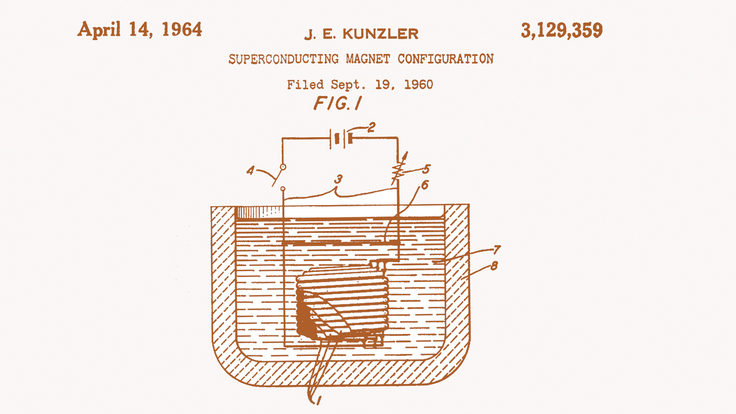
Today's MRI machines and particle accelerators wouldn’t exist without superconducting electromagnets, which generate powerful magnetic fields at a fraction of the energy cost of conventional electromagnets.
These photos represent an eye blink in the evolution of the Linac Coherent Light Source, a groundbreaking facility taking shape at SLAC National Accelerator Laboratory.