The Nobel Prize in Physics 2019 was awarded "for contributions to our understanding of the evolution of the universe and Earth's place in the cosmos," with one half to James Peebles and the other half jointly to Michel Mayor and Didier Queloz.
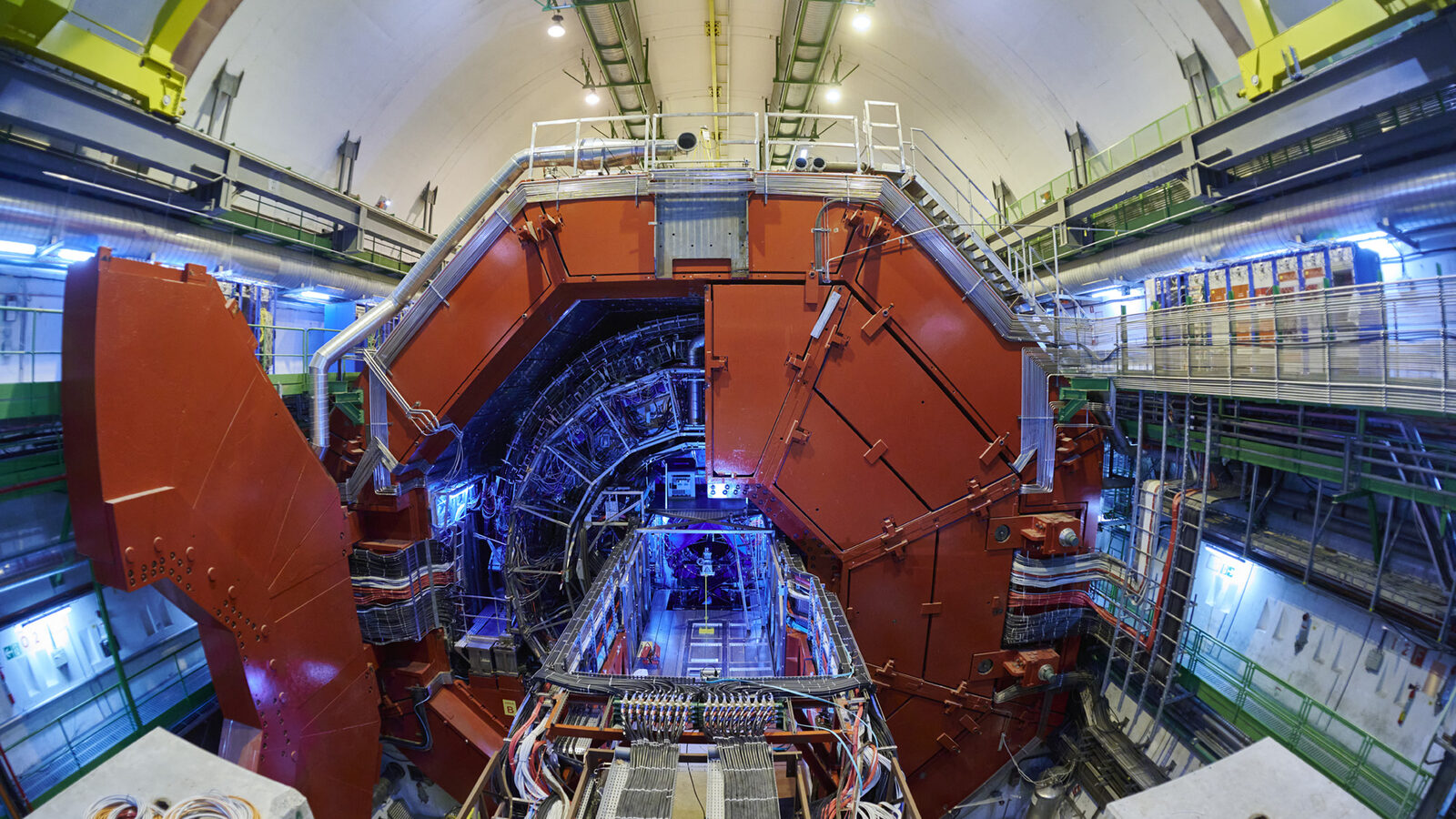
In 2023, the ALICE experiment was ready for their best year yet, until a mysterious signal threatened everything. As the LHC wraps up its 2025 lead-ion run, physicists recall how they worked together to solve the puzzle.
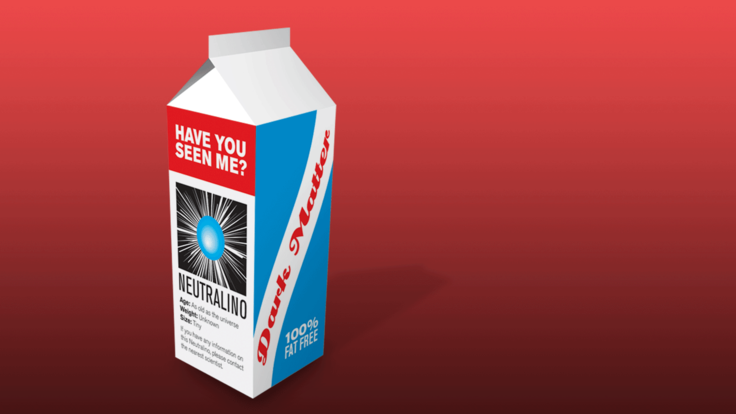
Whereas matter on Earth and in stars is made of atoms and nuclei, scientists know that dark matter must be made of something else. Neutralinos are a prime candidate.
Jorge Cham's popular comic strip about the lives of hapless grad students takes him to the Large Hadron Collider—and launches a series of comics that explains the science with remarkable clarity.
Marek Zreda and Darin Desilets of the University of Arizona approached airport security with a suitcase full of tubing, cables, electronic devices, and wires. The guard opened it. Lights started blinking.
If someone had told me when I was in high school that one day I would meet Stephen Hawking and have a meeting at NASA, I never could've guessed the trajectory I'd follow to get there. I would've assumed I had become a physicist.
Behind every big breakthrough is a series of small steps that build on each other to enhance our understanding of the universe. At Fermilab's Tevatron Collider, physicists have been telling the unfolding story of their experiments in weekly installments for more than five years.