The Nobel Prize in Physics 2019 was awarded "for contributions to our understanding of the evolution of the universe and Earth's place in the cosmos," with one half to James Peebles and the other half jointly to Michel Mayor and Didier Queloz.
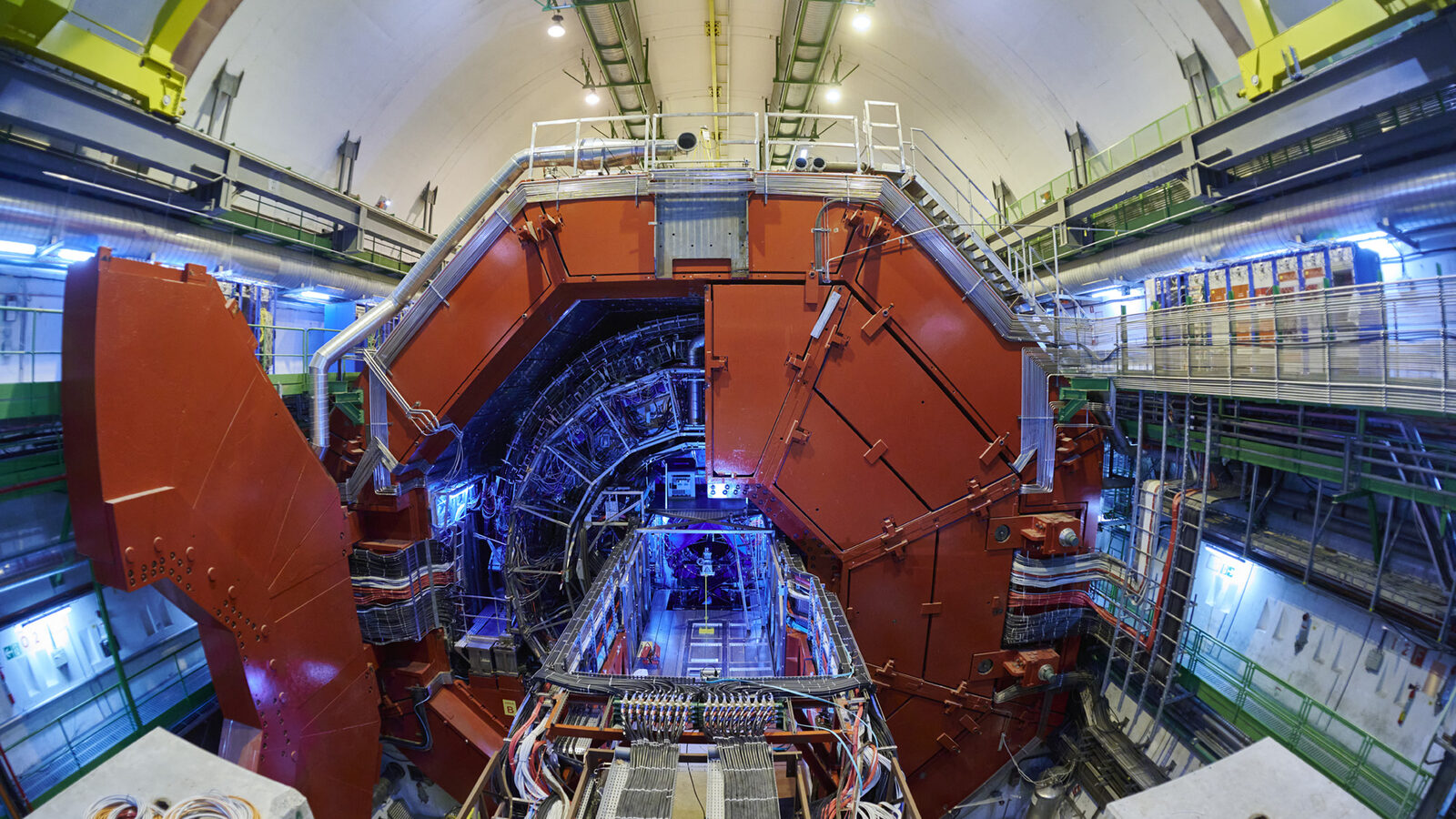
In 2023, the ALICE experiment was ready for their best year yet, until a mysterious signal threatened everything. As the LHC wraps up its 2025 lead-ion run, physicists recall how they worked together to solve the puzzle.
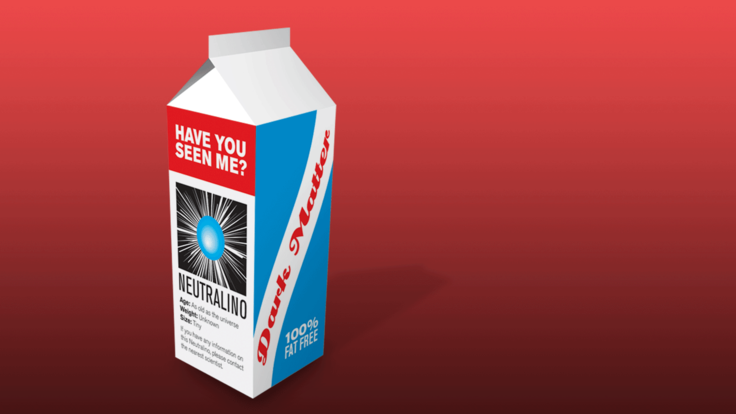
Whereas matter on Earth and in stars is made of atoms and nuclei, scientists know that dark matter must be made of something else. Neutralinos are a prime candidate.
Bluish lights flash on a grassy field, like giant fireflies angling for mates—sometimes a single flash, sometimes a ripple of light moving fast, as if suitors have given chase. Then all 16 lights flash at once, and the whole field glows.
The familiar elements of the Periodic Table come in a number of forms, or isotopessome found only fleetingly in the most violent events, such as exploding stars.
There are many ways to deliver a clever play on words: deliberately with a nudge, coyly with a wink, or tossed nonchalantly into a conversation to trigger a delayed laugh—or a groan.
Particle physics joins forces with other fields to look at two important factors shaping weather: temperatures high in the atmosphere and the dampness of the dirt beneath our feet.
Jorge Cham's popular comic strip about the lives of hapless grad students takes him to the Large Hadron Collider—and launches a series of comics that explains the science with remarkable clarity.