Three physicists wanted to calculate how neutrinos change. They ended up discovering an unexpected relationship between some of the most ubiquitous objects in math.
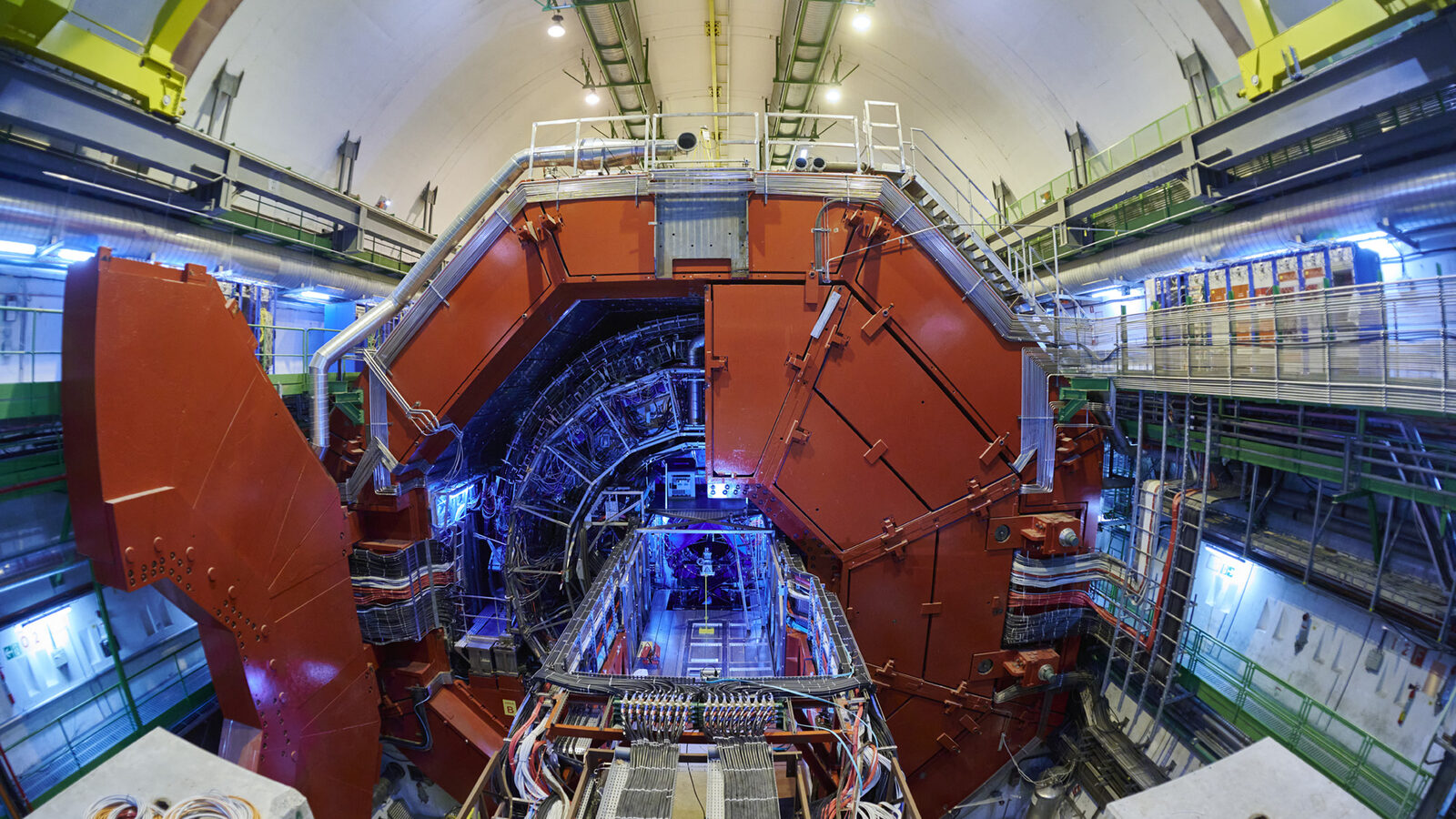
In 2023, the ALICE experiment was ready for their best year yet, until a mysterious signal threatened everything. As the LHC wraps up its 2025 lead-ion run, physicists recall how they worked together to solve the puzzle.
When it comes to training, hiring, and retaining women and members of ethnic minorities, particle physics lags far behind other fields of science. Staffers at three national labs Fermilab, SLAC, and Brookhavenare attacking the problem at every level.
When an earthquake flattened buildings in a number of towns across central Italy, physicists turned their focus from research to rescue and rebuilding.
Gazing into space, scientists wonder why the universe is expanding ever faster. What mysterious force is at work? By recording the light from hundreds of millions of galaxies from a mountaintop in Chile, they hope to find out what's going on.
Helium is the lifeblood of large particle accelerators. As the worlds supply dwindles, the particle physics community must take steps to preserve this precious commodity or learn to live without it.
The spotlight caught Todd Satogata. The camera zoomed in. “Did your particle beam shoot down a UFO?” the TV host asked. The accelerator physicist at RHIC, Brookhaven National Laboratory's Relativistic Heavy Ion Collider, smiled. Of course not.
Look at the periodic table of elements, and youd be hard pressed to find an element that is not used in physics. But what are the most important elements for building accelerators, detecting particles, and solving the mysteries of the universe?