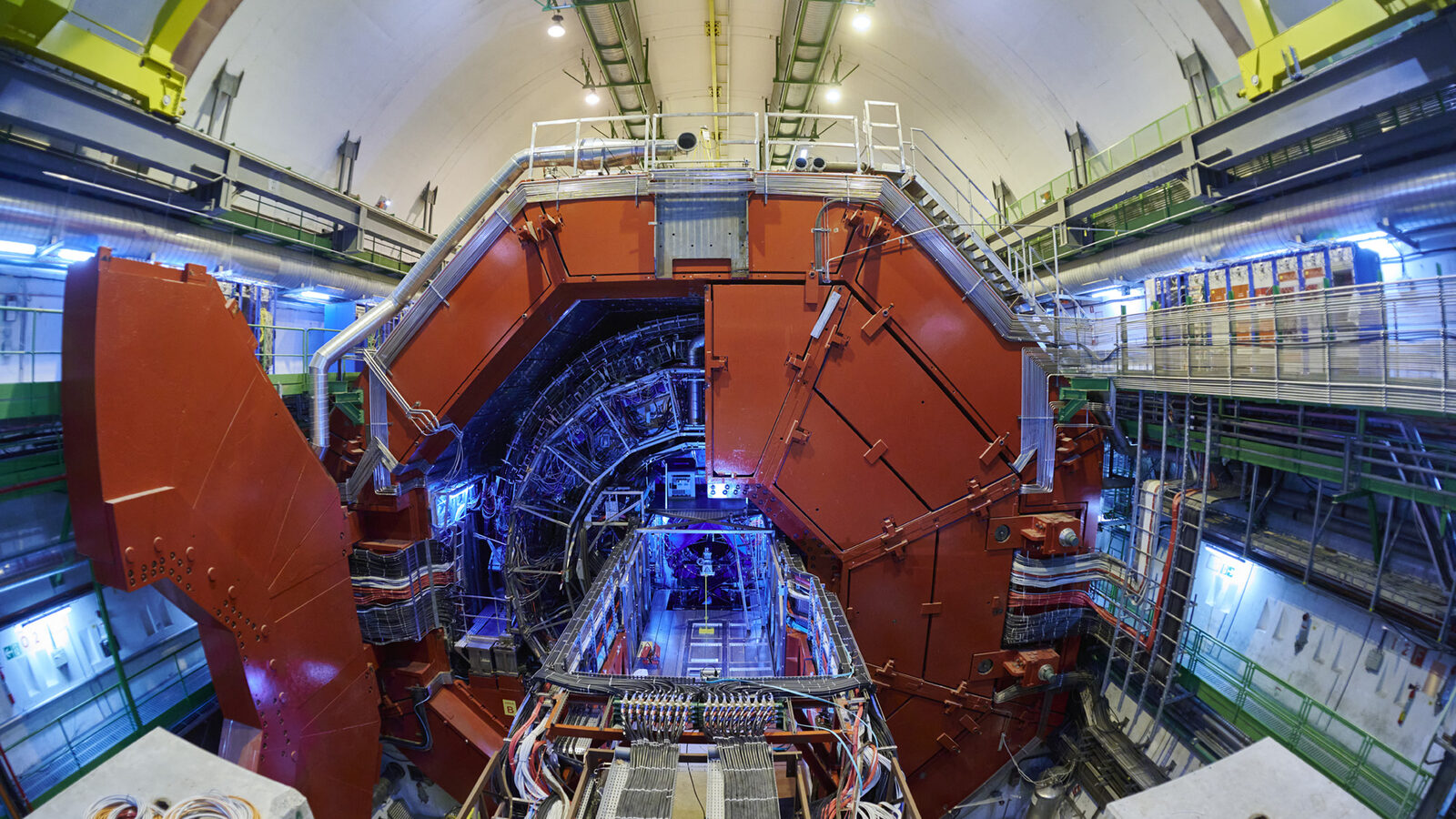
Ultrasensitive experiments on trapped antiprotons provide a window onto possible differences between matter and antimatter. Now they could also shed light on the identity of dark matter.
In 2023, the ALICE experiment was ready for their best year yet, until a mysterious signal threatened everything. As the LHC wraps up its 2025 lead-ion run, physicists recall how they worked together to solve the puzzle.
Imagine a house-sized acrylic fishbowl inside a giant, shiny, disco-ball-like sphere, suspended in a cavern as tall as a 10-story building. Now imagine climbing around inside that pitch-dark fishbowl with a squeegee and a flashlight.
Fermilab is cooking up a hot technology—and the serving is ultracold. The laboratory is stepping up efforts to develop and test superconducting radio-frequency cavities, a key technology for the next generation of particle accelerators and the future of particle physics.
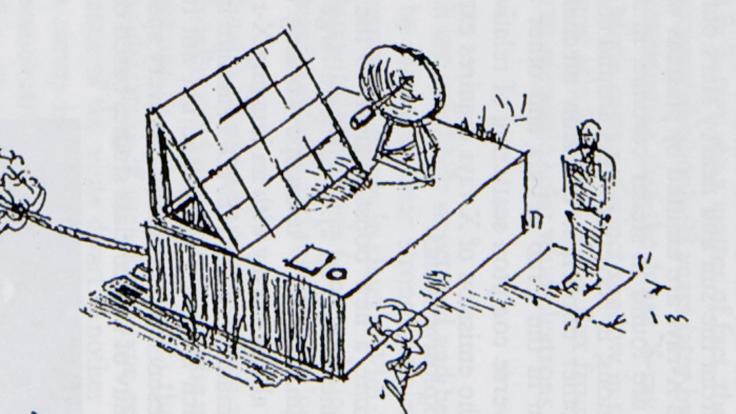
In 1991, James Cronin travelled to Leeds, England, to visit Alan Watson, an expert on cosmic-ray physics. Cronin, a Nobel Prize winner in physics who had worked on accelerator-based particle physics experiments, wanted to discuss ideas for cosmic-ray projects.
You can't feel it. Yet the moon's gravitational pull shifts the ground ever so slightly, creating “earth tides” that rhythmically raise and lower the ground.
Plugged into a weatherproof outlet behind SLAC's Test Laboratory, what looks like an oversized green-and-silver go-cart waits with its load of tools and paint supplies.