Like surfers on monster waves, electrons can ride waves of plasma to very high energies in a very short distance. Scientists have proven that plasma acceleration works.
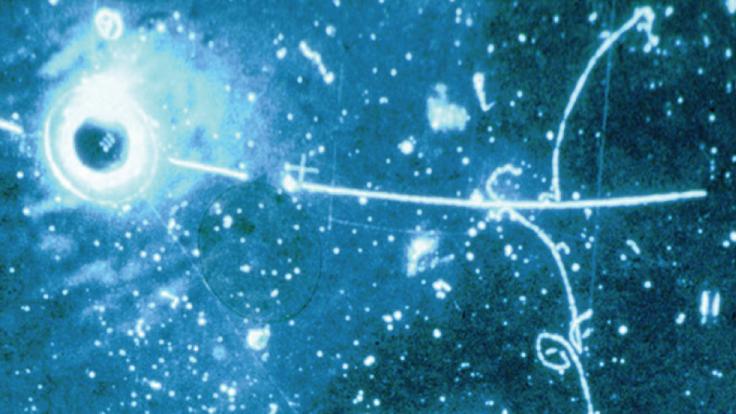
The Gargamelle collaboration at the European laboratory CERN began operating its bubble chamber in the early 1970s, shooting neutrinos through 12,000 liters of Freon, a heavy liquid.
Fermilab is cooking up a hot technology—and the serving is ultracold. The laboratory is stepping up efforts to develop and test superconducting radio-frequency cavities, a key technology for the next generation of particle accelerators and the future of particle physics.
The eyes of the world were on the Large Hadron Collider at CERN on September 10, 2008. On that day, dubbed "Big Bang Day" by the BBC, the first beams of subatomic particles zoomed around the 17-mile-long, super-cooled particle accelerator.
Alberto sits down at a computer and brings up a clickable map of CERN. But rather than dry text, he is greeted with bright, musical animation, a pinball game, a quiz show, rocket ships, evil slugs, and music videos.
For her latest work, choreographer Liz Lerman took members of her dance troupe to CERN, where they reveled in the fog, danced in the aisles and found inspiration in wide-ranging conversations with scientists.
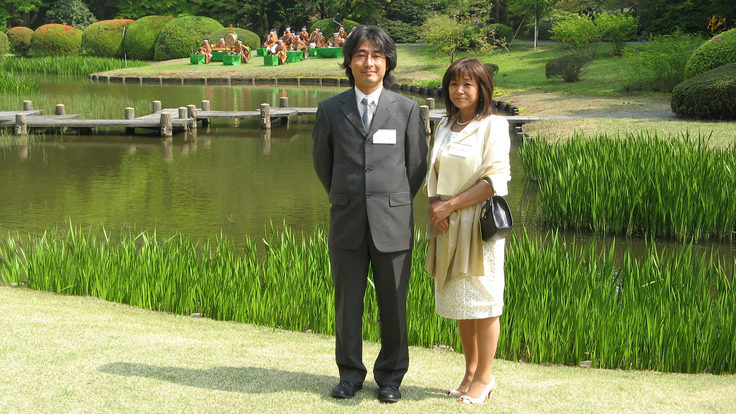
When I assumed the position of director of the Institute for the Physics and Mathematics of the Universe (IPMU), my smart-mouthed friends joked that I became the Director of the Universe.